The home of architecture and design in the Asia-Pacific
Get the latest design news direct to your inbox!

Get the latest design news direct to your inbox!
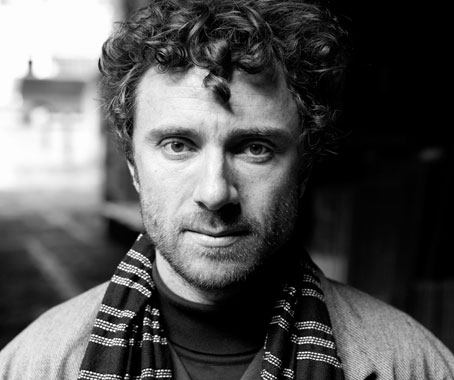
Introduced as “the ultimate maker”, British designer Thomas Heatherwick delighted the audience at the 2012 WAF. Narelle Yabuka reports
October 16th, 2012
For an hour or so on the evening of Friday 5 October 2012, World Architecture Festival (WAF) delegates in Singapore were plunged into darkness for the first time in three days. There was no problem with electricity supply; the dim conditions were intentional and served to heighten the impact of slides presented by a most engaging speaker.
Thomas Heatherwick delivered the WAF’s final keynote address to a jam-packed hall that saw (for the only time during the festival) virtually every seat filled and the walls lined with an overflow of people. It was a testament to the appeal of an individual who, ironically, has not been trained in architecture – a fact he highlighted in the first minutes of his address.
Heatherwick didn’t disappoint the expectant crowd. His captivating and humorous address enhanced the theatre-like atmosphere that had evolved at Marina Bay Sands. Repeatedly surfacing in Heatherwick’s discussion was the theme of togetherness – an appropriate one for a forum that attracted 1,800 people from across the globe.
He first discussed his famous London Olympics cauldron and the realisation that he and his studio had been asked to design an object that no one ever really remembers.
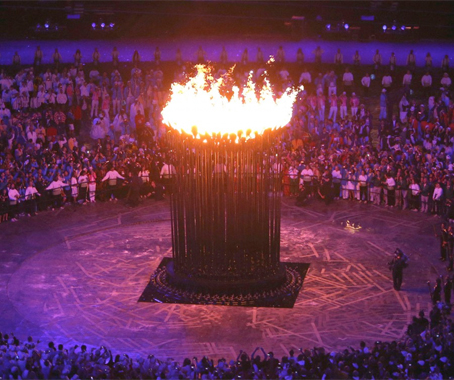
London 2012 Cauldron – Opening Ceremony. Image © Heatherwick Studio
“What people do remember is a moment,” he said, referring to the 1992 Barcelona Olympics opening ceremony in which an archer lit the cauldron from a distance and people asked themselves, ’What if he misses?’ Explained Heatherwick, “We wondered if there was a way to make the object and the process [of lighting it] the same thing.”
A video segment of the resultant London cauldron’s 204 copper petals rising into position and slowly sprouting fire during the opening ceremony moved the audience to a wholesome applause.

Nanyang Technological University – learning hub. Image © Heatherwick Studio
Heatherwick next discussed an architecture project for Singapore’s Nanyang Technological University – a learning hub building containing tutorial rooms, the construction of which has just begun.
More a bulbous cluster of 8-storey towers than a singular building, it emphasises the tendency for today’s universities to serve as places for people to connect with each other rather than with information (which can be remotely accessed). The 24-hour-access building will incorporate a passive cooling system and elevated gardens, and is due for completion in 2014.
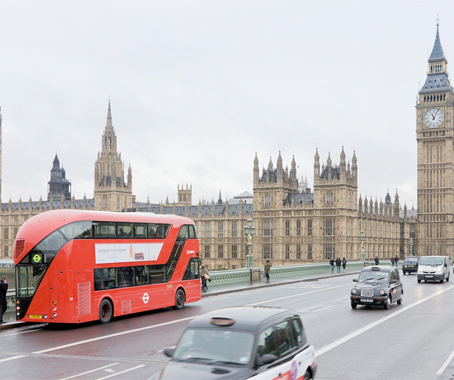

New London Bus by Heatherwick. Images © Heatherwick Studio
A new design for London buses was shown next – the first complete design overhaul to be commissioned in 50 years. A chief goal for Heatherwick and his team was to “unreinvent” the bus – to “calm down” the collection of “barnacles” (safety grips, overbearing lighting, and so on) that are typically installed one after the other without holistic consideration.
He aimed to reinstate the ’dignity’ of the passenger while also enhancing safety, reducing energy consumption, and taking into account the prominence of the bus fleet in the city. “Our logic was that buses are part of the architecture of London,” he said.


Shanghai Expo. Photos © Iwan Baan
Heatherwick closed with a discussion of the UK pavilion at the 2010 Shanghai World Expo. The project graces the cover of his recently released book, “Thomas Heatherwick: Making” (published by Thames & Hudson, 2012) – the vehicle for a long book-signing queue after his presentation.
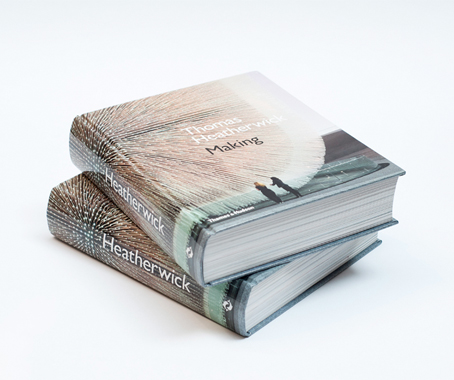
“Thomas Heatherwick: Making”. Image © Heatherwick Studio
The poetry of Heatherwick’s unusual pavilion, which contained 250,000 seeds embedded in 60,000 acrylic rods, was also its power. The pavilion demonstrated the potential impact of a single idea clearly expressed.
Two videos were shared during this final segment. One was an old television advertisement for Play Doh’s Mop Top toy. The other was comedic footage of the head of UK trade and investment rolling down the pavilion’s morphing astroturfed ’landscape’ with members of the public, and exclaiming “Brilliant!” when he came to a stop.
Both highlighted the broad experiential and sociocultural encounters that feed into and grow around the work of Heatherwick Studio. They also made for a great show.
Hero image: Photo by Elena Heatherwick
Heatherwick Studio
heatherwick.com
INDESIGN is on instagram
Follow @indesignlive
A searchable and comprehensive guide for specifying leading products and their suppliers
Keep up to date with the latest and greatest from our industry BFF's!
The internet never sleeps! Here's the stuff you might have missed