The home of architecture and design in the Asia-Pacific
Get the latest design news direct to your inbox!

Get the latest design news direct to your inbox!
POSH’s Head of Design and Development talks to Tamsin Bradshaw about his extraordinary artistic talents and calligraphic training.
June 17th, 2016
In 1927, DJ De Pree, Herman Miller’s Founder, went to visit the wife of the brand’s millwright, who had just died of a heart attack. That visit changed his perspective forever, giving him a new insight into the life of this engineer – and it also changed his approach to Herman Miller’s staff in general. For it turned out that the millwright had harboured a secret love of writing poetry, and that he was talented, too. “We are all extraordinary,” said De Pree in a 1986 interview on the subject.
His belief in the extraordinary nature of the people who worked for Herman Miller is still part of the brand DNA today. Like that millwright, so many of those working at the global furniture company have surprising skills and wonderful aptitude for unexpected hobbies; something the brand is keen to nurture. This is certainly the case with Jack Liang Wang, Head of Design and Development at POSH, a Herman Miller company.
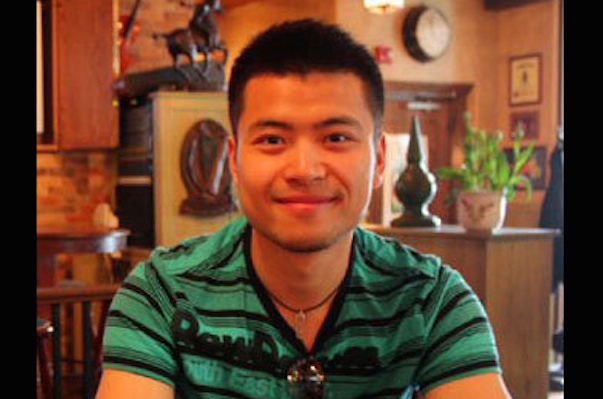
Jack Wang, Head of Design and Development at POSH Design Lab
Wang oversees the POSH Design Lab (PDL), driving new product design and development. Most recently, he was involved with two exciting new products from PDL – namely, the Activity chair and Optimis desking solution. Both of these new products demonstrate the innovation, in-depth research and ergonomic thinking POSH, as a Herman Miller brand, is bringing to design that’s made in Asia – an approach that’s in sync with its parent company’s design tenets.
The Shanghai-born Wang worked as Design Manager of Herman Miller R&D, Asia Pacific, before he took on his current role. Aside from his obvious abilities as head of PDL, Wang is a talented artist and a traditionally trained Chinese calligrapher. Here, we speak to him about art, calligraphy and keeping things in balance.
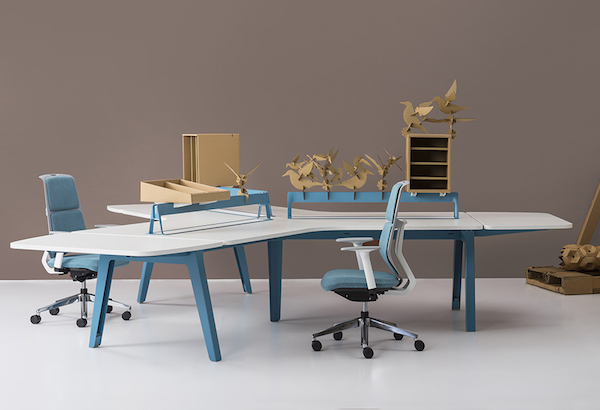
Wang was involved in working on both the Activity chair and Optimis design solution, as pictured, for POSH Design Lab
How long have you been creating art?
It started when I was a kid. I focused a lot on Chinese calligraphy in my early years, but I found painting helps me to express myself better. I use pencil to record whatever I am thinking or feeling.
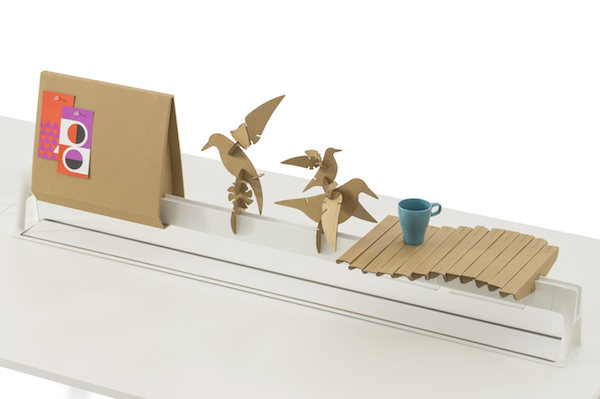
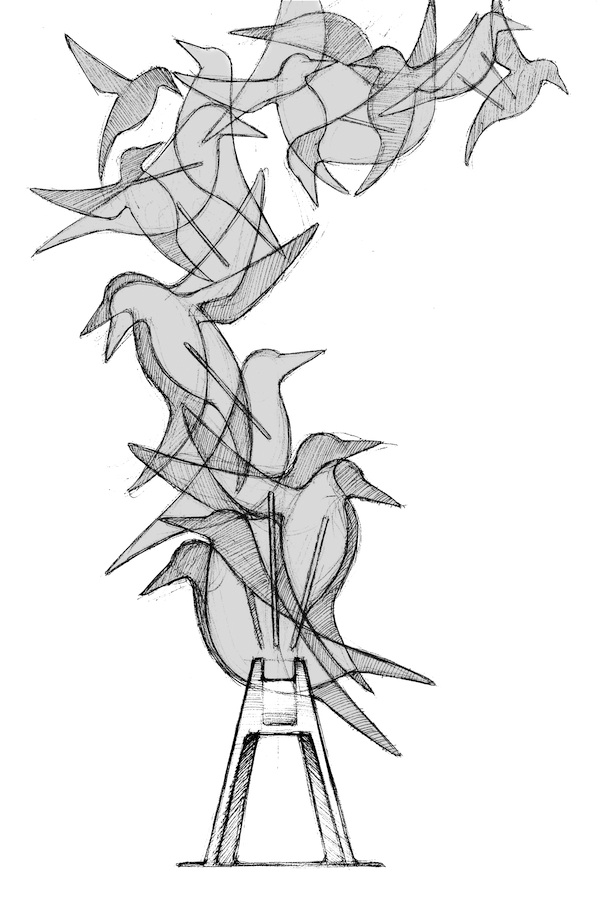
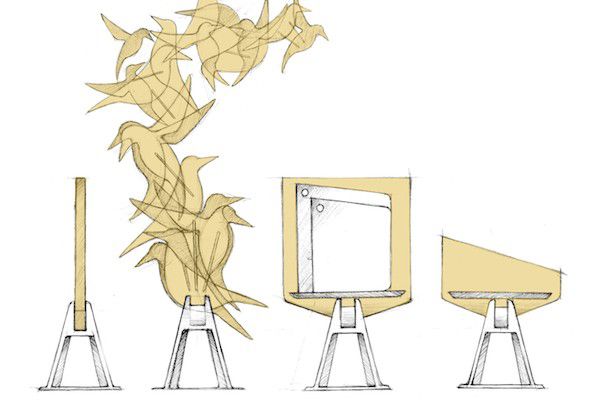
The birds Wang sketched have transformed into imaginative paper accessories for Optimis
Why did you train as a calligrapher? Did you ever want to work as a calligrapher?
It was my father’s idea and determination. He came from a generation that lived during the Cultural Revolution when education was not valued, and when ‘intellectuals’ were sent to work manually in the countryside. Therefore he wanted me to receive the best education. By having a traditional craft, he thought it would enhance my future prospects and lead to career success.
As a young boy, though, I resisted! The training was hard, especially on top of school. It occupied a huge amount of my free time. Now, though, as an adult looking back, I can appreciate and value the journey I’ve been on. It strengthened my roots and linked me with my Chinese heritage: the balance of yin and yang, the traits of humility, confidence, patience and so on. Sometimes I think such attributes are somewhat overlooked in today’s society.
As an artist, there have been moments where I’ve found myself reaching a certain bottleneck and I could not grow until I found another art form, such as drawing and painting. I am still exploring how calligraphy can help me truly express myself. There are, however, a lot of common areas in between different art forms, and practicing calligraphy definitely helps me find inner peace and balance.
What is your creative process?
I always keep an eye on the objects or ideas I am interested in and, therefore I collect photos of people, colour patterns, and some other art or design which inspires me. I will create random sketches to compose the idea if it’s hard to visualise in my mind. I also pour oil on a raw canvas directly to experiment with colour combinations.
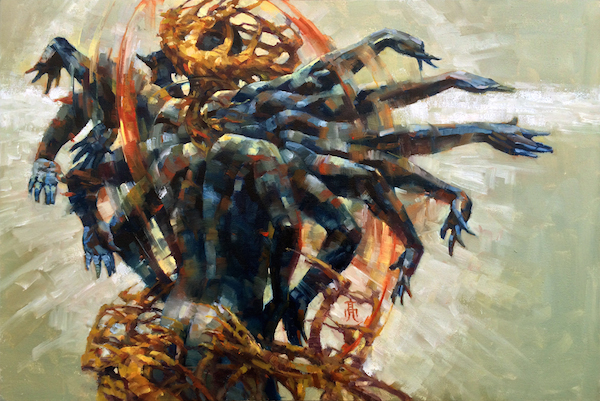
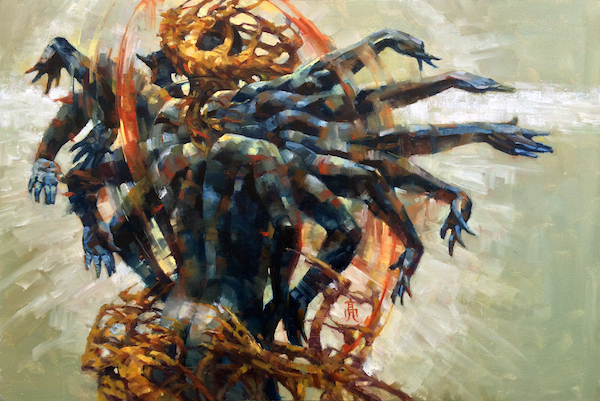
Flutter, oil on canvas, by Jack Wang
Do you have any rituals that help you with your art?
Always keeping an eye on things or artists that inspire me. Family, reading, travel, music, film and theatre help significantly in moving to a space that enables me to feel inspired beyond my day-to-day role.
If you could design anything, what would it be? If you had no budget restrictions and you were given free rein to be as creative as you liked.
There needs to be a brief first. I believe design is about rising to the challenge of solving problems, such as visual problems, function problems or application problems and so on. It never works without boundary. Only boundaries and restrictions stimulate creativity and innovation, and hence give birth to greater work than before.
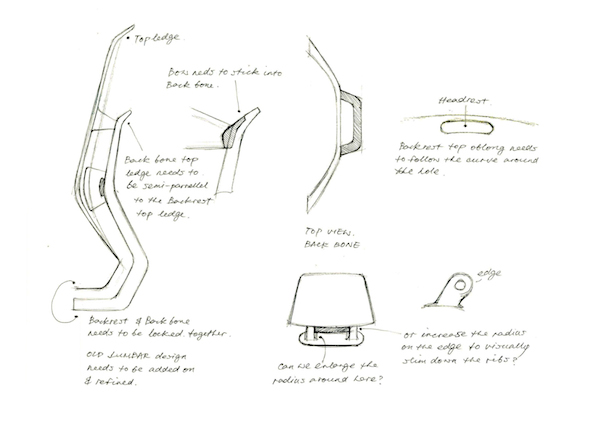
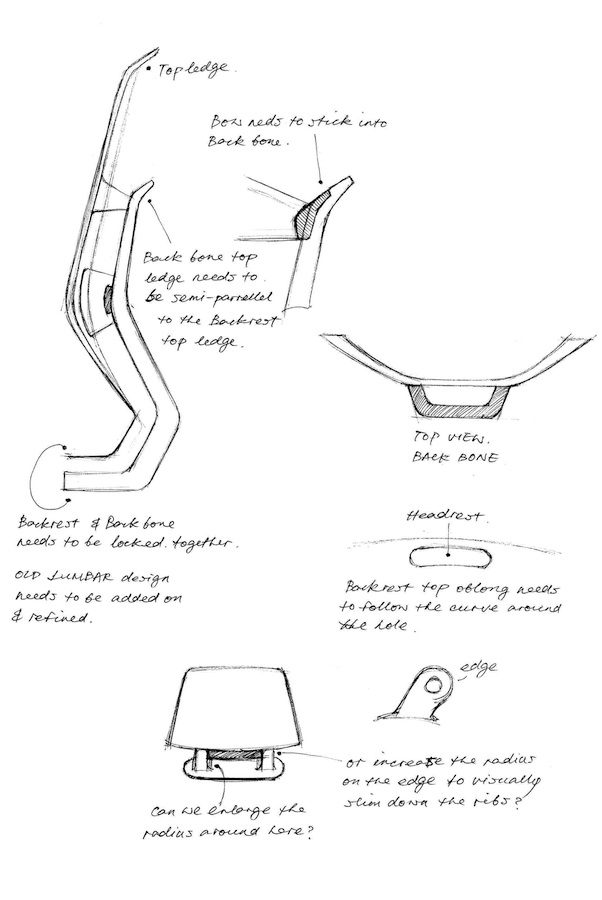
Beauty in the details: Jack Wang’s sketches and thought process for POSH’s Activity chair
What does passion mean to you?
Passion is something that comes from the heart, not the head. There is no right or wrong, nor logic.
Jack Wang
jackliangwang.com
POSH
poshworkspace.com
Herman Miller
hermanmiller.com/asia
hermanmillerreach.com
INDESIGN is on instagram
Follow @indesignlive
A searchable and comprehensive guide for specifying leading products and their suppliers
Keep up to date with the latest and greatest from our industry BFF's!
The internet never sleeps! Here's the stuff you might have missed