The home of architecture and design in the Asia-Pacific
Get the latest design news direct to your inbox!

Get the latest design news direct to your inbox!
Leading an agenda of change, Steelcase has released plans that will help ensure sustainability for the company and the planet with a firm focus on the future.

In some quarters it seems that the environment has taken a back seat as the world comes to terms with a global pandemic that has changed the way we live. However our health, and that of our world, go hand in hand and so it is heartening to see that some companies are taking the initiative to confront and then find solutions to help sustain our environment.
On August 25 this year, Steelcase announced that not only had it achieved carbon neutrality for its own operations but that it has established a goal to become carbon negative by 2030. These goals are informed by science and have been validated by the Science Based Targets initiative.
In a time when actions and re-actions are focused on other issues, this is a commitment that shows Steelcase is ready and willing to embrace sustainability wherever it can.

With a family of brands that include Steelcase®, Coalesse®, Designtex®, Turnstone®, Smith System®, Orangebox® and AMQ®, the company touches the four corners of the globe through its more than 800 dealer locations. As a leader in its field, Steelcase offers a range of architecture, furniture and technology products and services designed to help people reach their full potential in the workplace and beyond. However, Steelcase is also an advocate for change and has sustainability in its DNA. With the announcement of the carbon negative plan, Steelcase builds on its already stellar reputation having achieved a greater than 30 per cent reduction in greenhouse emissions over the past ten years alone.
While Steelcase was able to reach carbon neutral (not zero) for its own operations removing as much carbon as it emits, the company has embraced the science and will now focus on an ambitious emission reduction campaign that will see it remove more carbon than it emits.
Becoming carbon negative (also referred to as carbon positive) will be achieved through a combination of reductions and investing in renewable energy. Additional actions are expected to include financing carbon offset initiatives and support for external emission reductions with social benefits.
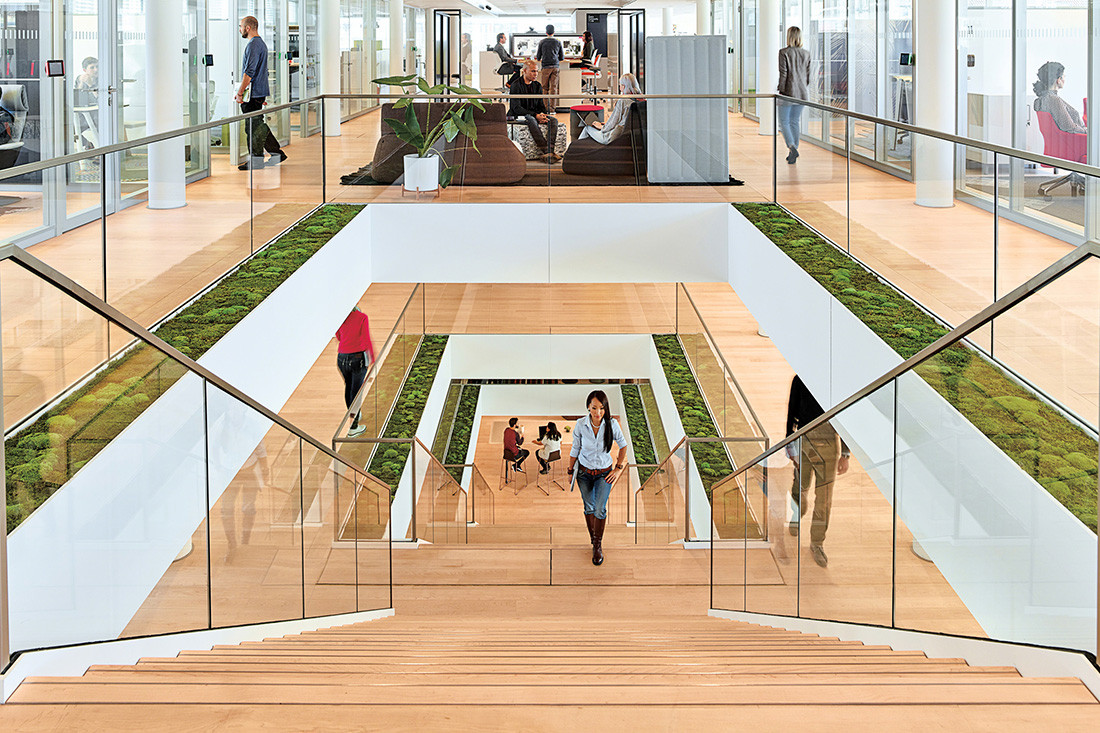
“Steelcase is proud to lead our industry in addressing this critical global issue,” said Jim Keane, President and CEO, Steelcase. “We continue to see the destructive effects of climate change that touch the lives of people in communities around the world and are pleased to be taking immediate steps in the right direction.”
By 2030 Steelcase will reduce absolute emissions from its business by 50 per cent and also cut indirect emissions from business travel and operations generated waste. Steelcase will also engage with suppliers to help set their own science-based targets by 2025.
Through its ongoing commitment to the ideas of sustainability, and where actions speak louder than words, Steelcase is indeed taking giant steps for the environment and making a difference for us all.

INDESIGN is on instagram
Follow @indesignlive
A searchable and comprehensive guide for specifying leading products and their suppliers
Keep up to date with the latest and greatest from our industry BFF's!
The internet never sleeps! Here's the stuff you might have missed