The home of architecture and design in the Asia-Pacific
Get the latest design news direct to your inbox!

Get the latest design news direct to your inbox!
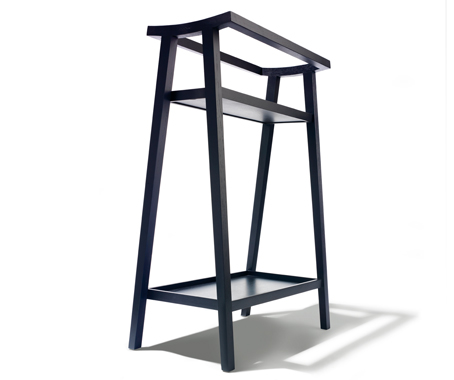
A recent winner of the ‘A’ Design Award for his Prism Table, Maurie Novak is a young, Melbourne-based architect and designer with a keen and curious eye.

April 30th, 2014
Indesignlive (IDL): When did you start creating your pieces?
Maurie Novak (MN): I’ve been dabbling in carpentry since I was a kid and have always enjoyed creating things, but it was probably not until I went to uni to study architecture that I started pursuing ideas to their end point. An ideology of experimentation really helped me to pursue my ideas. Just make it and see what happens. Some of the things I try to make fail, but I love the process of thinking through an idea, and seeing what outcomes are possible.
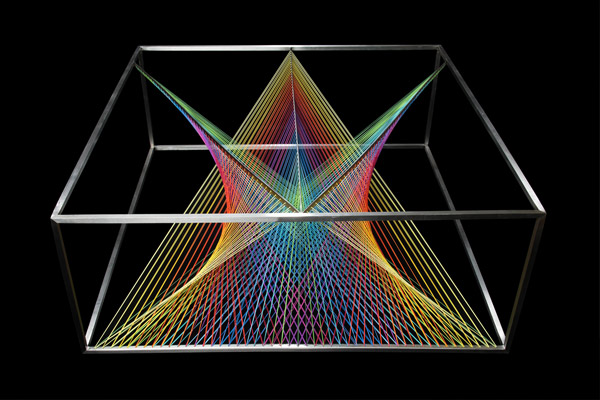
Prism Table
(IDL): What first inspired you to be a designer?
(MN): I don’t think that I ever set out to be a designer. I have always liked to create things and do so every day. It is probably the attention to detail and my obsessive nature which transform my creations into ‘designs’. I never really think of myself as a designer. I am just always coming up with problems and try to solve them in the most eloquent and informed way I can.
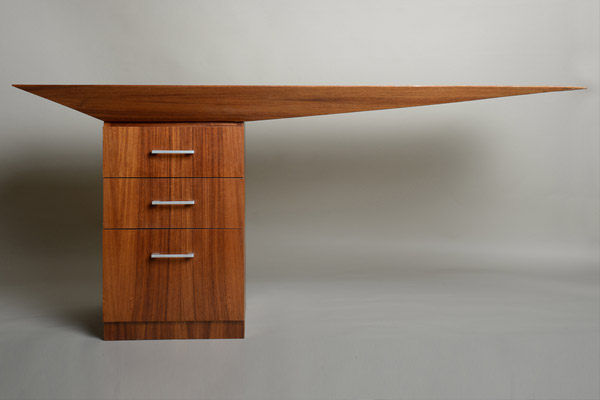
Minimal Table
(IDL): Who do you admire in the design world? (both classical and contemporary)
(MN): In the classical world I have always admired Giovanni Battista Piranesi. His incredible body of work is just awe inspiring. His work has an incredible level of detail and atmosphere and is so wide ranging. If I can accomplish just a fraction of what he did in his lifetime I will be happy.
In the contemporary world, one Architect that I admire greatly is Louis Kahn. Kahn had such a beautiful poetic way of understanding the world around us. He was able to find the essence of a design and express it in the most compelling way.
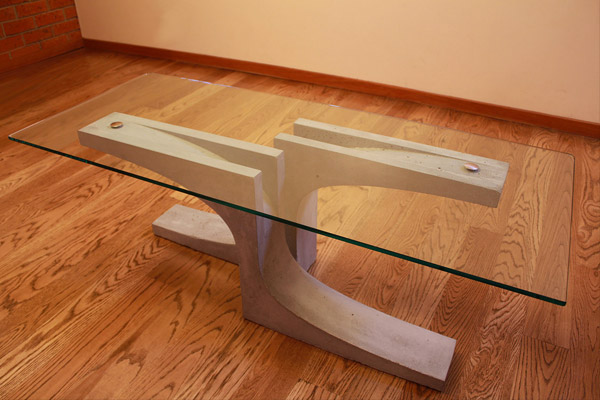
Asymptote Table
(IDL): What made you choose the medium you use?
(MN): Instead of restricting my designs to one specific medium, I enjoy working with a range of different mediums in designs that range in scale. In this way ‘scale’ becomes my medium of choice. While architecture often tends to involve design on a ‘grand scale’, furniture is of a scale in which almost anything is possible. Complex or difficult ideas can be tested more easily with furniture than it can with architecture. This helps me to develop a design language which can be used across any scale.
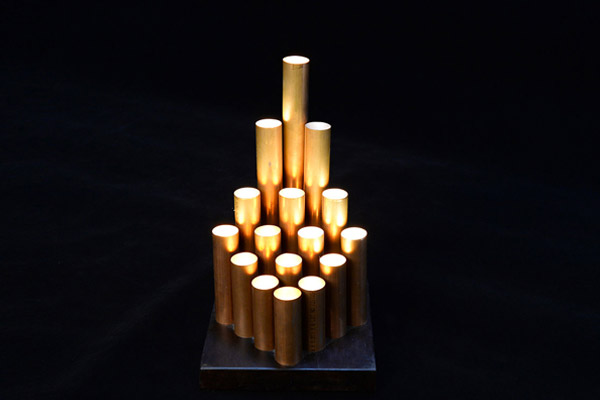
Pipe Series Lighting
(IDL): Where did you get the training/knowledge on how to work in this medium?
(MN): In any project I take on I try to tackle a new material or new method to achieve a goal. I speak to people and get advice, even partner up with people where I can. At the end on the day experience is the only thing that can ensure success. For every finished product I have there is a collection of failed attempts along the way, but that is where you learn. I would be restless being in a position where I have to follow the same procedure each time I approach a project. For me experimentation makes designing worthwhile.
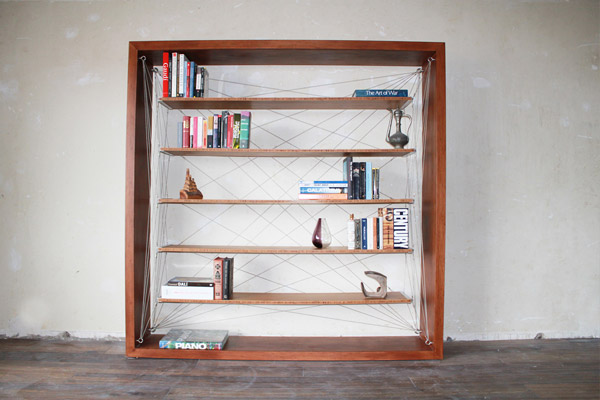
Poise bookshelves
(IDL): What is your creative philosophy?
(MN): Never to take on something simple and always try to make the complex look easy.
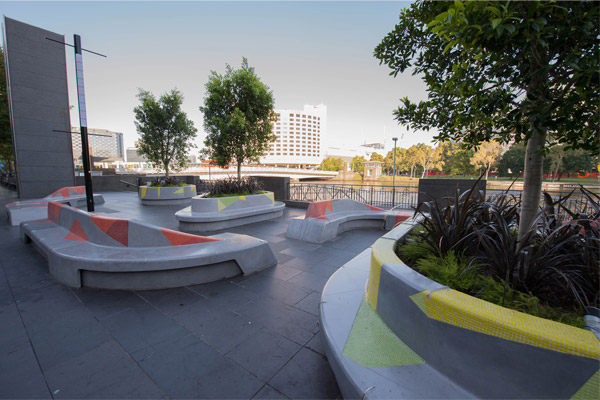
Southbank Seating at Crown Casino
(IDL): Do you believe Design has a social/political relevance? If so, what does your work ‘say’?
(MN): Of course – architecture and furniture always follow society in one way or another. Whilst some design may remain conventional, there is always a part of the design world that tries to reflect the mindset of the time in which it is created. Modernism has been around for quite a while and whilst my ideas would fall into that genre, to me my designs try to reflect where we are right now. My ideas often try to defy gravity in some way or have some logic defying element to them. To me this reflects how technology is coming to a point where it is unstoppable in its development and how the possibilities of future human innovation are almost inconceivable.
Maurie Novak – MN Design
mn-design.com.au
INDESIGN is on instagram
Follow @indesignlive
A searchable and comprehensive guide for specifying leading products and their suppliers
Keep up to date with the latest and greatest from our industry BFF's!
The internet never sleeps! Here's the stuff you might have missed