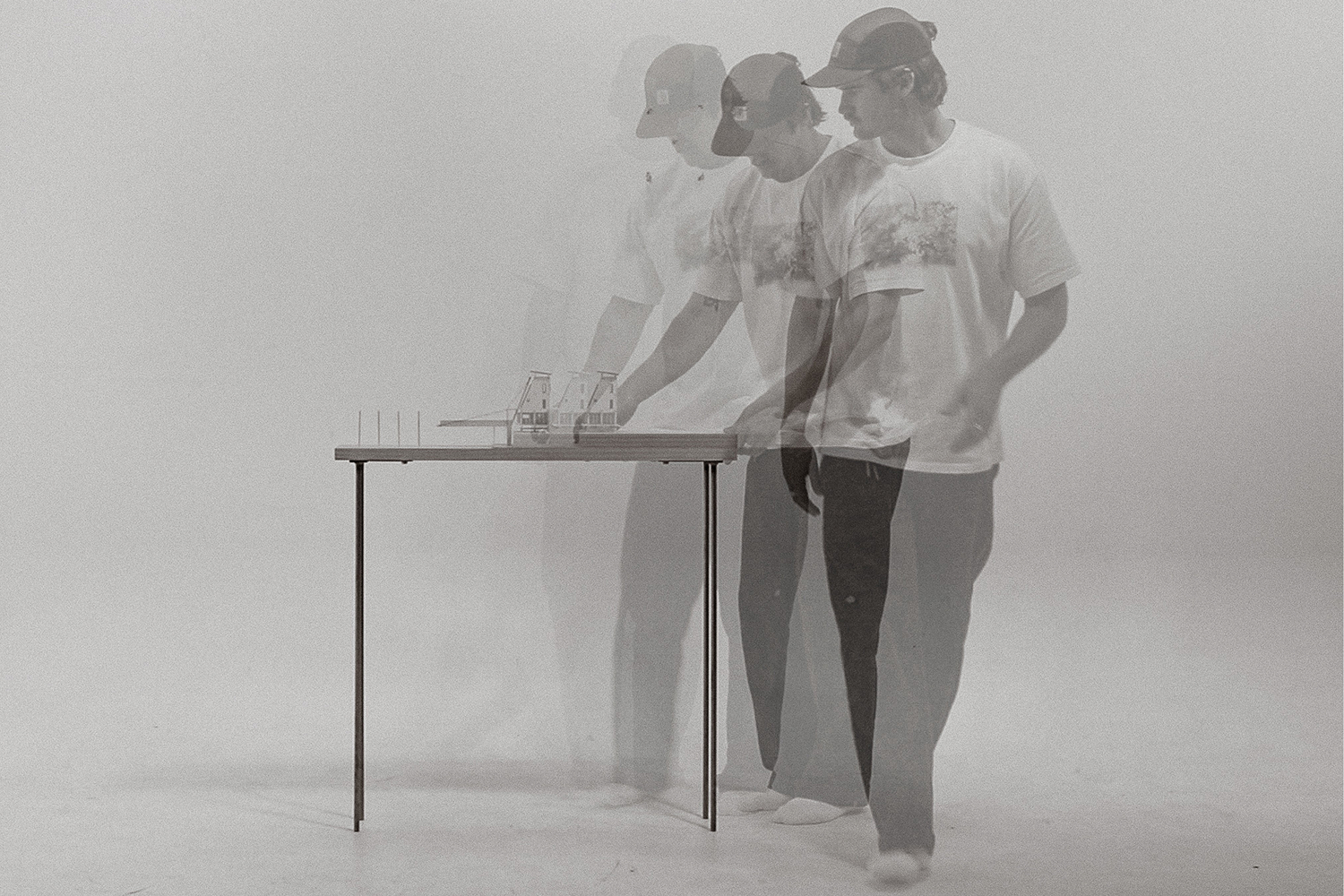
There’s nothing we like more than a good fiftieth birthday; largely because the traditional gift is gold and a bit of glamour never goes astray. Not that we’ll be buying Philip Cox any gilded bling. The Australian architect, who celebrates 50 years in the business this year, has enough shiny awards on his shelf as it is.
Professor Cox AO kicked off his stellar career in 1963 with fellow architect Ian McKay. He picked up his first Sulman Award almost immediately (along with McKay) for work on St Andrews Presbyterian Church in Leppington. Two years later the duo picked up another.

Albany Entertainment Centre – Albany, Australia
In 1967 he ventured out on his own, forming Philip Cox and Associates (now known as Cox Architects & Planners). He was awarded his first Wilkinson Award in 1969 for the Hawkins Residence in Cheltenham; one of the finest examples of mid-century architecture in NSW. The home was the epitome of the so-called ‘Sydney School’ of architecture, with its rustic materials (clinker bricks and timber) and the way it blended seamless into its bushland setting.

Helix Bridge – Marina Bay, Singapore
Over the years, Cox became less known for his private residences and more known for his heroic-scale civic buildings, such as the Australian National Maritime Museum at Darling Harbour, and the Sydney Football Stadium. In 1984 he was awarded the prestigious Royal Australian Institute of Architects Gold Medal.
Nowadays Cox’s practice employs more than 350 staff and has completed projects in South-East Asia, China, the Middle East, Africa and Europe.
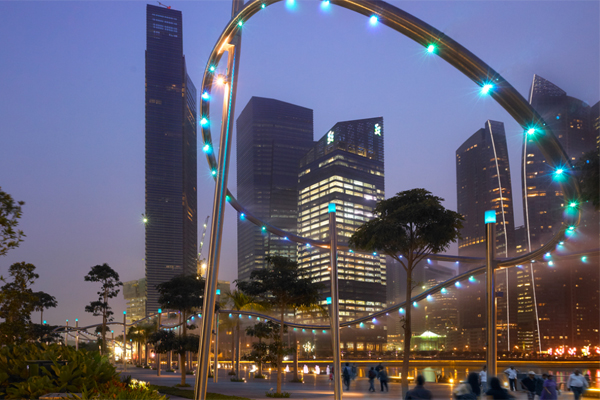
Promenade – Marina Bay, Singapore
When we caught up with the architect for a coffee at the Alliance Francaise in Clarence Street Sydney this week, we asked him the secret of his success. He modestly attributed much of it to the “laws of chance”.
“Things happen that are beyond your control and I’ve always believed that circumstances and luck plays a big part, it’s a matter of seizing opportunity when it comes along,” he says.
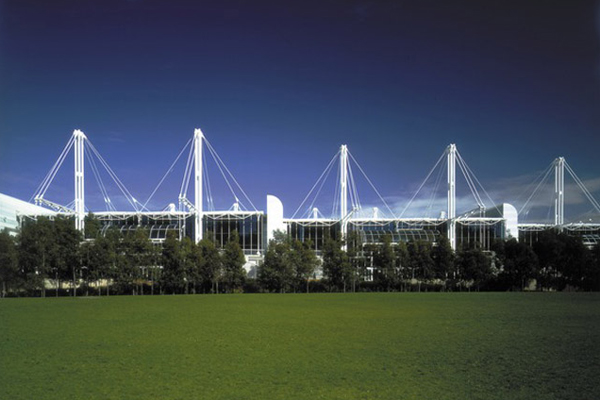
Sydney Exhibition Centre – Sydney, Australia © P Bingham-Hall
Cox says one of the buildings he is most proud of is the Sydney Exhibition Centre. It opened in 1988 ready for the Bicentenary and was awarded the Sulman the following year, and was subsequently listed by Icomos (International Council on Monuments and Sites). During the 2000 Olympics it served as a venue for several events (boxing, fencing, judo, weighlifting and wrestling) and was a key meeting facility for APEC Australia 2007.
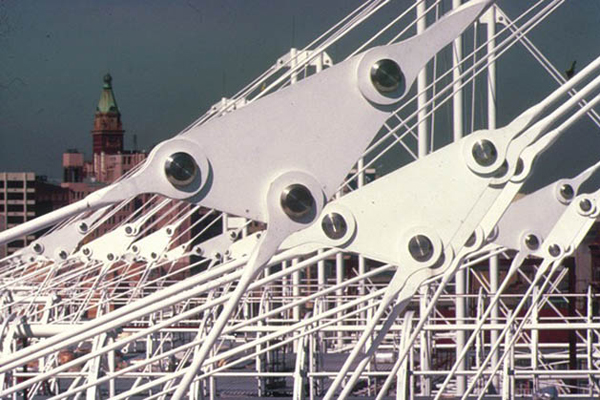
Sydney Exhibition Centre – Sydney, Australia © D Moore
Despite protests from numerous architects, both in Australia and abroad, the centre is set to be bulldozed to the ground at the end of this year to make way for a larger complex.
It’s not hard to see that the demolition is playing heavily on Cox’s mind. “It’s my main disappointment at the moment,” he says, rubbing his forehead. “I’ve contacted various government departments, but they seem to ignore me. All I’ve been told is that the die has been cast and nothing will stop the wrecking ball. It’s a great tragedy because what it’s being replaced by is very indifferent architecture that does nothing towards furthering Sydney as a world city.”

National Maritime Museum – Sydney, Australia
Cox says the Exhibition Centre was one of the first buildings designed as a tensile form. “Twenty years ago the technology was still being advanced and so the centre represents a place in time in both architecture and engineering.”
Another current annoyance is the multi-billion dollar development of Barangaroo, along Sydney’s former ‘Hungry Mile’. “It’s an ill-conceived, massively lost opportunity,” he says. “Barangaroo is a stupid urban resolution that doesn’t address the water, doesn’t contribute to the city, and doesn’t provide the amenity or the links to the city that are required to make it a viable spot.”
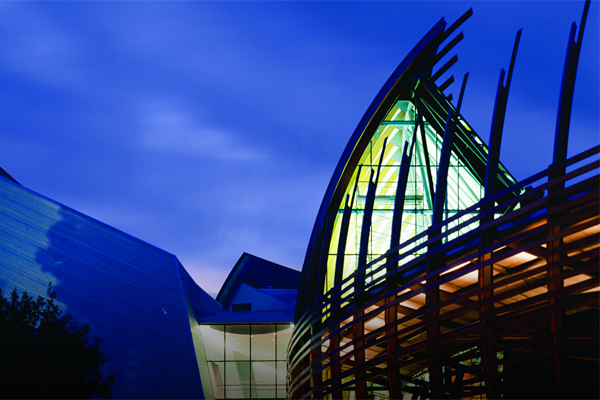
National Wine Centre – Adeliade, Australia
He adds: “Barangaroo will destroy the scale of Darling Harbour, which was essentially of a human scale and restricted by set-backs and development into the CBD. “I only hope that the citizens of Sydney, who currently enjoy Darling Harbour, will drift along to Barangaroo and activate it, but I can’t see it happening.”
As to Barangaroo’s built environment, Cox is less than convinced. “I’m worried about the scale and quality of architecture at Barangaroo. I hate the idea of the Packer intrusion into it. And the faux headland is a joke. Anything faux is suspect. You could say the present government has absolutely fucked up the entire waterfront between the Haymarket and Millers Point…the whole length of the city.”
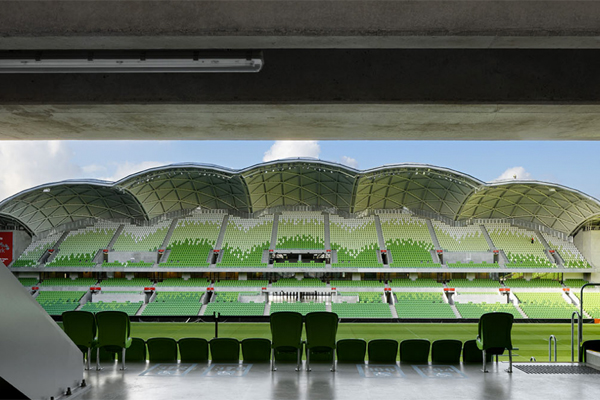
AAMI Park – Melbourne, Australia
So what would he have done differently? Cox believes the headland should have been punctuated by a landmark building (just as the Sydney Opera house punctuates Bennelong Point) such as a museum of South-East Asia.
“The collections we already have of New Guinea, Oceania, Indigenous Australia and Torres Strait, are immense, and more than rival Quai Branly in Paris, in scale and scope,” he says. “So why wouldn’t you increase cultural tourism in Australia with such a museum? Not everyone who comes to Sydney wants to cuddle a koala and go to Bondi.”
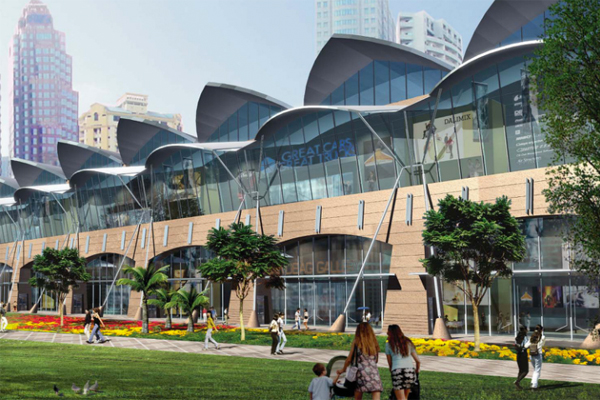
Kuala Lumpur Convention Centre – Kuala Lumpur, Malaysia
Cox says at 73 he has no plans to retire. His practice is working on a masterplan for the Royal Botanic Gardens and Domain in Sydney, and he has a couple of major projects on the go overseas, including Puteri Harbour in Malaysia and the urban design for the central area of Singapore.
“From the age of 70 you know that your life is limited and there’s a certain desperation that develops in that you want to do this, this and this,” he says. “It’s the acceleration of life rather than the slowing down that is the issue. Even though your body might be breaking up, the determination not to miss out on any experience is greater. You start ticking off what you didn’t do and what you want to do.”
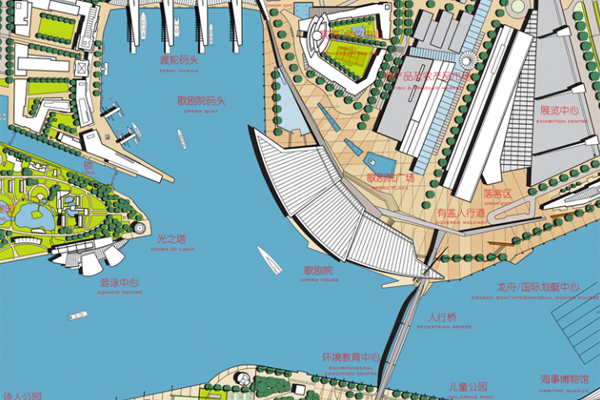
Ningbo Masterplan – Ningbo, China
And what about architectural regrets? “The Star Casino,” he says without hesitating. “It was a disaster, because we had to work with American architects. I just wouldn’t ever, ever involve our firm ever again in such an enterprise. I don’t believe in them (casinos). At that stage I didn’t care, but over the years I’ve realised they are an evil part of our society, causing misery. And aesthetically I hate it; it’s my worst building by far.”
COX Architecture
Philip Cox Portrait © Anthony Browell
Images © Cox Architecture unless otherwise stated