The home of architecture and design in the Asia-Pacific
Get the latest design news direct to your inbox!

Get the latest design news direct to your inbox!
Indesignlive sits down with Pritzker Prize laureate Glenn Murcutt, in the newly opened MPavilion, to talk about concept development, collaboration and designing through observation and curiosity.
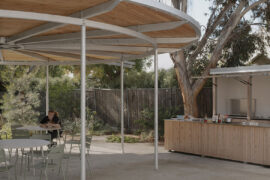
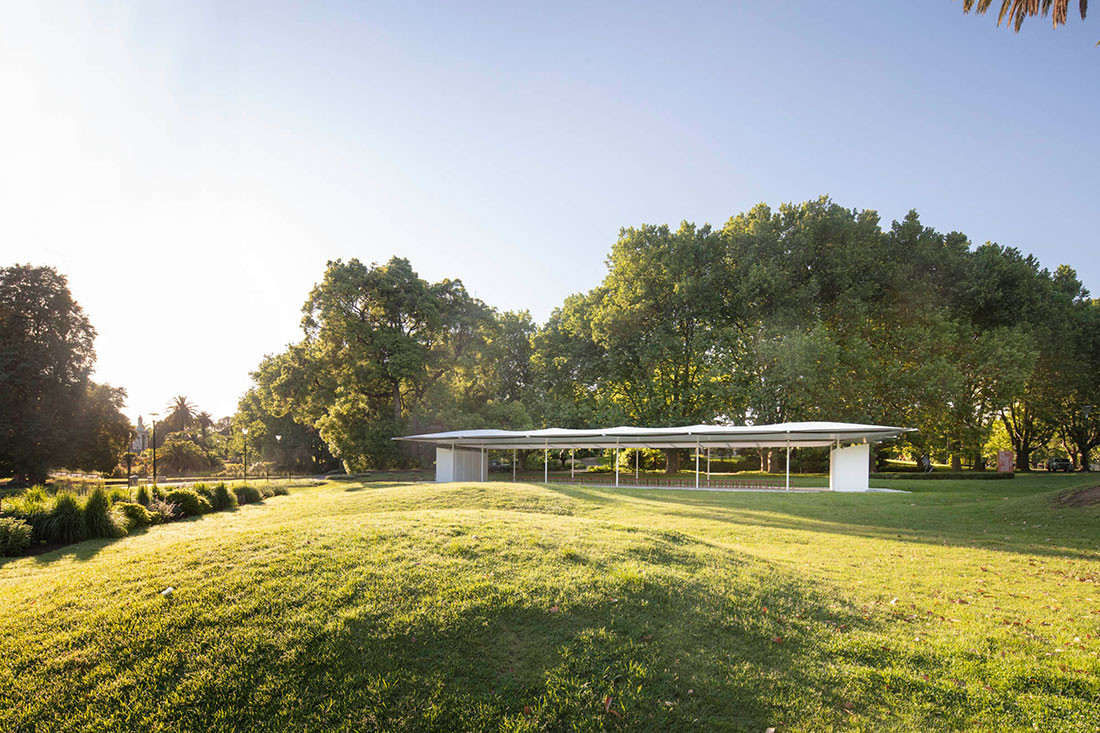
The 2019 MPavilion has officially opened in Melbourne’s Queen Victoria Gardens. Founded in 2014 by the Naomi Milgrom Foundation, the latest temporary pavilion is the sixth incarnation of MPavilion and has been designed by Australia’s only Pritzker Architecture Prize recipient – Glenn Murcutt AO. This year also marks Murcutt’s fiftieth year of practice, a momentous milestone for an architect that has inspired generations of architects with his ‘touch the earth lightly’ approach.
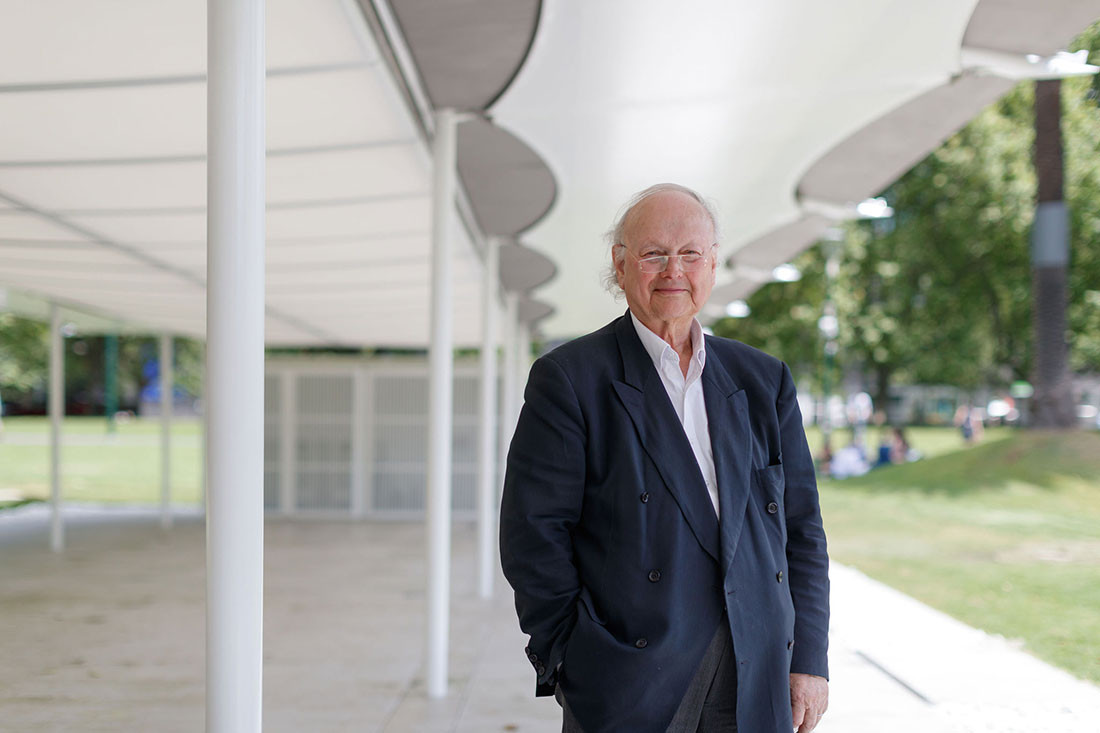
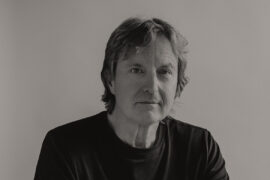
Portrait by Timothy Burgess
Glenn Murcutt: The first thing I did when I received the commission from Naomi Milgrom, was to look up the definition of a pavilion. So I looked it up in the dictionary and it said: ‘A pavilion is usually an open building, a shelter of sheets or fabric, or other material draped over and attached to a frame of poles, a light open building for shelter, for concerts, exhibits as in a park, a large tent, often elaborate, a large decorated tent.’ Another dictionary said: ‘A building in a garden used on special occasions, a light temporary or experimental structure, usually in gardens and pleasure grounds. A French word, pavilion comes from papilion as in a butterfly or moth wing.’ So these were some of the ideas that became the starting point.
The other thing I thought about was about how the building could become an object in itself, set within the landscape. So the park flows through the building, and the building hardly interrupts the park. The park and the landscape moves through it.

The idea for the design came to me very quickly from a memory I had in 1986. It was in Mexico, in Yaxchilán, we had taken a light aircraft to see some ruins that were being restored. When it came time to have lunch we looked out at the grasslands and the sun was beating down, it was very hot, we were in the tropics, but the aircraft wing was casting a shadow on the ground. That shadow established a sense of place, and from there we brought out a tablecloth, and it started to feel like a room, we had the roof overhead and the landscape was all around. It was the most beautiful experience. And from that experience, my mind went back to it when I was designing this building.
It’s very important to me that all our collaborators are recognised. I only work with architects for whom I have great respect and we work equally in collaboration. I’m very insistent on that. I want them to be contributing at every level of the process of design so that they feel very much part, as I feel very much part of the project, and learning and picking up things from each other.
For MPavilion, the collaboration with the staff of the Naomi Milgrom Foundation was critical. It was an easy relationship and they have very good people working on it. And the builders, Kane Construction, were also wonderful, they completed it ahead of time and on budget. It was absolutely realised in the most efficient way, not a single crossed-word on the whole project.
I think that pure curiosity, enthusiasm and observation are key. Observation has been my great learning experience, and nature has been my great teacher.
I don’t like to use the word sustainability, I like to use the word responsibility. A key consideration is the notion of warming in winter and cooling in summer – the orientation of buildings and adjusting them to work with the climatic zone that they’re built in. Another area of that is about spaces and light quantity, to get natural light is another area that should be capitalised on. And then in the design, there is the prospect, the refuges. Prospect and refuge are very important things and I’m very interested in producing works of architecture that are a response to the place and not an imposition.
For MPavilion, the length of the building is positioned very close to north, which means it gets very deep shade throughout the day in summer and I get very good sun in through inside the pavilion in winter.


MPavilion is commissioned by the Naomi Milgrom Foundation, with support from the City of Melbourne, Victorian State Government through Creative Victoria and Development Victoria, ANZ and RACV.
MPavilion runs from 14 November 2019 to 22 March 2020, check the website for programming details.
INDESIGN is on instagram
Follow @indesignlive
A searchable and comprehensive guide for specifying leading products and their suppliers
Keep up to date with the latest and greatest from our industry BFF's!
The internet never sleeps! Here's the stuff you might have missed