The home of architecture and design in the Asia-Pacific
Get the latest design news direct to your inbox!

Get the latest design news direct to your inbox!
Daniel Thompson believes inclusive design has an exciting and important role to play in helping shape our built environment. Here’s how.

Photography by Raphael Renter, via Unsplash.
March 22nd, 2022
Inclusive design has an exciting and important role to play in helping shape our built environment, so it better serves all our communities, and acts as a catalyst for broader and positive change. And here at Warren and Mahoney, as we recently celebrated Aotearoa’s Pride Festival and Australia’s 44th Mardi Gras, I was reminded how hugely beneficial embracing diversity can be as an organisation, and through our project work – where small but considered details can create big impacts.
Personally, as I reflect on Pride, what it means in 2022, and the rich celebration that it has become, for me it truly showcases how people yearn for connection and evolve in the expression of that connection.
I am inspired to consider the role we can play as architects and designers in bringing this connection and progress into our buildings and spaces.
Daniel Thompson
Like people, some of our buildings remain in their original form, while others redevelop on high rotation. But, for periods of time our best buildings, places, and spaces exist as monuments of human achievement and the physical manifestation of culture and creativity. And as an ambitious architect, I believe the buildings and spaces we create should aspire towards progressive ideals, built to inspire, and provide equal (and amazing) experiences for all.
This of course doesn’t need to mean grand gestures. As designers, we have the power to make everyday moments easier and more equitable and this is not a responsibility to be taken lightly.
Importantly, we also consider the details, how these spaces may be represented in terms of iconography. For example recently, when we specified unisex or inclusive bathrooms, we moved away from dressing stick figures in skirts or trousers and used simple iconography of the toilet: the very thing housed in that room. It is after all, the small things that can contribute to big impact.
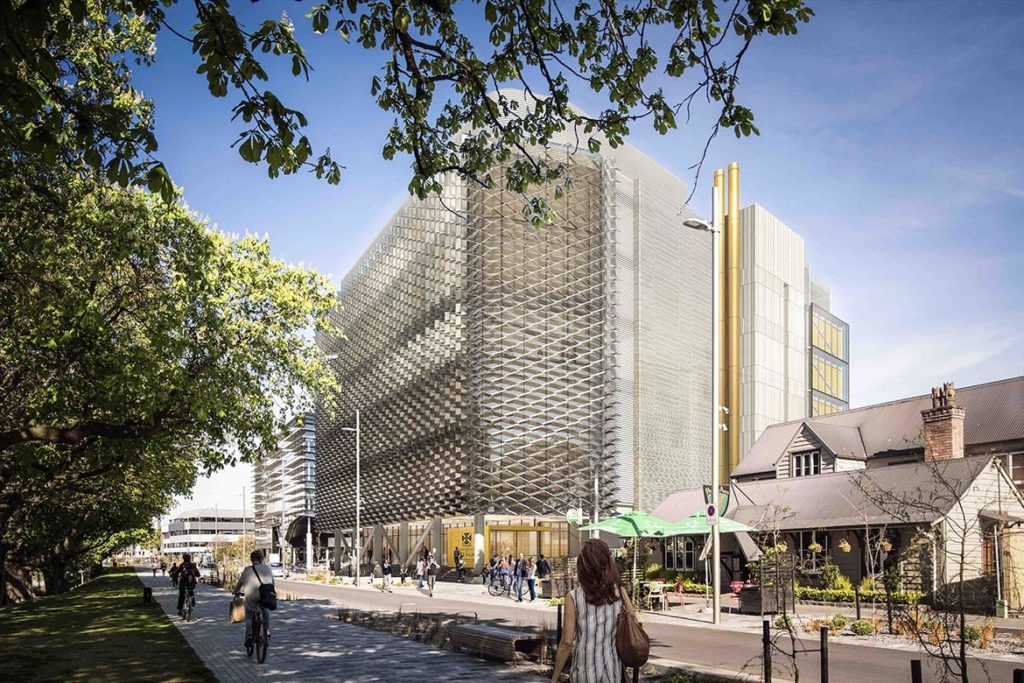
Our Christchurch studio recently looked at how we foster greater social inclusion at the University of Otago’s Campus redevelopment project in Christchurch (pictured here). This initiative was conceived in partnership with the university and sought to build upon its current design standards to bring fresh perspectives and enhancing end-user outcomes.

Specifically, the university recognised its responsibility in training future health professionals to not only be great practitioners, but also leaders in cultural and social understanding. As such, educating them in an environment that demonstrated respect, openness, and safety for all was vitally important. To achieve this, we piloted a new user group which we called the Social Accountability Group which sought to gather broader views, embrace diversity, and join up conversations.
Through the Social Accountability Group, we engaged in a more holistic manner where culture, ability, faith, sexual orientation, gender, and wellness were talked about in a far broader sense. And this started to open much deeper conversations about how buildings can better support and represent all the people that occupy them.
Our discussions included themes around fundamental inclusive design principles, such as unisex toilets, accessible shower facilities, wellbeing rooms, multi-faith spaces, display spaces, parenting rooms and accessible storage.

We also delved further into neurodiversity and mental health needs with the design response, embracing biophilic design principles and providing spaces for retreat, as well as low sensory environments.
Critically, we also understood that accessibility for one group, should not come at the cost of alienating others.
Daniel Thompson
The design throughout provides facilities to cater for the broadest cross section of society. Unisex or inclusive toilets can benefit everyone, with upgraded privacy for users and increased space efficiency for our clients.
In this project, by embracing a progressive project aspiration and bringing this to life through a rich and diverse consultation process, we were able to create spaces that provided more inclusive, universal, and fundamentally better design outcomes.
Great inclusive design benefits all the building users without compromise, and as we reflect on Pride and what it can mean to the profession, this must be something we strive for in all projects.

Daniel Thompson is a senior architect with Warren and Mahoney in New Zealand.
All project images: The University of Otago Christchurch Campus Redevelopment designed by Warren and Mahoney, courtesy of Warren and Mahoney.
Warren and Mahoney
warrenandmahoney.com
We think you might like this thought leadership piece by Warren and Mahoney principal, Simon Topliss.
INDESIGN is on instagram
Follow @indesignlive
A searchable and comprehensive guide for specifying leading products and their suppliers
Keep up to date with the latest and greatest from our industry BFF's!
The internet never sleeps! Here's the stuff you might have missed