The home of architecture and design in the Asia-Pacific
Get the latest design news direct to your inbox!

Get the latest design news direct to your inbox!
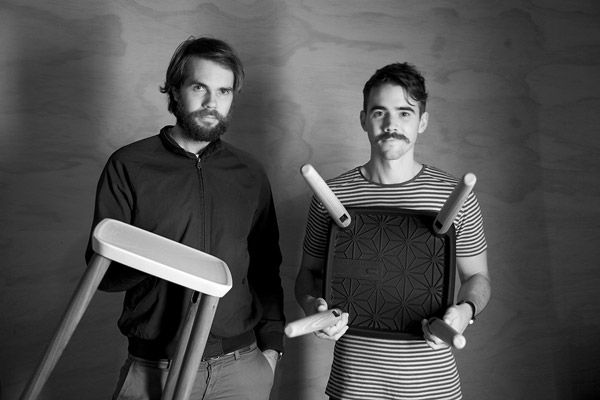
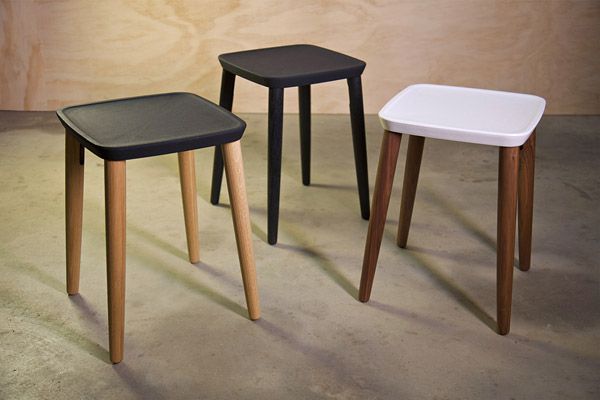
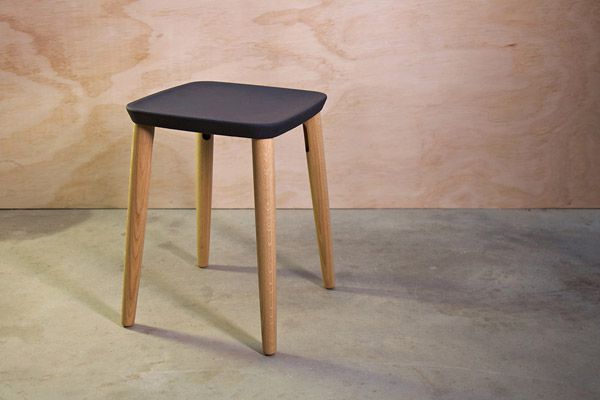
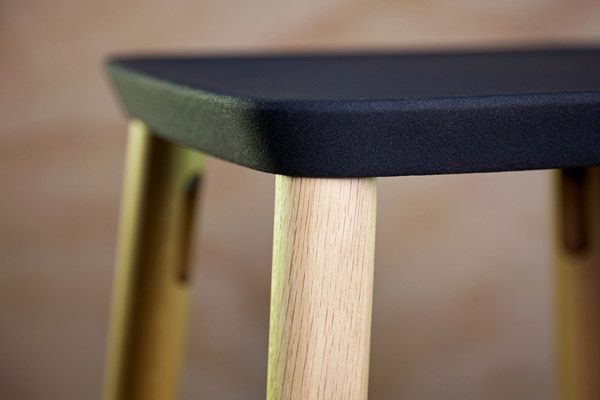
Winners of the People’s Choice Award at the 2015 Australian Contemporary Emerging Design Awards for their Grain Stool, industrial designers Callum Campbell and Jack Flanagan share their creative processes and inspirations.
January 22nd, 2016
When did you know you wanted to work in the design industry?
CC: I suppose the defining moment was on my 18th birthday when I received my first piece of furniture, a red Eames LCW. I remember picking it up from the showroom and being blown away by how historically significant it was. It did however take me another three years of staring at that chair before finally realising I wanted to create objects just like it.
JF: I grew up being fascinated with engineering and how objects were made. I really enjoyed aesthetic disciplines like art and sculpture, but it wasn’t until I was 20 years old that I realised that there was such an industry that I could combine these passions in a career.
What interests you most about your particular area of design?
CC: I really enjoy the hands-on nature of what I do. I find it deeply engaging experimenting with different materials, manufacturing processes and technologies. It’s also profoundly rewarding completing a project you’ve nurtured from conception to a physical object you can interact with. It’s a rather unique feeling.
JF: The most satisfying element of industrial design is solving a problem in a way that is beautiful in form, function and manufacture. The journey that leads to this also exposes you to the most interesting processes, materials and people.
What is unique about the way you work?
CC: Maybe the fact that I usually start a new design by developing its details first. I start with an idea of what I want the object to be then base the design around certain details and elements that determine and influence its form and construction. I mainly focus on elements such as texture, material interaction, joint detailing, smell and even sound resonance.
JF: When I am in the conception stage of a new product I visualise the three dimensional components and how they interact in my head a lot more than most other designers, which allows me to come up with design solutions at the strangest of times.
Biggest career moment?
CC: To be honest, I think that’s still yet to come. Exhibiting in London during the London Design Festival both in 2012 and 2015 was pretty cool though.
JF: I think the biggest career moments are the three times I have been selected to exhibit at the London Design Festival, because it’s assured me that I must be doing something right.
Who/what are your top influencers?
CC: There’s no question that I’m deeply influenced by the minimal qualities of the Scandinavian design style. However, I also like to think I find profound inspiration from anything and everything in my life. Architecture, jewelry, sci-fi movies, art installations, perfume and even emotions have all played roles in influencing many of my previous designs.
JF: Ronan and Erwan Bouroullec, Sebastian Loeb (World Rally Champion), Seinfeld, 60’s architecture.
If you could collaborate with anyone on any type of project, who would it be?
CC: Without a doubt, Thomas Heatherwick. There seems to be no creative limit to what he and his studio can achieve.
JF: John Lautner.
Callum Campbell
callumcampbelldesign.com
Jack Flanagan
jackflanagan.com.au
INDESIGN is on instagram
Follow @indesignlive
A searchable and comprehensive guide for specifying leading products and their suppliers
Keep up to date with the latest and greatest from our industry BFF's!
The internet never sleeps! Here's the stuff you might have missed