Established by former AIA Gold Medal-winner, Alec Tzannes, in the early 1980s, the eponymous Sydney practice has had what every solo practitioner setting out in the field of architecture wishes for – a tangible effect shaping places. In particular, the effect of Tzannes is admirably tied up with a very specific place, the city of Sydney. With the launch of a new book, Tzannes: Adaptive Urban Architecture and Design, it’s finally time to reflect upon decades of practice that have made a significant contribution to Alec’s hometown.
If you’re going to make a design book, then make it properly. This striking tome, with its textured and striking red cover, certainly does that. Designed by Daniel New and edited by Paola Favaro and Robert Freestone, it has not only a high design value but also packs some significant intellectual heft in its pages – a welcome and deliberate steer away from some of the more surface-level coffee table books that often overwhelm design publishing.

Tzannes contains writing from a number of UNSW academics and teachers, including Peter Kohane and Phillip Oldfield. Indeed, the breadth of writing is a standout feature of the volume. With a number of different writers, it’s very much closer to an edited collection of essays than a single voice uncritically celebrating the practice’s work.
The book begins by setting the scene of the Sydney that Alec grew up in, with notable detours to the Greek island of Kythera where he spent a formative junior year in the place of his family heritage. The ‘Studying Architecture: 1970-1975’ section describes it: “Alec’s early experience of the Greek island of Kythera had already awakened his sensibilities,” note the authors, Kohane and Mark Stiles, as they set the scene for his University of Sydney days. “As well as being impressed by the fort when visiting the island’s main town of Chora, he also valued the way that the town ‘worked.'”
Related: Tzannes in profile

Overall, we get more than a glimpse of how Sydney has evolved so dramatically in Alec’s lifetime, and what some of the early influences on his thinking about architecture might have been. The book covers this terrain both biographically and architecturally.
Chapters then move into two broad categories, residential and non-residential. From the early terrace house work in inner Sydney that brought initial renown to the larger projects such as Daramu House at Barangaroo, a number of important works and themes are explored in chapters covering topics such as Town Houses, Harbour Houses, Poetics and Performance and Street Furniture.

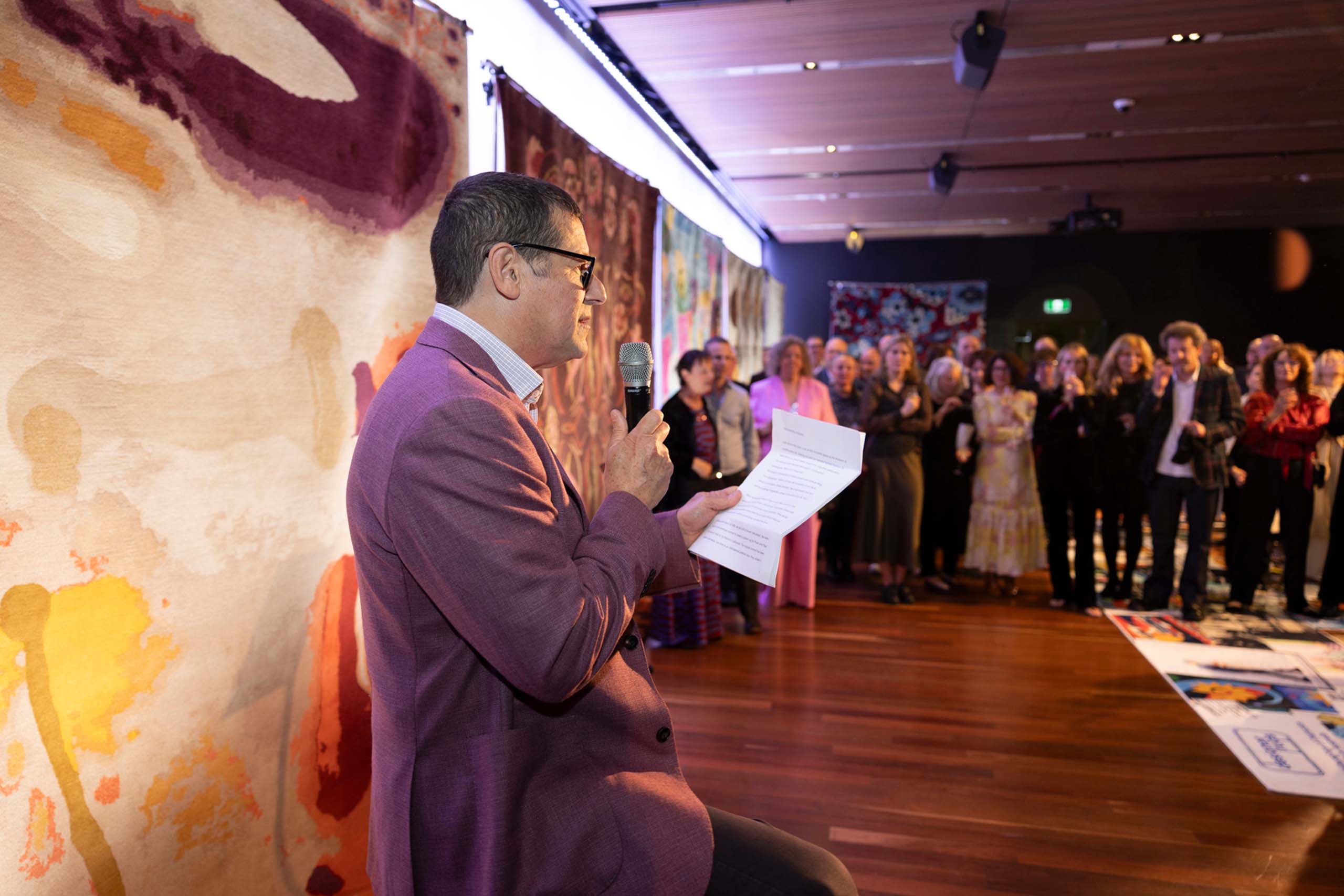
The book launch was celebrated with an event at Machine Hall in Sydney, attended by people from across the architecture and design community (with, we might add, a notable over-representation of the UNSW network).
“The work of Tzannes, the architect and the firm, has impacted our understanding and evolution of the city and propelled a thoughtful conversation about heritage, character and future potential,” writes Peter Poulet in the foreword.
Tzannes: Adaptive Urban Architecture and Design, edited by Paola Favaro and Robert Freestone, is out now.
Tzannes
tzannes.com.au
Photography
Linda Nguyen