The home of architecture and design in the Asia-Pacific
Get the latest design news direct to your inbox!

Get the latest design news direct to your inbox!
The upcoming exhibition Portraits + Architecture at the National Portrait Gallery in Canberra signals a growing national appreciation for the creative professions.
August 26th, 2009
“To expand the definition of what contemporary portraiture might be”: this is the aim, according curator Christopher Chapman, of the forthcoming Portraits + Architecture exhibition at the National Portrait Gallery (NPG).
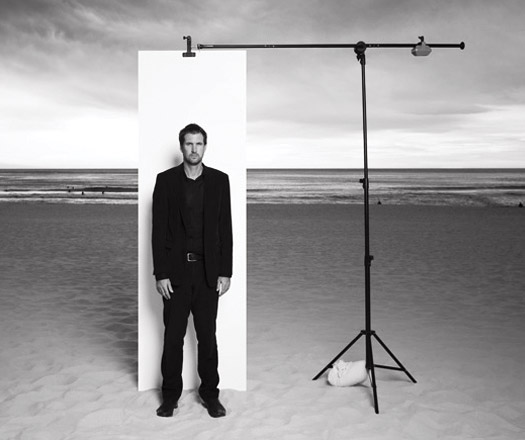
Brining together seven architectural firms of diverse size, geographical location and philosophy, the exhibition is formed in two parts; one asks the firms to find their own photographer – acknowledging pre-existing relationships – to photograph their architects, and the other asks each group to create an installation that is a ‘portrait’ of their practice.
The idea for the exhibition was floated a few years ago as the first in a series to explore Australia’s creative professionals.
“We thought that looking at the work of architects was appropriate – given we’ve just moved into a new building – but also that architecture is a profession that, at the moment, is quite relevant for what it has to say about sustainability, about lived spaces and about psychology of space,” Chapman explains.
As the portraits within the exhibition were taken by a number of different photographers, restrictions were placed on format – A1 black and white – creating a consistent element to the displays, tying together some diverse and individual interpretations.
“I think it’s fair to say that each of the teams we’ve selected has a unique take on what they do, and they’re teams that will be of long-term interest to the profession,” Chapman says.
“It’s a really exciting project for us here at the portrait gallery. We’re interested in doing exhibitions that complement the collection; that can expand and challenge expectations about portraiture.”
Portraits + Architecture will be on display at the NPG in Canberra from 11 September until 15 November 2009 with portraits of CO-AP, Denton Corker Marshall, Johnson Pilton Walker, Kerstin Thompson Architects, Sean Godsell Architects, TERROIR and Troppo Architects.
Hero Image: TERROIR: Gerard Reinmuth by Brett Boardman Image courtesy of the National Portrait Gallery, Canberra
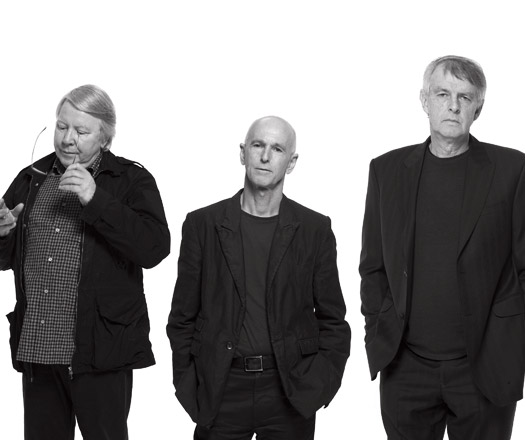
Denton Corker Marshall by John Gollings Image courtesy of the National Portrait Gallery, Canberra
Image Credits (Below):
1 – 3. Denton Corker Marshall by John Gollings Image courtesy of the National Portrait Gallery, Canberra
4. TERROIR: Gerard Reinmuth by Brett Boardman Image courtesy of the National Portrait Gallery, Canberra
5. CO-AP (Collaborative Architecture Practice) by Ross Honeysett Image courtesy of the National Portrait Gallery, Canberra
6. Johnson Pilton Walker: Adrian Pilton by Ingvar Kenne Image courtesy of the National Portrait Gallery, Canberra
7. Johnson Pilton Walker: Graeme Dix by Ingvar Kenne Image courtesy of the National Portrait Gallery, Canberra
8. Johnson Pilton Walker: Kiong Lee by Ingvar Kenne Image courtesy of the National Portrait Gallery, Canberra
9. Johnson Pilton Walker: Richard Johnson by Ingvar Kenne Image courtesy of the National Portrait Gallery, Canberra
10 – 12. Kerstin Thompson Architects by Luis Ferreiro Image courtesy of the National Portrait Gallery, Canberra
13. Sean Godsell Architects by Earl Carter Image courtesy of the National Portrait Gallery, Canberra
14 – 15. Troppo Architects by David Lancashire Image courtesy of the National Portrait Gallery, Canberra
INDESIGN is on instagram
Follow @indesignlive
A searchable and comprehensive guide for specifying leading products and their suppliers
Keep up to date with the latest and greatest from our industry BFF's!
The internet never sleeps! Here's the stuff you might have missed