The home of architecture and design in the Asia-Pacific
Get the latest design news direct to your inbox!

Get the latest design news direct to your inbox!
Elana Castle interviews Chris Tanner about Austrade’s mission to Indonesia to learn about the country’s current push towards green building development in the region.
May 26th, 2014
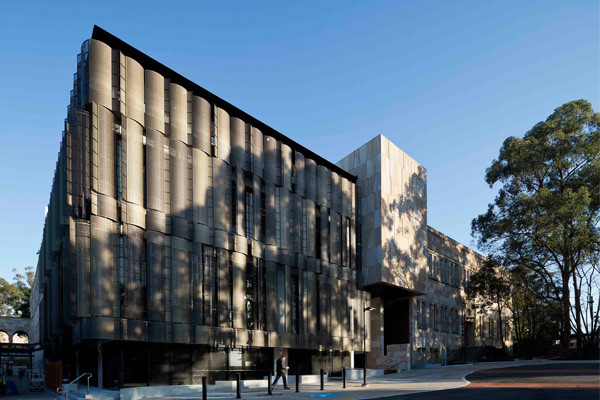
Above: The Global Change Institute at the University of Queensland is an example of Australia’s world leading expertise in environmentally sustainable building practices. The building was recently awarded a 6 Star Green Star rating from the Green Building Council of Australia. Structural & Façade Engineering: Bligh Tanner. Architects: HASSELL. Photograph: Angus Martin.
What is the nature of Indonesia’s “green” building push?
Indonesia recognises its role in the global context to combat global warming, with the world’s buildings responsible for producing approximately 40% of the earth’s greenhouse gas emissions. The Green Building Council of Indonesia believes the push is necessary as Indonesia is part of a global community that share the same responsibilities for preserving the earth and creating cleaner and healthier environments for current and future generations.
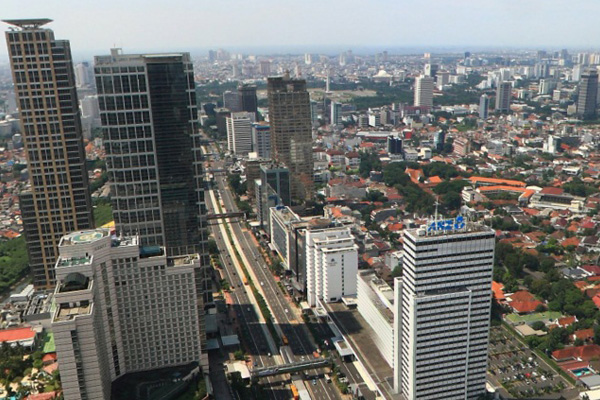
Jakarta City Skyline, photograph by Vian Kadal
How did Australian architects & engineers become aware of this initiative?
Austrade has a number of advisers throughout Australia including TradeStart which promotes these kinds of activities. This particular initiative was organised in conjunction with Trade and Investment Queensland with help from Matthew Lamprecht and Austrade’s Jakarta representative, Andree Surianta.
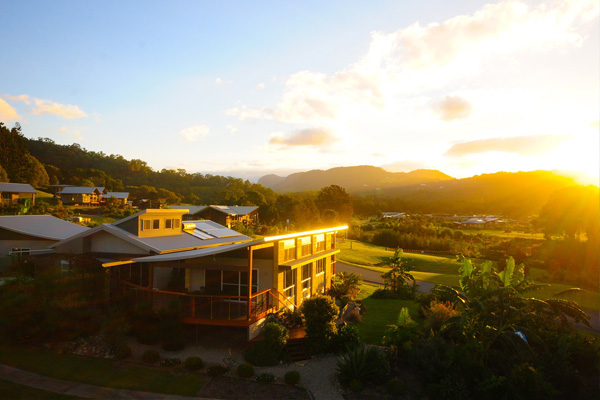
The international award winning Ecovillage at Currumbin inhabits a 270 acre site on the Gold Coast, comprising residences and community facilities including a hall, playgrounds, oval and café. It achieves self-sufficiency in energy usage and complete autonomy in water and wastewater recycling. Water and Environmental Engineering: Bligh Tanner. Photograph courtesy Landmatters Group.
How did the Austrade mission to Indonesia come about?
The mission was specifically designed for Australian companies involved in the planning, design and construction of environmentally sustainable buildings and for those interested in understanding first-hand green building development in the largest tropical country in South East Asia.
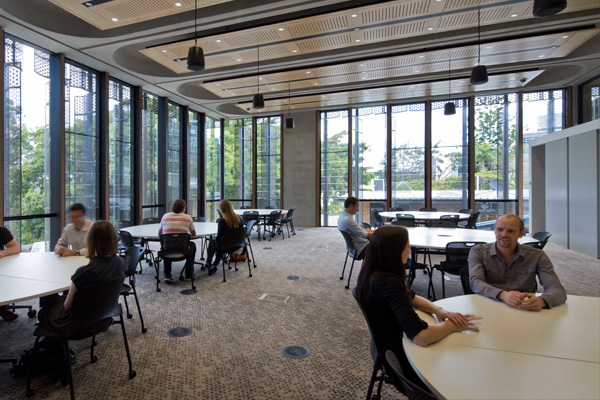 The Global Change Institute represents a world-first use of modern structural geopolymer concrete – a low-carbon product produced with significantly lower greenhouse gas emissions than conventional concrete. Bligh Tanner collaborated with project architects HASSELL and concrete manufacturer Wagners to precast geopolymer concrete floor panels which incorporate cast-in hydronic pipes that play an integral role in the low energy and passive cooling of the building. Photograph: Angus Martin.
What is Austrade’s goal in the region?
The mission was designed to learn from local experts and authorities and develop a first-hand understanding of market trends and key projects in Indonesia. This included being involved in GREENRIGHT 2014 – the biggest Green Building Expo and Conference in Jakarta – for direct exposure to stakeholders in Indonesia’s green building market. We also had access to the World Green Building Council – Asia Pacific Network, comprising members from 15 countries.
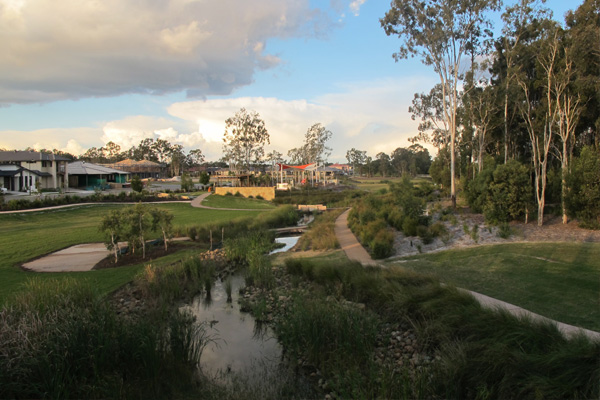
Bligh Tanner worked closely with Japanese engineers, JFE, Economic Development Queensland and the Queensland Water Commission to develop an environmentally friendly and cost effective integrated water management solution for a new 114 hectare housing development at Fitzgibbon Chase, 12km north of the city of Brisbane. The project features a non-potable stormwater harvesting system (the FiSH) and potable roof water harvesting system (PotaRoo) that are estimated to achieve a 60% saving on normal mains water use. It is recognised internationally as setting a new benchmark for creating water sensitive cities, attracting delegations from Japan, China, Korea, Malaysia and Israel who are keen to learn how Bligh Tanner was able to bring this project to fruition. Water and Environmental Engineering: Bligh Tanner. Photograph courtesy Economic Development Queensland.
What was Bligh Tanner’s project mission?
The focus is to become a key player in helping Indonesia resolve what appear to be intractable water issues. Bligh Tanner has played a significant and leading role in shaping the future of water management in Australia. We were the first small to medium enterprise to become a participating member of the Cooperative Research Council for Water Sensitive Cities – $120m program seeking to map out Australia’s progression to a Water Sensitive City. We are keen to ‘translate’ our knowledge and practical experience from Australia to suit the Indonesian landscape. It appears that many of the issues are similar, albeit guised in a cloak of a different language, culture and government, and we feel confident that we can make a real contribution. Following the Mission, Bligh Tanner was asked by the Green Building Council of Indonesia to help with the water management for a model ‘eco farming’.
Which other Australian firms are currently involved in this initiative?
Michael Ferris & Partners (architects), Vision Architecture and Thirkell Consulting Engineers and Building Designs.
Austrade
austrade.gov.au
Bligh Tanner
blightanner.com.au
The Green Building Council of Indonesia
gbcindonesia.org
INDESIGN is on instagram
Follow @indesignlive
A searchable and comprehensive guide for specifying leading products and their suppliers
Keep up to date with the latest and greatest from our industry BFF's!
The internet never sleeps! Here's the stuff you might have missed