The home of architecture and design in the Asia-Pacific
Get the latest design news direct to your inbox!

Get the latest design news direct to your inbox!
Spark dreams up a future scenario for Singapore – one where self-sustaining food centres will float on water, drawing all the energy they need from the sun.

September 18th, 2014
Stephen Pimbley has a vision for Singapore and its waterscapes, and it’s a bold one.
The Director of international design studio Spark has put forth a proposal for a floating food centre that is solar-powered and self-sustaining, and that can easily ‘pop up’ in any location around the island. It comes on the tails of the government announcement of a $11 million initiative to build floating solar islands in the country’s reservoirs.
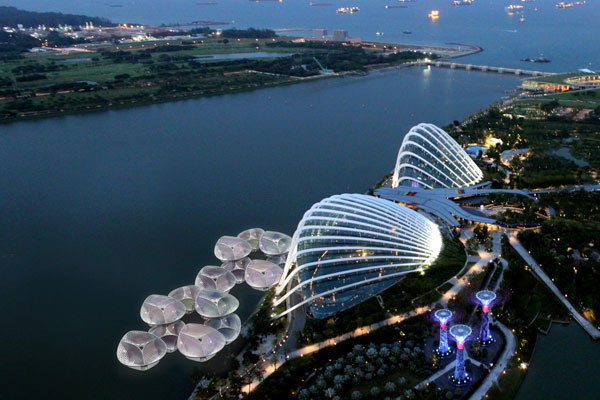
The idea behind Spark’s proposal is two-pronged. One, as Pimbley explains, was to find a way of ‘reanimating’ the city’s waterfronts. “ I feel that Singapore has turned its back on the river a little bit… and that this extraordinary resource for the city is not being used particularly well.”
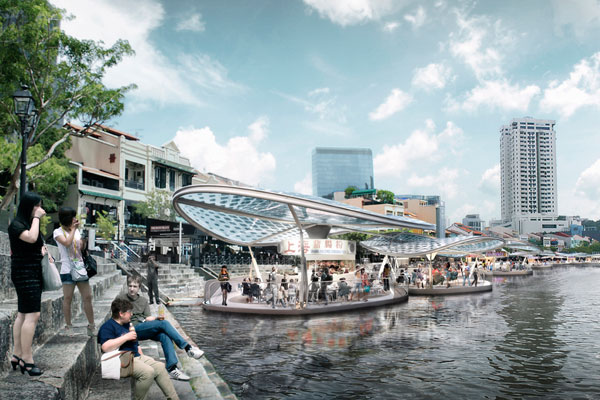
Another catalyst for the project, says Pimbley, was to help revive the waning food centre or hawker culture.

Code name ‘Solar Orchid’ in reference to the country’s national flower, the project comprises individual pods with a leaf-like canopy made of energy generating inflated ETFE pillow lined with thin-film photovoltaic cells.
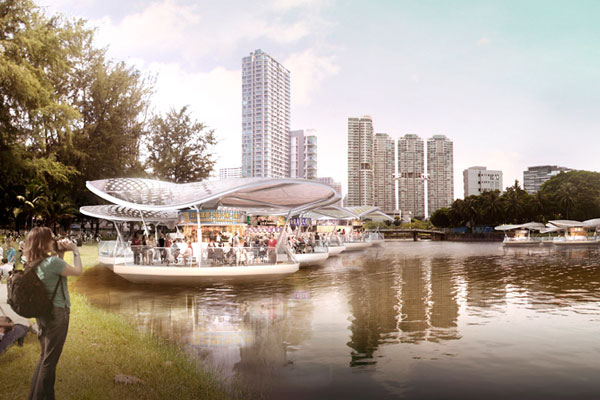
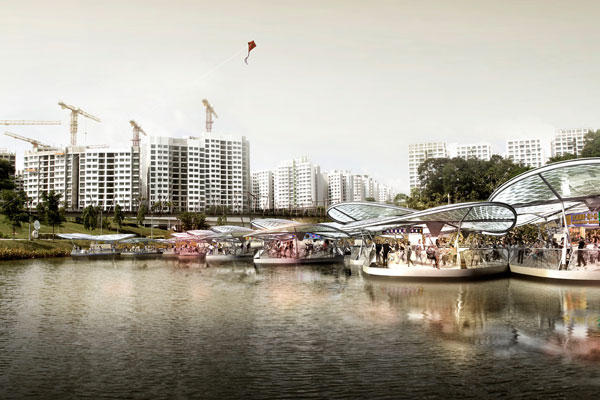
The Solar Orchids will each contain cooking stalls and table settings, and are designed to accommodate around 120 people. They can also be clustered together in various formations to respond to different locations and conditions.
“We have a duty as designers to develop and propose ideas and visions that can enhance our cities, as well as contribute to making them more liveable,” says Pimbley, whose first project in the ‘80s – with Richard Rogers Partnership in London (now known as Rogers Stirk Harbour + Partners) – was a reimagination of the River Thames with a concept of a new pedestrian bridge and landscape park on the river’s northern embankment.
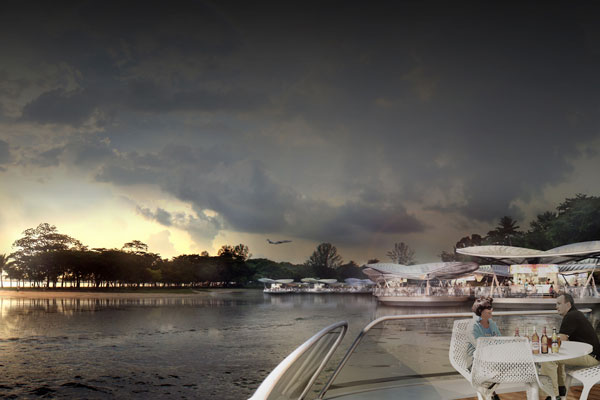
“For me, [proposals like Solar Orchid] are about us as architects saying we understand a little bit about the city, we like certain things about it, and we can add to it. It’s about generating an idea, a talking point… it’s about us celebrating what’s great about the city in a novel way.”
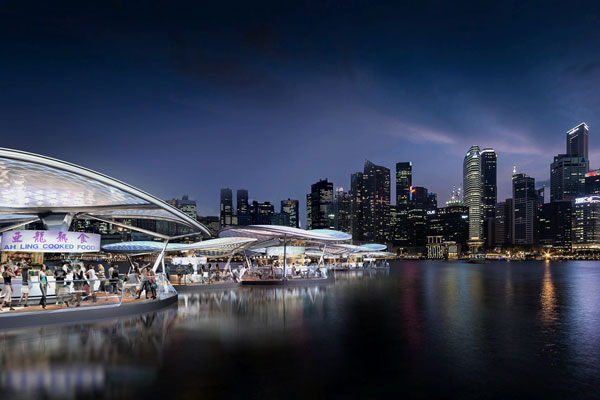
While it is anyone’s guess at this point if the Solar Orchids will ever get built, Pimbley makes the suggestion that the project would be a great way to mark Singapore’s 50th year of independence in 2015.
And so we wait…
Spark
sparkarchitects.com
INDESIGN is on instagram
Follow @indesignlive
A searchable and comprehensive guide for specifying leading products and their suppliers
Keep up to date with the latest and greatest from our industry BFF's!
The internet never sleeps! Here's the stuff you might have missed