The co-working space – a fairly new office typology – often has to strike the balance between maintaining individuality and creating communities. The 3,000 square-feet Metropolitan Workshop, which accommodates 64 people, provides a hot desk area shared between multiple users with rooms organised around it for private business activities.
According to Minako Lee from Muse Studio who spearheaded the design, the main difference between a typical office and a co-working space is that the latter needs more privacy. Lee says, “The challenge [for designing a co-working space] would be to avoid creating rooms that are too close to each other, while trying to reduce wasted space in the common area.”
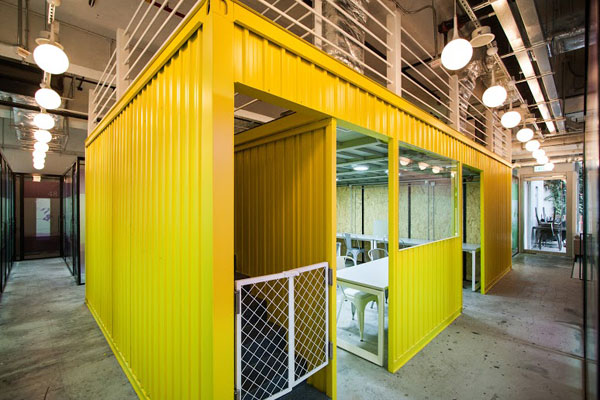
The hot desk area, located at the heart of the space, takes the form of a bright yellow container. It creates a stylish and cosy atmosphere for young business startups, and also helps to organise the interior spaces. Lee says, ”We can separate the [different] rooms by placing the container at the centre so that all the rooms are more private, while [being] connected to each other.”
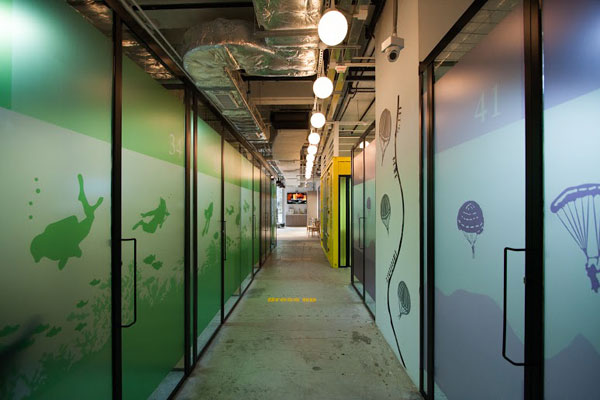
The private rooms around the container workspace accommodate two to three people in most cases. Translucent glass walls let light through, while the exposed ceiling with wire mesh reduces the feeling of confinement.
On the translucent glass walls are graphic prints depicting activities such as dancing, cycling, and diving. “The target customers [of the co-working space] are young people, so we would like to include patterns that suggest motion and are energetic,” Lee says.
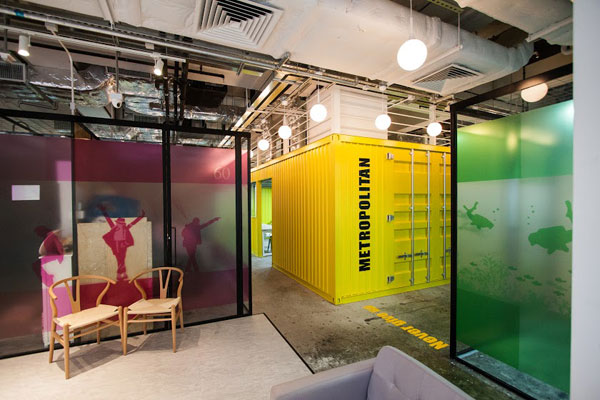
Apart from spaces for work, the Metropolitan Workshop also features a mini-club space that functions not only as the pantry, but also an area for informal meetings and relaxation.
The mini-club is located near an outdoor terrace. Lee says, “We have designed a mini-club space next [to the building’s existing balcony].” She adds that when the bi-folding doors between both spaces are opened, the mini-club can extend outdoors.
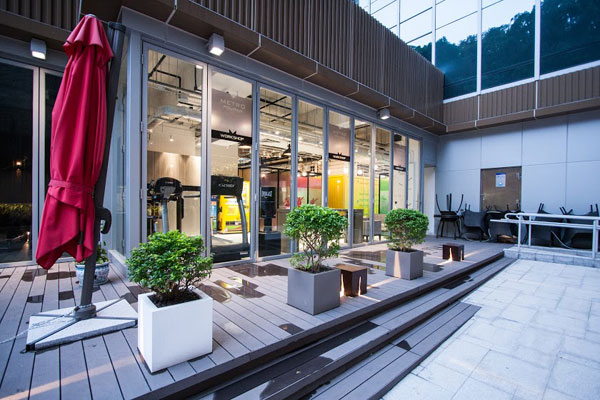
According to Lee, a cosy, relaxed atmosphere unites the different spaces in the Metropolitan Workshop. To create a cheerful ambience, vivid colours are employed throughout the space. Artificial materials are avoided in favour of recyclable and eco-friendly materials such as concrete flooring and recycled wood panels.
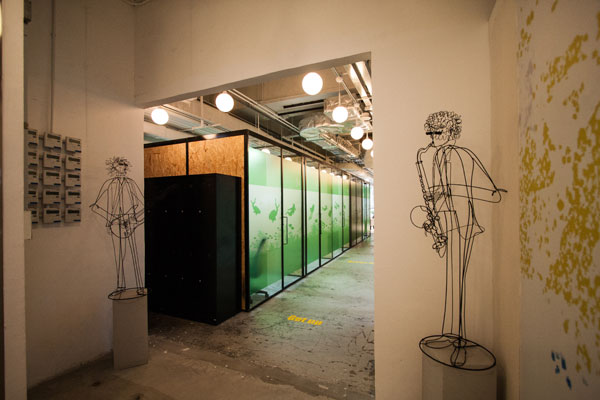
The custom designed letterboxes, as well as lockers in monotone, stand in contrast to the colourful finishing and furniture, making these facilities immediately identifiable. The grey letterboxes also form the letter “M” to make a playful brand statement.
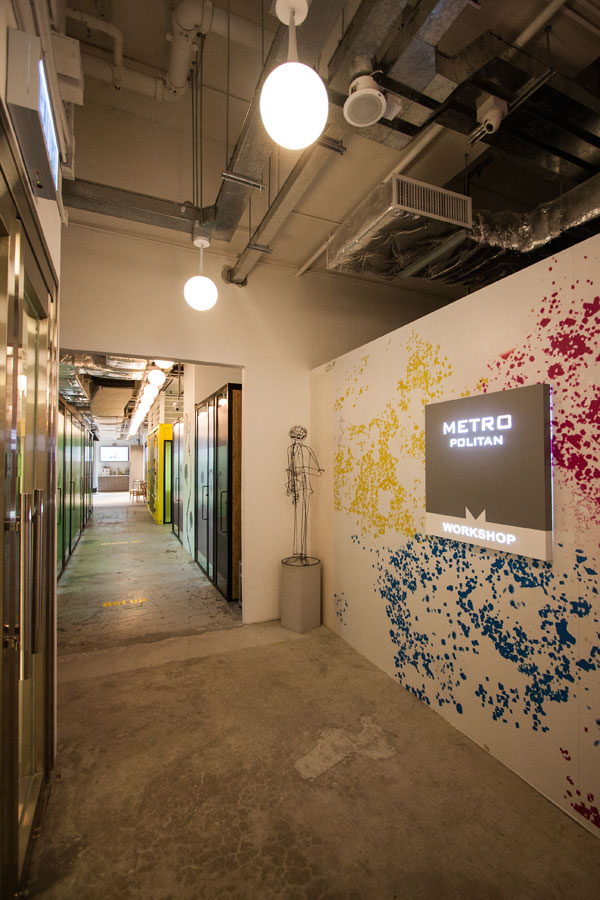
Targeting young entrepreneurs, the Metropolitan Workshop aims to be an efficient workspace that accommodates private business activities within a community. It aspires to be a space that protects ideas, while providing mutual support among different business starters.
Muse Studio
musestudio.com.hk