The home of architecture and design in the Asia-Pacific
Get the latest design news direct to your inbox!

Get the latest design news direct to your inbox!
Seven student designers were crowned at the HKDA Design NextGen Awards 2016. Projects proposed spanned ideas for a better world through the preservation of culture and human relationships.

June 22nd, 2016
Top Image: Motional In-Architecture – Circle by Gary Hon
The Hong Kong Designers Association (HKDA) marks 40 years of design advocacy with a new award incepted to spur on local design students. Titled HKDA Design NextGen Awards (DNA), the new scheme is essentially the student version of the coveted HKDA Global Design Awards.
Young designers were given the opportunity to flex their creative muscles. Submitted works spanned multiple fields of design, including Spatial & Environmental, Product and Graphic design. Out of over a hundred entrants, seven students emerged winners. Lai Yiu Sing received the Gold honour for his creative typeface, inspired by the architectural features of the Chinese temple, while Charles Lai received Silver for his branding proposal revolving around the simple fishing village culture of Tai O.
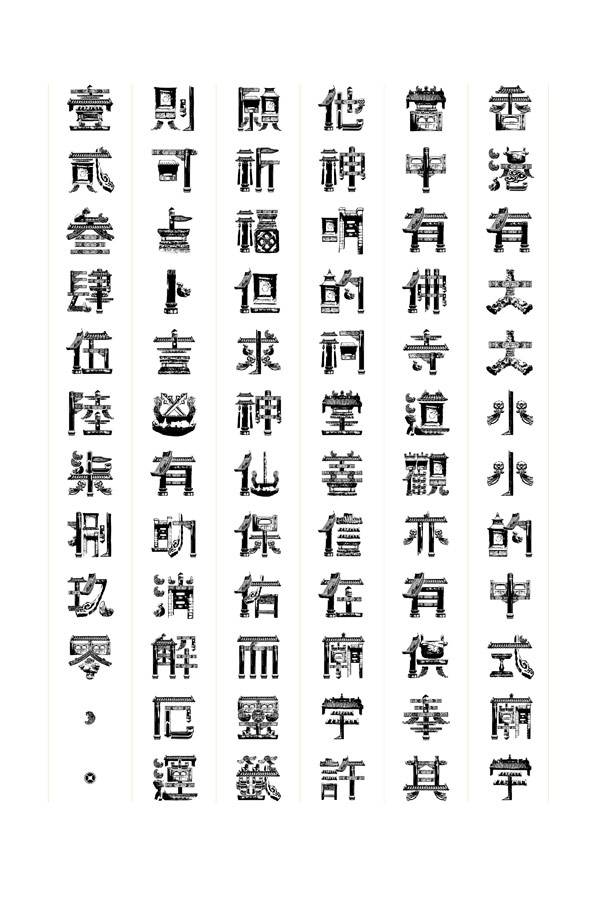
Temple-Type by Lai Yiu Sing
Gary Hon received the Bronze award for Motional In-Architecture, which comprises public seating inspired by basic geometry. The project generated three playful platforms designed for people to interact with one another, as well as with a physical environment that escapes the confinements of small living quarters in Hong Kong. The emotional experiment was born out of Hon’s views on the decline of the human touch and face-to-face communication due to the rise of virtual connections. Hon is a registered architect in Hong Kong and the co-founder of WOWOW Studio.
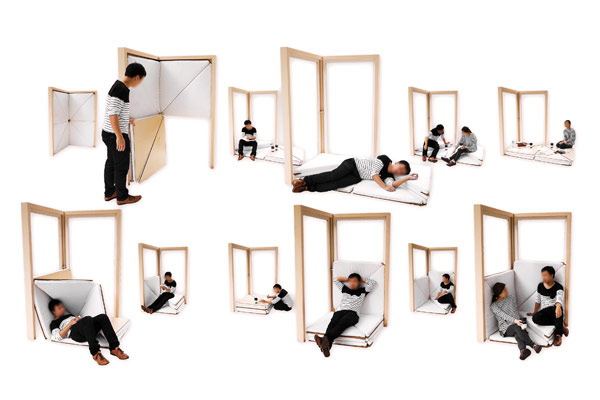
Motional In-Architecture – Square (patent pending) by Gary Hon
Izk Chan was awarded Excellence for Tranquil Resonance, a prototype of the Multi-Faith Space (MFS) Cultural Centre of Religion. The MFS is located at Tuen Mun River estuary – the birthplace of many early religious developments in Hong Kong. Chan extracted patterns from a synthesised track bearing traditional and popular music derived from various religions to form the geometric layout of the architectural design, resulting in an environment that promotes cultural unity.
Other winners of the Excellence award were Sophie Tang for her branding design of a tea merchandise and Kelly Lau’s fashion design inspired by Wu Zetian.
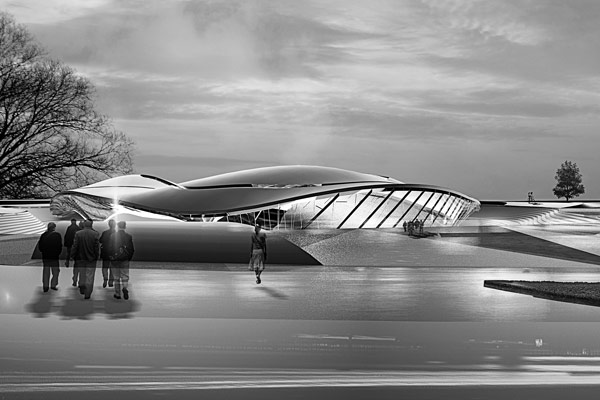
Tranquil Resonance by Izk Chan
Bagging the Full-Brain Innovator award, Gap Chung’s Unplanned Green Block centres on the use of unremarkable, but adaptive wild plants for urban landscaping. Having observed that the city currently uses purchased ‘ornamental plants’ that rarely survive harsh urban conditions, Chung’s Unplanned Green Block revolves around wild vegetation, such as moss and fern, which are self-sustainable and tolerant to urban pollution. His landscape designs of pavement blocks, alley and highway interventions offer a cost-effective, low-maintenance and ecologically viable solution for greening in the city.
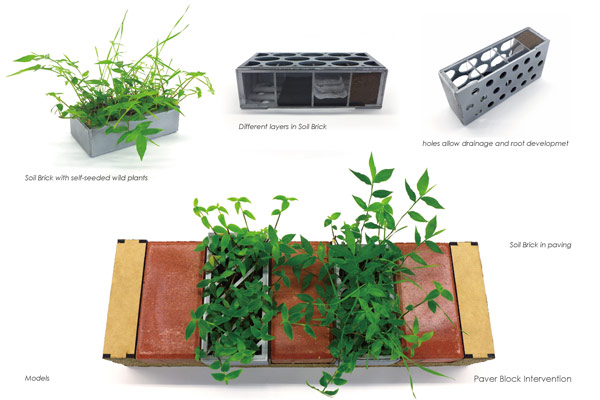
Unplanned Green Block by Gary Chung
An output of DNA 2016, the Next Design Exhibition showcases the works of 20 finalists. Encouraging students and young designers to constantly refine their work, the ‘Next Design’ theme was borrowed from Argentine architecture and industrial design master Emilio Ambasz, who famously said, “when an architect [and a designer] is asked what his best building [and work] is, he usually answers, ‘The next one.’”
The Best Design Educator Awards also made its debut this year, recognising motivational design tutors.
The Next Design Exhibition is held from 22 June to 5 July 2016 at the Art Mall Atrium, G/F, K11, 18 Hanoi Road, Tsim Sha Tsui, Kowloon, Hong Kong
INDESIGN is on instagram
Follow @indesignlive
A searchable and comprehensive guide for specifying leading products and their suppliers
Keep up to date with the latest and greatest from our industry BFF's!
The internet never sleeps! Here's the stuff you might have missed