The home of architecture and design in the Asia-Pacific
Get the latest design news direct to your inbox!

Get the latest design news direct to your inbox!
Virginia Lung, co-founder of Hong Kong based One Plus Partnership tells Christie Lee about her obsession with theme driven designs.

May 21st, 2015
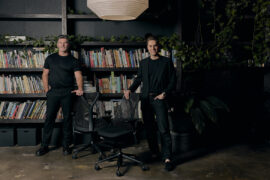
Top: Mr Ajax Law and Ms Virginia Lung, One Plus Partnership
Frank, energetic and articulate, Virginia Lung belongs to a new breed of Hong Kong designers who has crafted a design identity for herself. Born and bred in Hong Kong, Lung read architecture at the University of Oregon, but upon realising that she is “more interested in working with colours and materials,” decided to pursue a career in interior design.
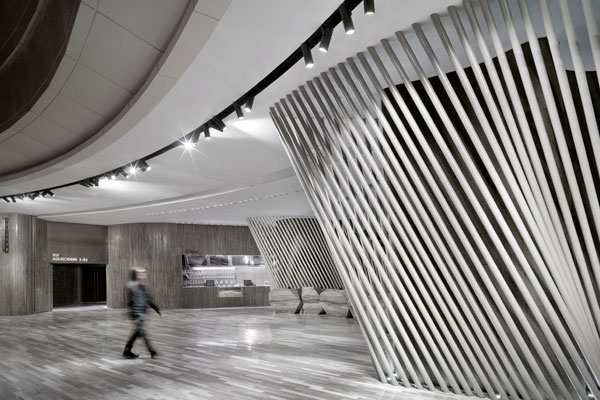
Coastal Cinema, 2014
After cutting her teeth at reputable studios such as Steve Leung Designers, she founded One Plus Partnership with her husband, Ajax Law in 2004.
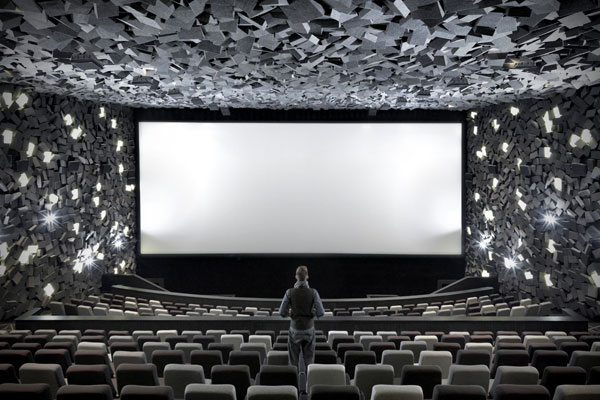
One Plus Partnership’s design approach is anchored by themes that inform the design direction of a space. Step into any of One Plus’s works, the spaces are picturesque, as if they belonged to a film set. A case in point would be the Chongqing Mountain + City Sales Office, where Hong Kong’s rugged terrains and urban energy is translated into the interior space through multi-faceted forms.
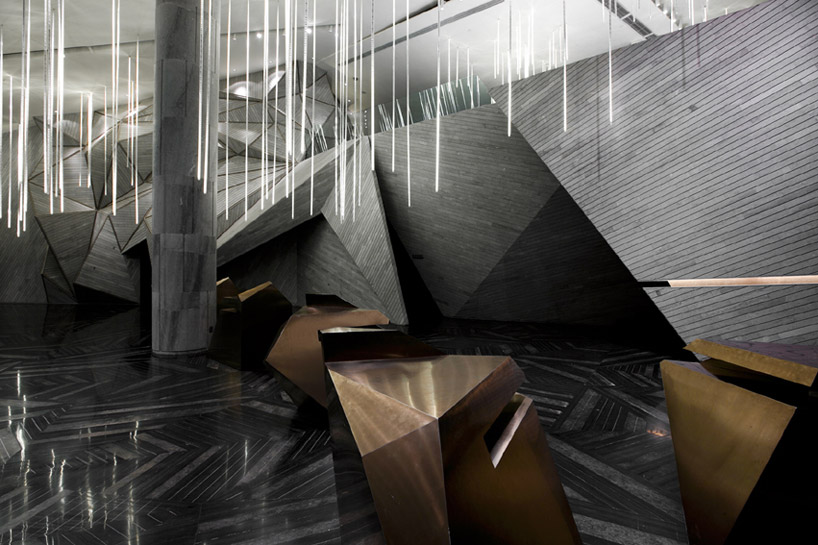
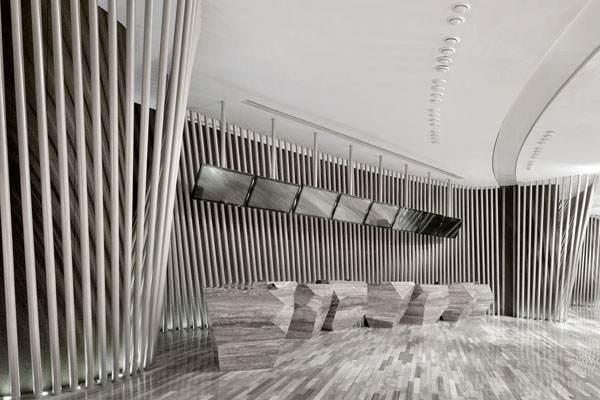
Chongqing Mountain + City Sales Office, 2011
What is One Plus Partnership’s design philosophy?
We are very much into theme-driven design, which is what makes each of our projects unique. Architecture and design shouldn’t just be beautiful or elegant.
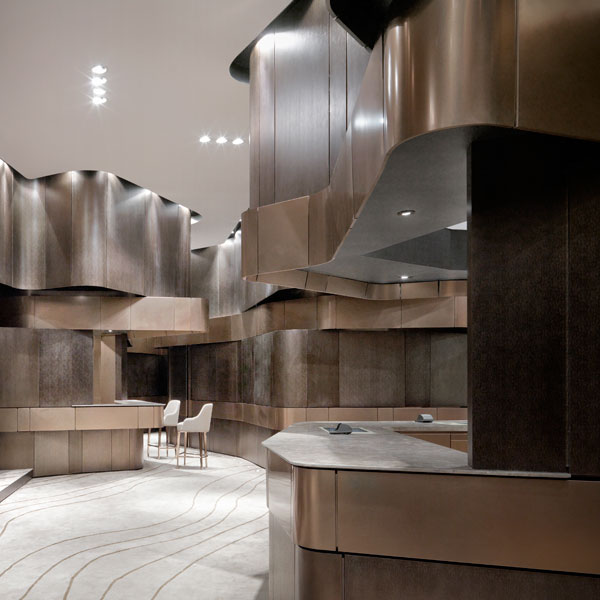
Coastal Private Club, 2014
Is that why you have focused on cinema projects?
We actually got our start with property developers, designing show flats and such. It wasn’t until later when our designs got bolder, did we start getting approached by cinemas.
Working with a cinematic space also allows us to be more experimental, as it is a place where people expect to see more abstract and outrageous designs.
You’ve designed cinemas in both Hong Kong and mainland China. Would you say that audiences in these two places are looking for different design cues?
The standard up north is generally higher because there is so much competition going on among all the different cinema houses and design firms. Due to the fast-paced economic growth, mainland Chinese audiences are also always on the lookout for the next big thing. Since cinemas are relatively small in Hong Kong, clients usually prefer a more elegant design.
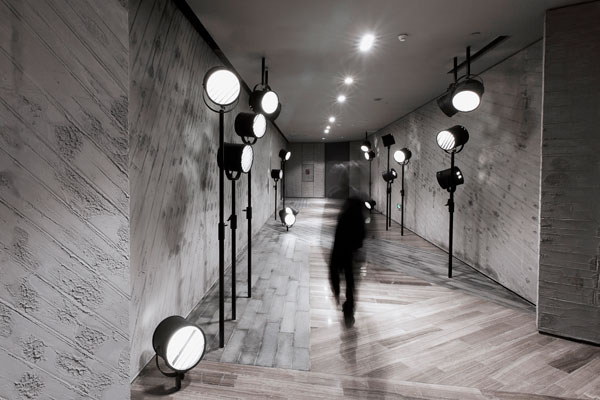
Luminary, 2014
What are the challenges of designing a cinema house?
There are quite a number of constraints. If you’re in China, building materials need to be of Grade A standard. In other words, fire-proof materials including marble, metal and glass need to be used instead of wood or fabric.
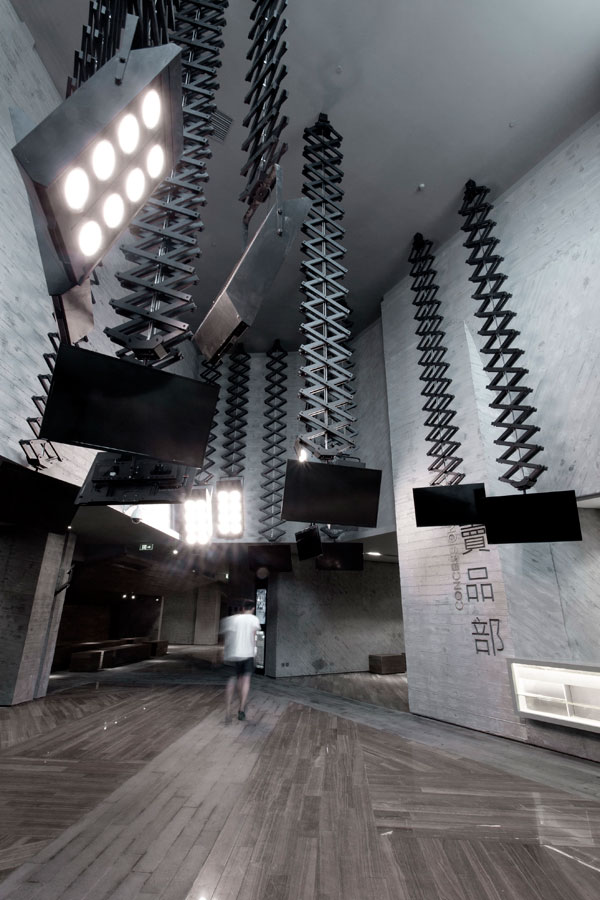
Luminary, 2014
Are you partial towards certain materials?
We don’t have a preference as that’s not our main focus. Rather, the challenge for us is to use whatever materials we have, be it wood or concrete, in unexpected ways.
What are clients looking for right now?
A lot of clients are going for an industrial aesthetic as that is where the [design] world is going right now. The thing is, it has been in places like New York for ages! We actually proposed adopting the aesthetic to one of our projects a few years back but it wasn’t accepted as the client didn’t think it looked “luxurious” enough.
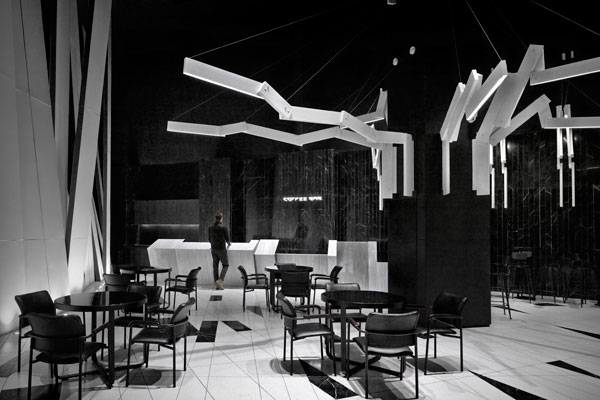
Stop Motion Café, 2014
What do you see One Plus Partnership in five years?
Expansion naturally! We hope to get a different type of client once every two years. Now that we have nailed cinema design, the next step would be restaurants and perhaps shopping malls.
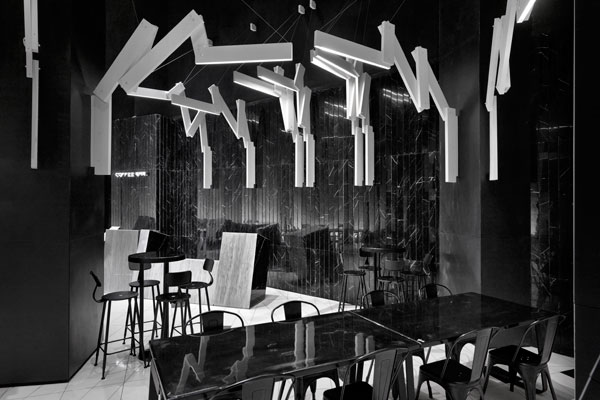
Stop Motion Café, 2014
One Plus Partnership
onepluspartnership.com
INDESIGN is on instagram
Follow @indesignlive
A searchable and comprehensive guide for specifying leading products and their suppliers
Keep up to date with the latest and greatest from our industry BFF's!
The internet never sleeps! Here's the stuff you might have missed