The home of architecture and design in the Asia-Pacific
Get the latest design news direct to your inbox!

Get the latest design news direct to your inbox!
After a highly successful debut last year, Sherman Contemporary Art Foundation’s Fugitive Structures programme returns in 2014 with two boldly innovative installations.
December 3rd, 2013
The second iteration of Fugitive Structures, opening in March and based on the concept of temporary built structures, features creative practitioners working at the cutting edge with new technology.
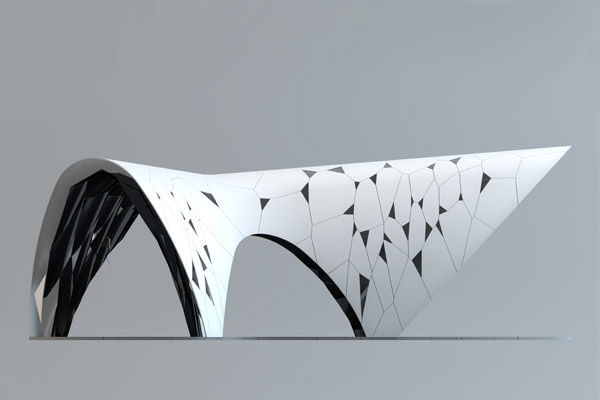
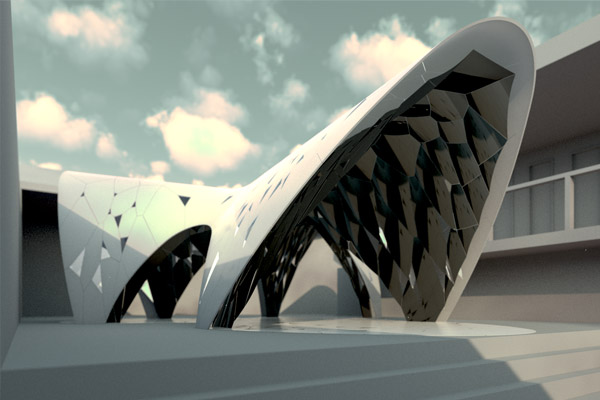
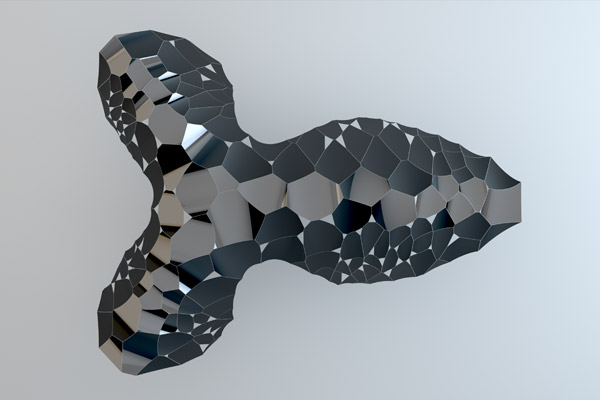
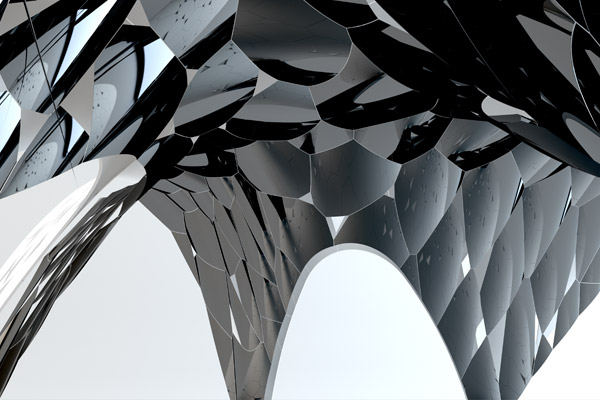
Designed by experimental architectural practice AR-MA (SCAF Project 20), the pavilion uses advanced computer design to fulfil a conceptual brief – developed by Dr Gene Sherman (Executive Director, SCAF) in partnership with BVN Donovan Hill – of a built structure that uses the most progressive technology currently available. A robotically formed, curved, Corian exterior envelope and 250 laser-cut cylindrical, black mirror-polished stainless steel interior panels are linked by digitally fabricated fixings to form what Dr Sherman describes as ‘an innovative structure based on state-of-the-art technologies offering functionality as well as a futuristic aesthetic.’ The pavilion has the flexibility to be a meeting place, an auditorium or a stage for the Foundation’s many events. This technologically advanced structure will take shape in the gallery’s Zen Garden and will remain until October 2014.
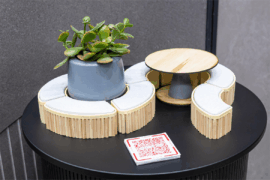
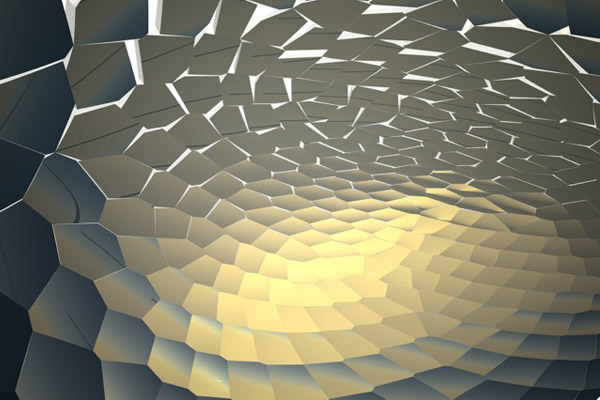
To complement the Zen Garden pavilion, multi-disciplinary architectural firm Archer Breakspear has designed Poly (SCAF Project 21), a series of itinerant forms that allow gallery visitors to ‘design’ their own environments in the internal exhibition space. Poly builds on the interactive theme that proved so popular with SCAF’s 2013 presentation of Olafur Eliasson’s The cubic structural evolution project, 2004, which encouraged visitors to construct a model city from 130,000 white LEGO blocks. Visitors will be able to move the Poly forms to create cubby-like enclosed spaces or collaborative groupings, which will be used periodically for the Foundation’s Culture+Ideas series of conversations, film screenings and events.
Later in the year, in an exhibition presented in association with the National Art School Gallery (SCAF Project 22) and simply titled Home, Taiwanese artists Chen Chieh-jen and Chang Chien-Chi will explore multi-layered contemporary notions of what the concept implies. Once thought of as a fixed dwelling, ‘home’ is now often seen in the context of separation, loss and alienation. Magnum photographer Chang Chien-Chi, based in Austria and the US, first showed The Chain, a series of photographs of Taiwanese mental asylum home inmates chained in pairs, at the Venice Biennale in 2001 where it created a sensation.
Home opens at both Sherman Contemporary Art Foundation and the National Art School Gallery 22 May 2014 and runs through to 2 August.
SCAF
sherman-scaf.org.au
INDESIGN is on instagram
Follow @indesignlive
A searchable and comprehensive guide for specifying leading products and their suppliers
Keep up to date with the latest and greatest from our industry BFF's!
The internet never sleeps! Here's the stuff you might have missed