The home of architecture and design in the Asia-Pacific
Get the latest design news direct to your inbox!

Get the latest design news direct to your inbox!
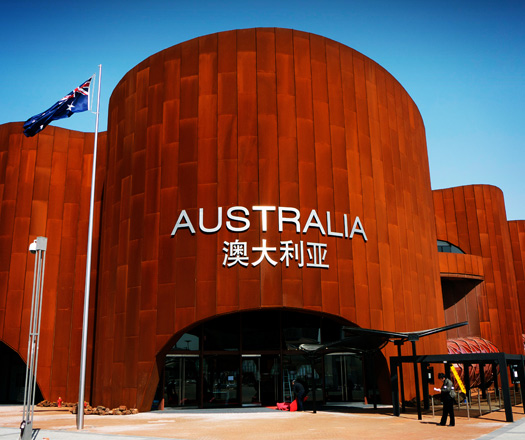
One city, 171 national pavilions, 5kms, 70 million visitors expected.
April 30th, 2010
Words: Anne Warr
Photography: Katarina Stuebe
Expos rise every five years to show us what the world can look like. They are ephemeral laboratories for experimenting with architecture and technology. At their best they poke a hole into the future.
Joseph Paxton’s Crystal Palace was a revolutionary glimpse at the possibilities of steel and glass back at the first World’s Fair in London in 1851.
Gustav Eiffel’s temporary entrance to the Paris Fair of 1889 continues to enchant, while Ludwig Mies van der Rohe’s pavilion for the 1929 International Exposition in Barcelona, pushed the limits of spatial planning for Germany’s Weimar Republic.
Buckminster Fuller’s geodesic dome symbolized space-age aspirations as the US pavilion at the 1967 Montreal World’s Fair, while Moshe Safdie’s Habitat ’67 showed us a new model for living at the same Expo.
The theme for the Shanghai Expo is “Better City, Better Life”, with a focus on sustainable ideas for cities of the future.
Shanghai itself has been working to become more sustainable in the decade leading up to 2010 by introducing an extensive underground metro system, now the 4th largest in the world, increasing its per capita green ratio, protecting its built heritage and improving water and air quality.
The Chinese pavilion, bigger than the rest, embraces the Expo theme with exhibitions relating to the growth of human communities in China, problems faced by modern-day societies globally and interactive displays that allow visitors to help plan China’s future cities of.
A final section shows how new technologies will contribute to building a better life for China’s more than a billion citizens.
Shanghai Expo 2010
en.expo2010.cn
INDESIGN is on instagram
Follow @indesignlive
A searchable and comprehensive guide for specifying leading products and their suppliers
Keep up to date with the latest and greatest from our industry BFF's!
The internet never sleeps! Here's the stuff you might have missed