The home of architecture and design in the Asia-Pacific
Get the latest design news direct to your inbox!

Get the latest design news direct to your inbox!
15 designers, based in London, ponder what the future holds for their city. UK correspondent Alaana Fitzpatrick reports.
July 8th, 2009
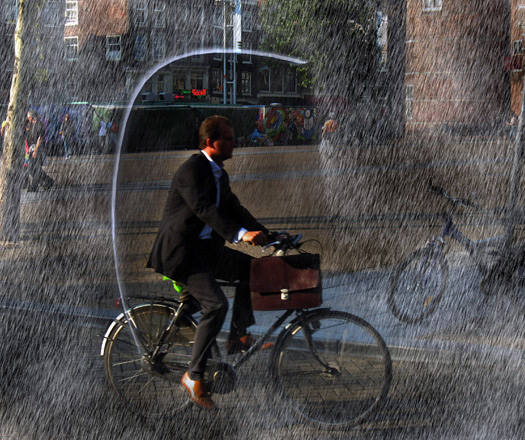
Conceptual, progressive and sometimes nostalgic, the ideas presented at the Design Museum’s Super Contemporary exhibition highlight the brilliance of 15 London-based creatives. Simply asked to respond to the question, “What would you give back to London?” the outcomes were as diverse as the backgrounds of the people involved.
Fashion designer Paul Smith reconsidered the approach to waste. Rather than another instructive device, he created a positive garbage bin (in the shape of a rabbit) that would respond in an encouraging manner when waste is deposited.
Tom Dixon explored the benefits we would reap if electric engines were installed in the cars we drive. As a case study he remodelled a vintage Bently with the engine of an old milk float (apparently a perfect match for weight/size/mechanical simplicity – but I’ll take his word for that).
Thomas Heatherwick’s ‘Lamp-post Chandelier’ would be a welcome addition to any public space and BarberOsgerby’s ‘Listening Station’ opens up a world of opportunities.
Sounds broadcast from the other side of the room were caught by a giant dome, and redirected to a set point where (if ears were positioned correctly) people were amazed at what could be distilled from the rest of the noise going on around. Perhaps this is a sign of our times – but I see that being particularly well adopted by advertisers wishing to cut through the clutter.
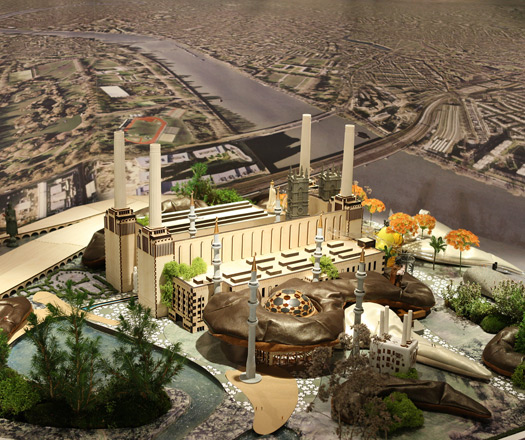
Other respondents were more abstract in their approach. Zaha Hadid’s simulation of a parallel London were somewhat intriguing and Ron Arad’s video, used as a tool to campaign for the return of the “neon tower” (which had been a prominent element of the landscape when he first moved from Tel Aviv), was a charming insight into the reverence he had for London’s history.
But the exhibition is about London’s future, and most beneficially, some of the ideas have been installed around London during the exhibitions duration – and who knows what may come of the rest? Wayne Hemmingway’s ‘KiosKiosk’ was situated just west of the Design Museum along the Thames path.
A competition invited designers to submit their products, and each winner was granted two days to sell their wares to the passers by – the perfect public showcase for upcoming English talent. Late May saw the unveiling of Smith’s new bin in Covent Garden, gimmicky, but bound to stimulate use.
Super Contemporary also housed a retrospective of significant designs spanning the ‘60s until today. Magazines with cult followings, record covers, architectural models and even political posters helped to place the future of London within the iconic framework of British design.
Design Museum and Beefeater 24 present Super Contemporary until 4 October 2009 at the Design Museum, London
designmuseum.org
Words + Gallery Images (below): Alaana Fitzpatrick
INDESIGN is on instagram
Follow @indesignlive
A searchable and comprehensive guide for specifying leading products and their suppliers
Keep up to date with the latest and greatest from our industry BFF's!
The internet never sleeps! Here's the stuff you might have missed

Presented by Woven Image