The home of architecture and design in the Asia-Pacific
Get the latest design news direct to your inbox!

Get the latest design news direct to your inbox!
JJ Acuna gives us a tour of the Frank Gehry: Fish Lamps exhibition, currently on show at Gagosian Hong Kong.
February 11th, 2014
Born in 1929, LA-based architect, Frank Gehry, needs no introduction. Being relatively the most populist of all starchitects of his generation, Gehry is also easily the most touchy-feely of the bunch. A straightforward practitioner, his exploration of form is unabashedly sculptural without the theoretical mumbo jumbo that guides the fluid works of Zaha Hadid, Peter Eisenmann, and Thom Mayne of Morphosis, for example.
The architect-as-sculptor liberates Gehry to do what he does best, design form without constrains, which includes the computer. Those who have studied Gehry’s work know that his studio is filled with hundreds of physical models, and there’s the old legendary tale of his designing Bilbao from a cocktail napkin. But because this is architecture and his stuff needs to be built, his projects go through a process of rationalisation, which eventually has to work structurally, as well as respond to a site’s scale constraints.

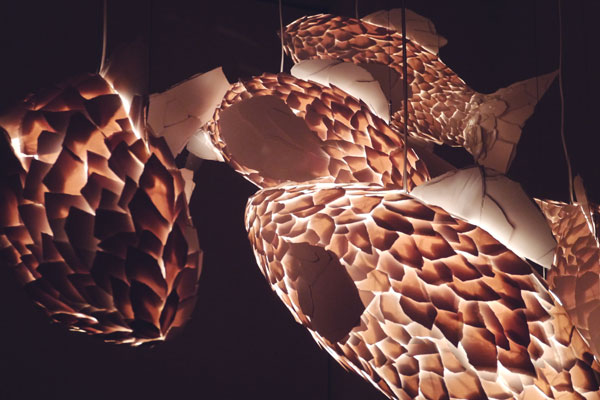
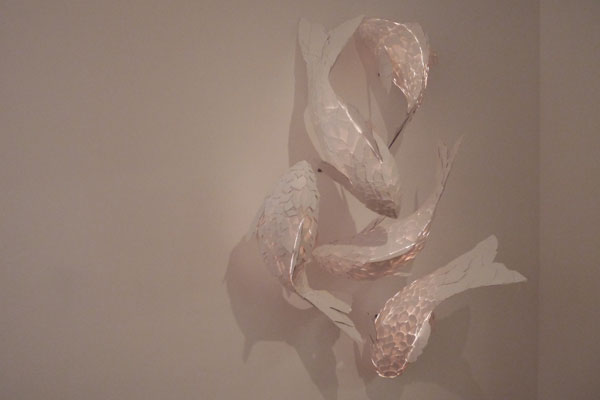
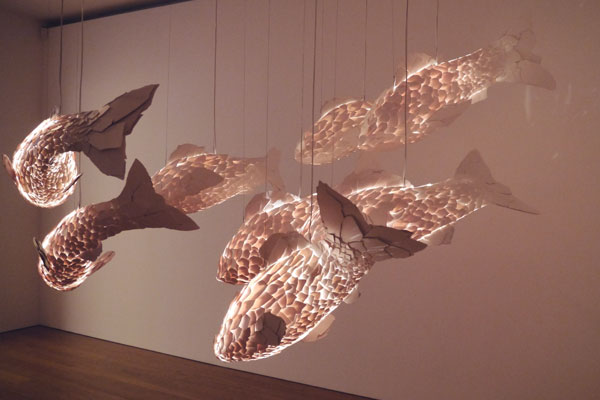
Funny however that while his latest buildings and his non-habitable works like his corrugated cardboard furniture series – Easy Edges (1969-73), Experimental Edges (1979-82), and the Knoll Furniture Series (1989-92) – all focus on trying to make the thing kind of not look like the thing it is supposed to be, the Fish Lamp studies, of which the latest versions of them are currently on display at the Gagosian Gallery in Hong Kong, are exactly what he names them to be. The angle here is not really about the restraint of formal explorations as to what the fish can be, but really about the earlier brief that started it all, a request by Formica Corporation to Gehry to create something new with their plastic laminate product, ColorCore, in the early eighties. Gehry’s Formica product is a thin sheet of glossy plastic laminate, which when broken and ripped, reflect the scales of a fish when grouped together. The properties of the torn plastic gives the sculpture different levels of translucency, especially when the LED within the fish is turned on.
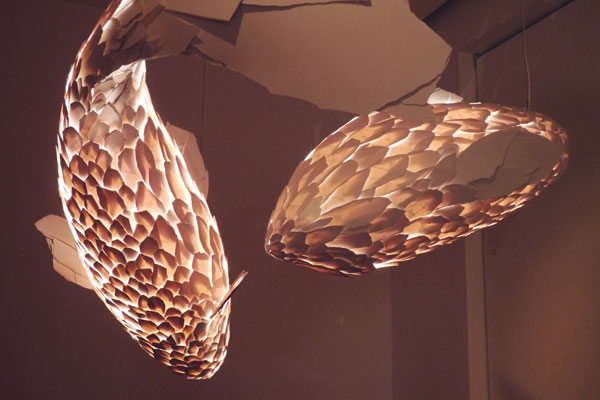
According to Gallerist Nadia Chan of Gagosian Hong Kong, these fish lamps, 33 new pieces in total and exhibited amongst four Gagosian galleries around the world, were all hand sketched by Gehry and are site specific to the floor plan. Eventually like all architectural works, his sketches are further studied on computer, and built in his California studio by hand. The hand-chipped fish scales are then individually glued piece by piece on a wire armature built based on the computer’s model.
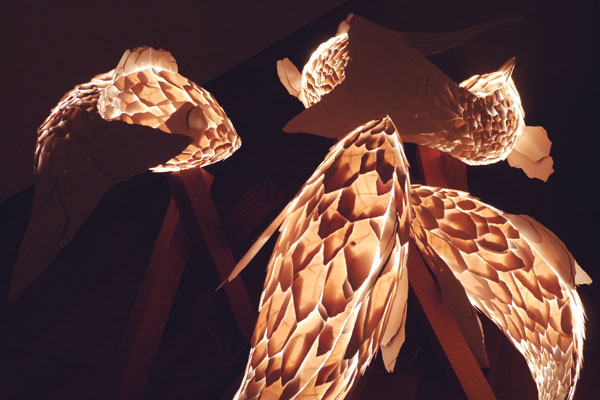
Not a surprise, Gehry sells well, and the Hong Kong showing, tied with the Lunar New Year, is considered the grand finale of all four Gagosian shows. Hong Kong has the most new works of these Koi light sculptures, a lucky symbol by Chinese standards. An extra treat to Gehry fans is his inclusion of a big black alligator sculpture located at the very end of the visitor’s path.
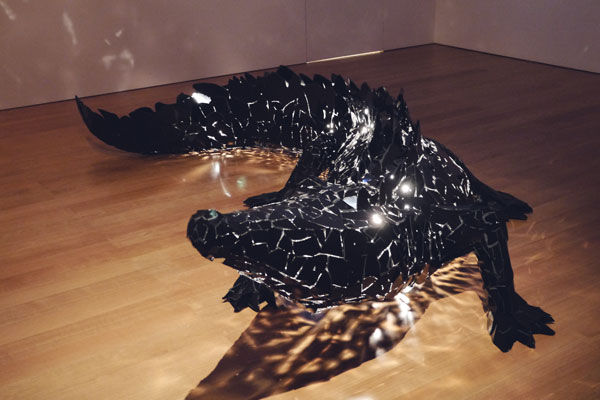
The exhibition, ending on 1 March 2014, has already sold well for the gallery. A single fish or a school of them can be acquired making sure Gehry’s offerings easily adapt to Asian spaces. The architect originally planned to make a press appearance in Hong Kong for the show’s opening, but sources say, due to health and schedule, he was not able to make it to this side of the Pacific. Noting his age, this may very well be the last we see of new fish from Gehry at such a grand scale.
For those who want to see his fish on permanent exhibit, there is always the giant Fish Sculpture at Vila Olimpica at Barcelona (1989-92) and the Standing Glass Fish (1986) at the Minneapolis Sculpture Garden, which will be situated at their sites pretty much forever.
Catch the Frank Gehry: Fish Lamps exhibition from 16 January – 1 March 2014 at Gagosian Hong Kong.
INDESIGN is on instagram
Follow @indesignlive
A searchable and comprehensive guide for specifying leading products and their suppliers
Keep up to date with the latest and greatest from our industry BFF's!
The honour of being the Venice Architecture Biennale Commissioner has been presented to Janet Holmes à Court AC. Janet Holmes à Court is one of Australia’s most successful and influential businesswomen and a renowned patron of the arts. Currently she is Chairman of the John Holland Group, one of Australia’s leading construction and engineering companies, […]
The internet never sleeps! Here's the stuff you might have missed