The home of architecture and design in the Asia-Pacific
Get the latest design news direct to your inbox!

Get the latest design news direct to your inbox!
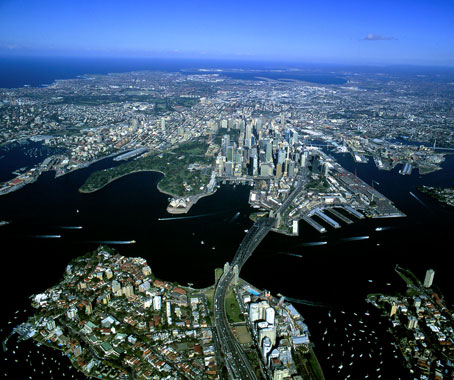
As the City of Villages continues to grow upwards and outwards, a strong vision for the future is paramount, writes Ola Bednarczuk.
November 26th, 2010
The problem with our cities, says critic and columnist Elizabeth Farrelly, is the way we see them; our inability to change the way we look at our built environments. The future of Sydney, then, depends on a vision and a mechanism that achieves what past visions were unable to do.
At the Australian Institute of Architects’ Visions of Sydney seminar yesterday, Farrelly along with City of Sydney Councillor John McInerney and NSW Government Architect Peter Mould took to the podium to discuss their vision for the Sydney of the future, and what we can do now to make it happen.
How to cope with density in a city with a rapidly growing population was a key concern for all speakers.
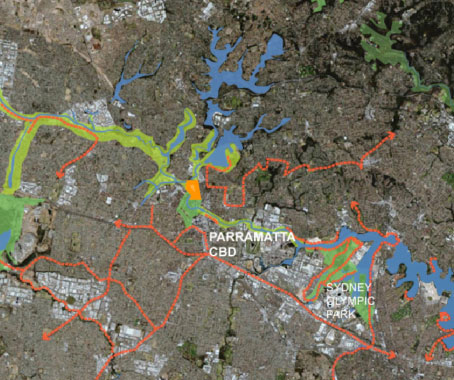
Mould highlighted the importance of using environmental conditions to inform planning conditions. His vision for the Sydney of 2040 is one of a series of interlinked green corridors comparable to East London’s Green Grid initiative.
According to Mould, building density around these corridors while maintaining the natural biodiversity of the environment, restoring water, creating more natural environments for recreation and building bike lanes for transport are all simple actions that have the ability to solve key infrastructure issues.
McInerney highlighted the importance of simple measures rather over extreme solutions. “Let’s find the successes that we have already here,” he said, “and build them up.”
He noted the 2004 vision of ‘Sydney as a City of Villages’ as one that will lead the city forward into the 2040 period. Kings Cross, Erskineville and Surry Hills all provide excellent examples of vibrant, dense communities he explained.
The challenge for the future, McInerney said, will be to spread this vitality into the other city villages. Narrowing traffic movements and slowing down cars, imbuing them with a pedestrian quality will be key to the revitalisation of the CBD village.
Creating a combination of pedestrian and cycling routes to form what McInerney calls a “liveable green network” will make the city more attractive and pleasant to live in.
Work is currently underway on a 200km cycleway network worth $87 million which, for McInerney, “will be the City Council’s great legacy.” Contracts are also underway for a sophisticated water plan, waste plan and power network that will help to achieve the Council’s Green Infrastructure Master Plan.
Speakers agreed that the city of the future will be “compact, connected, equitable and sustainable”. What’s needed now is a clear vision and strong mechanism to put this in place.
Photo above by Patrick Bingham-Hall
Courtesy of the City of Sydney
INDESIGN is on instagram
Follow @indesignlive
A searchable and comprehensive guide for specifying leading products and their suppliers
Keep up to date with the latest and greatest from our industry BFF's!
The internet never sleeps! Here's the stuff you might have missed