The home of architecture and design in the Asia-Pacific
Get the latest design news direct to your inbox!

Get the latest design news direct to your inbox!
From Disney to the Metropolitan Museum of Art, Meastri’s high profile work sees the Australian leading his field, Robert Townsend reports.
August 28th, 2012
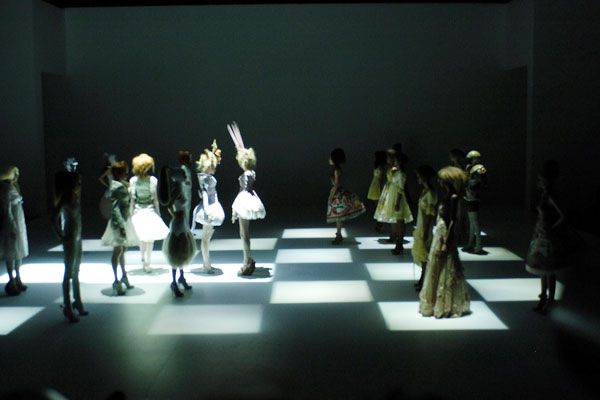
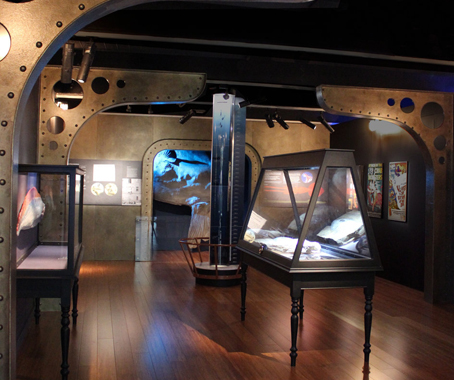
“It’s about creating an immersive environment, especially with something so abstract,” Deep Oceans exhibition designer Aaron Maestri explains.


“The deep ocean is black. There is no light, so you have to play to people’s perceptions about being underwater, because if it totally takes reality as its driving force, it’s too foreign for people to understand.”

Deep Oceans Entry Concept Sketch with Jules Verne-esque visual references

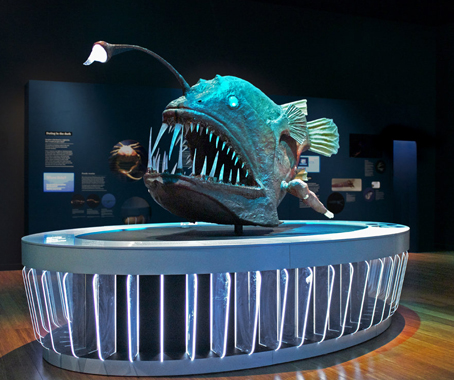
Deep Oceans Exhibition Entry
Maestri has been working for over a year on the project which takes visitors to the depths of the seas. The facade forms a gateway to the exhibition, which moves from the known to the unknown as different zones of the ocean are uncovered through a layering of visibility.
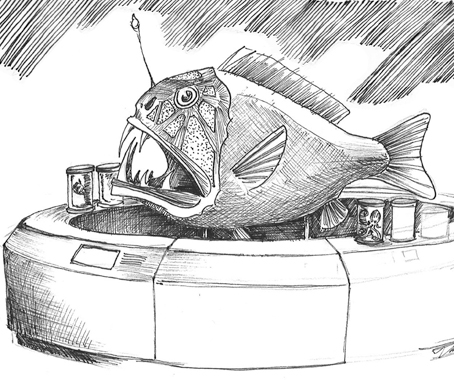
Aaron Maestri’s Deep Oceans exhibit Concept Sketch
Inspiration came from related iconography, such as 2000 Leagues Under The Sea, jellyfish, U-boats and rock pools, to wider influences like 1950s comics, amusement parks and even Maestri’s fondness of vintage coffee machines.


Aaron Maestri’s Deep Oceans Exhibit Concept Sketches
Having studied an integrated design course at COFA, Maestri has 16 years of experience in industrial design and exhibit design.
He began working on exhibitions at the Maritime Museum and the State Library, before moving to Italy and then to America for eight years, where he designed a number of big-budget projects, including the Metropolitan Museum of Art’s Permanent Islamic Galleries and the Walt Disney Family Museum in San Francisco.
“The Disney project was $100m. They were like, ’What marble should we put on the floor? Do you want to go to Carrara and look at the marble?’”


Aaron Maestri’s Deep Oceans exhibit design for the Australian Museum conveying the scale and magnitude of the deep sea’s inhabitants
Such varied experience has stood Maestri in good stead to create a thoroughly immersive and engaging exhibition with Deep Oceans, yet he understands the importance of not leaving too big a thumbprint on his work.
“The thing about exhibition design is that you can’t have your own style, it really should enhance the content. The design just needs to create the environment for people to appreciate the objects on display and the stories that you are telling.”
Aaron Maestri
Deep Oceans
INDESIGN is on instagram
Follow @indesignlive
A searchable and comprehensive guide for specifying leading products and their suppliers
Keep up to date with the latest and greatest from our industry BFF's!
The internet never sleeps! Here's the stuff you might have missed