The home of architecture and design in the Asia-Pacific
Get the latest design news direct to your inbox!

Get the latest design news direct to your inbox!
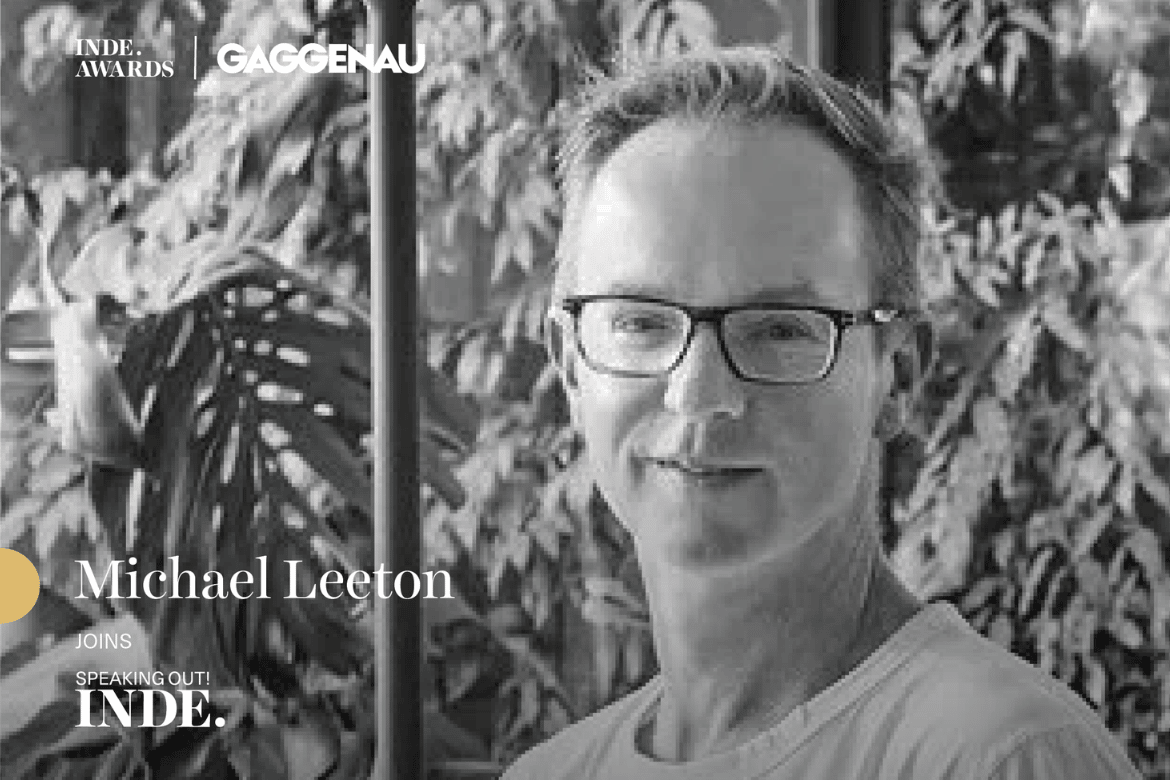
In this interview, Michael Leeton reflects on his philosophy of placemaking, connection to landscape and the importance of designing homes that balance intimacy with scale, using his award-winning project House on a Hill as a central reference point.
May 21st, 2026
As part of the SpeakingOut! series for the 2026 INDE.Awards, this conversation brings together one of Australia’s most compelling residential architects in dialogue with Jan Henderson. Supported by Gaggenau, partner of The Living Space category, the interview offers a considered look into the ideas shaping Michael Leeton’s practice at Leeton Pointon Architects.
Leeton’s work is underpinned by a quiet sensitivity to site, climate and the rhythms of everyday life. His architecture seeks to create spaces that feel at once protective and open, places that nurture their occupants while remaining deeply connected to the landscape. For Leeton, architecture begins with placemaking: the careful shaping of environments that allow people to gather, retreat and engage with their surroundings in meaningful ways.
This balance between function and feeling sits at the core of his approach. Whether navigating harsh environmental conditions or complex briefs, his focus remains on creating homes that are intuitive, adaptable and built to endure. Organic forms, layered courtyards and considered orientation are used to dissolve the boundary between inside and out, enhancing both comfort and liveability.
His pathway into architecture, however, was less direct. Growing up in a family immersed in the medical profession, it was travel, and the rituals that came with it, that first sparked his awareness of space. Childhood memories of roadside picnics, repositioned in search of better light, shelter or outlook, became an early lesson in reading environment and understanding place. That instinctive way of observing the world continues to shape his design thinking today.
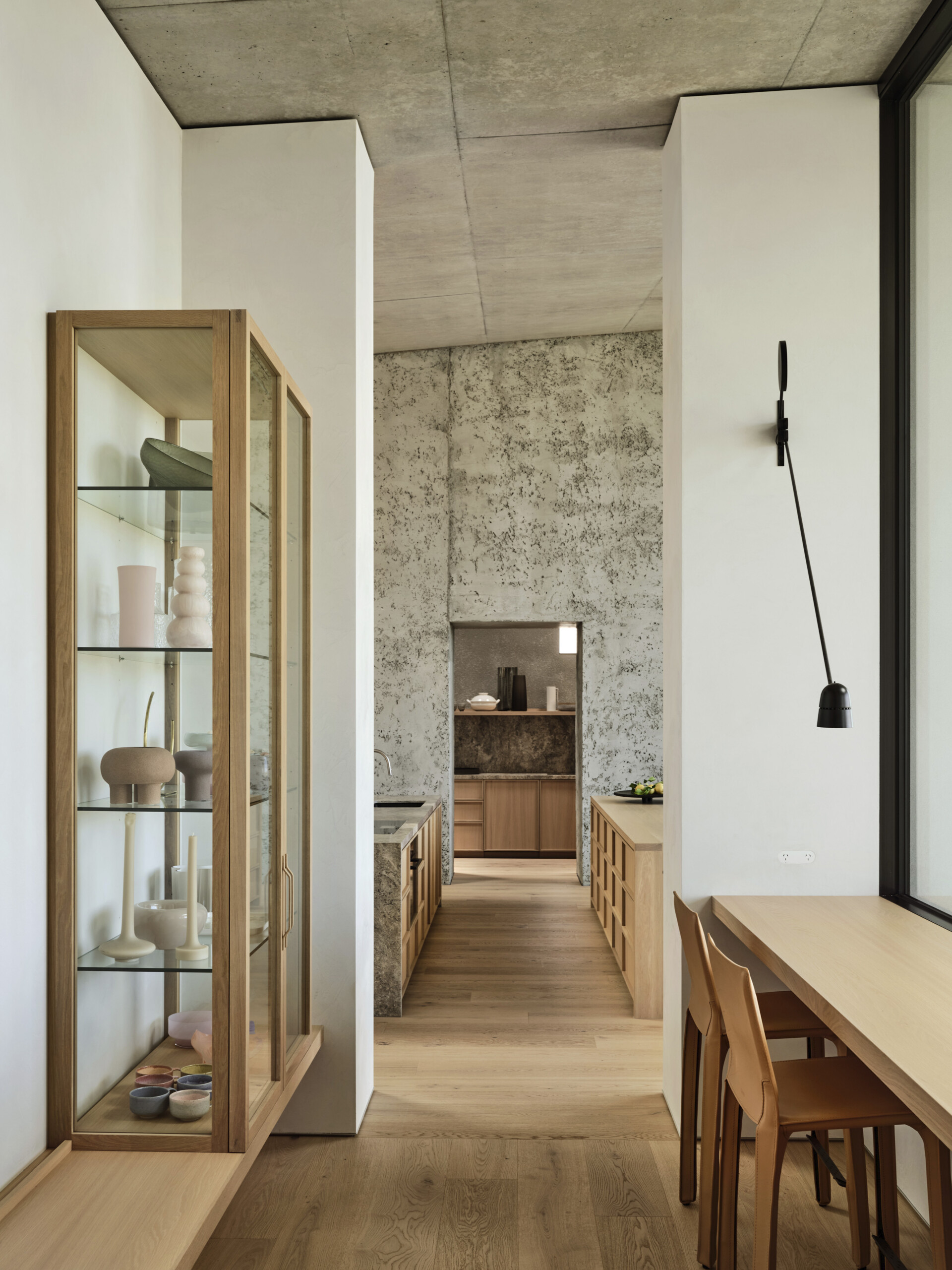
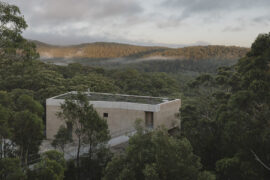
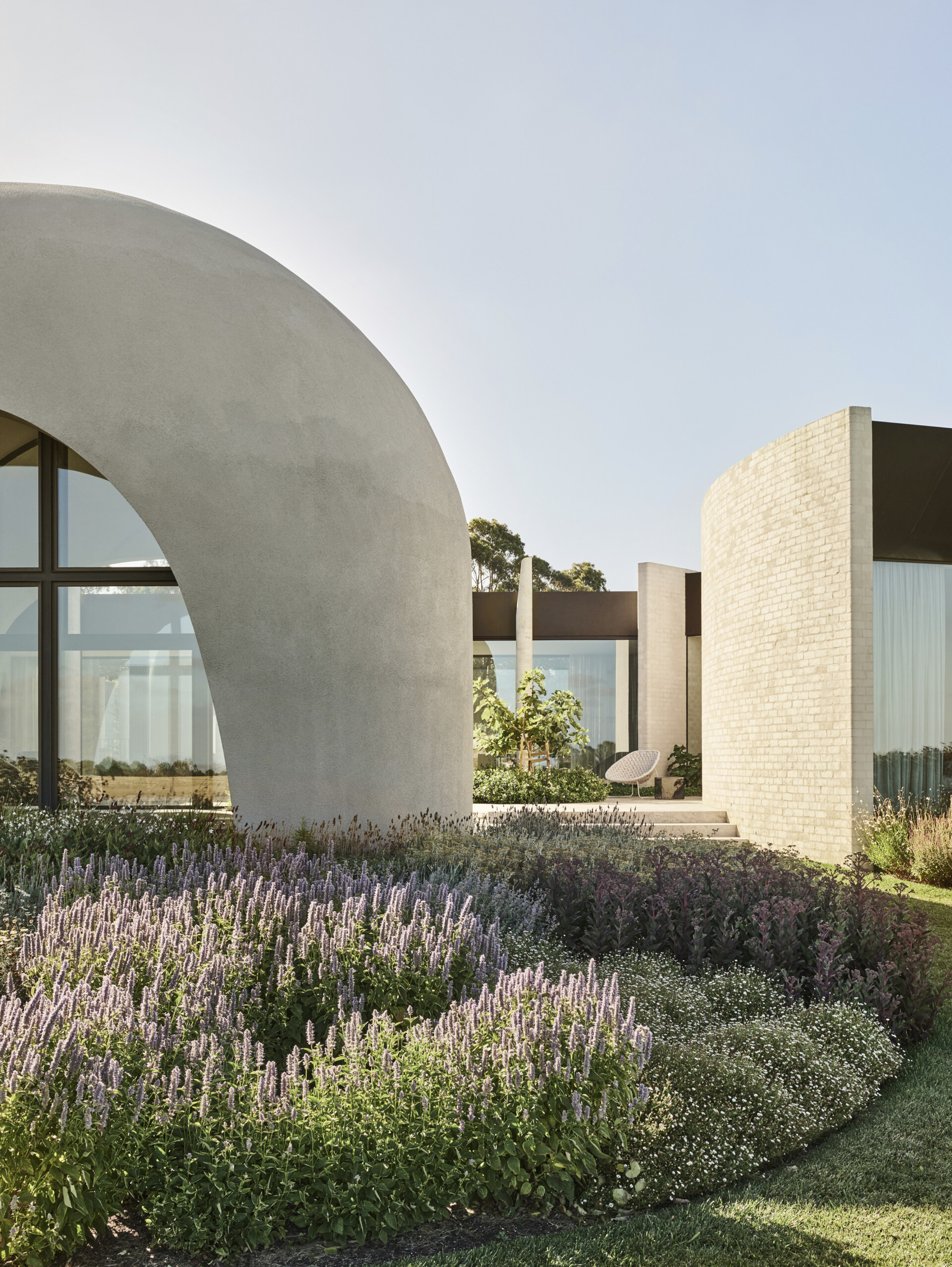
Nowhere is this more evident than in House on a Hill, the 2025 INDE.Awards winner for The Living Space. Set within the exposed landscape of the Mornington Peninsula, the project responds to both a demanding climate and an expansive, multi-generational brief. Rather than a singular form, the house unfolds as a series of interconnected volumes arranged around courtyards, each offering moments of refuge from wind, sun and shifting conditions.
The architecture negotiates scale with subtlety. Large enough to accommodate extended family and gatherings, the home is carefully broken down to retain a sense of intimacy. Spaces expand and contract as needed, allowing the house to feel equally resolved whether occupied by two people or many. This flexibility extends to the integration of technology and function, ensuring the home can adapt seamlessly to different modes of living and working.
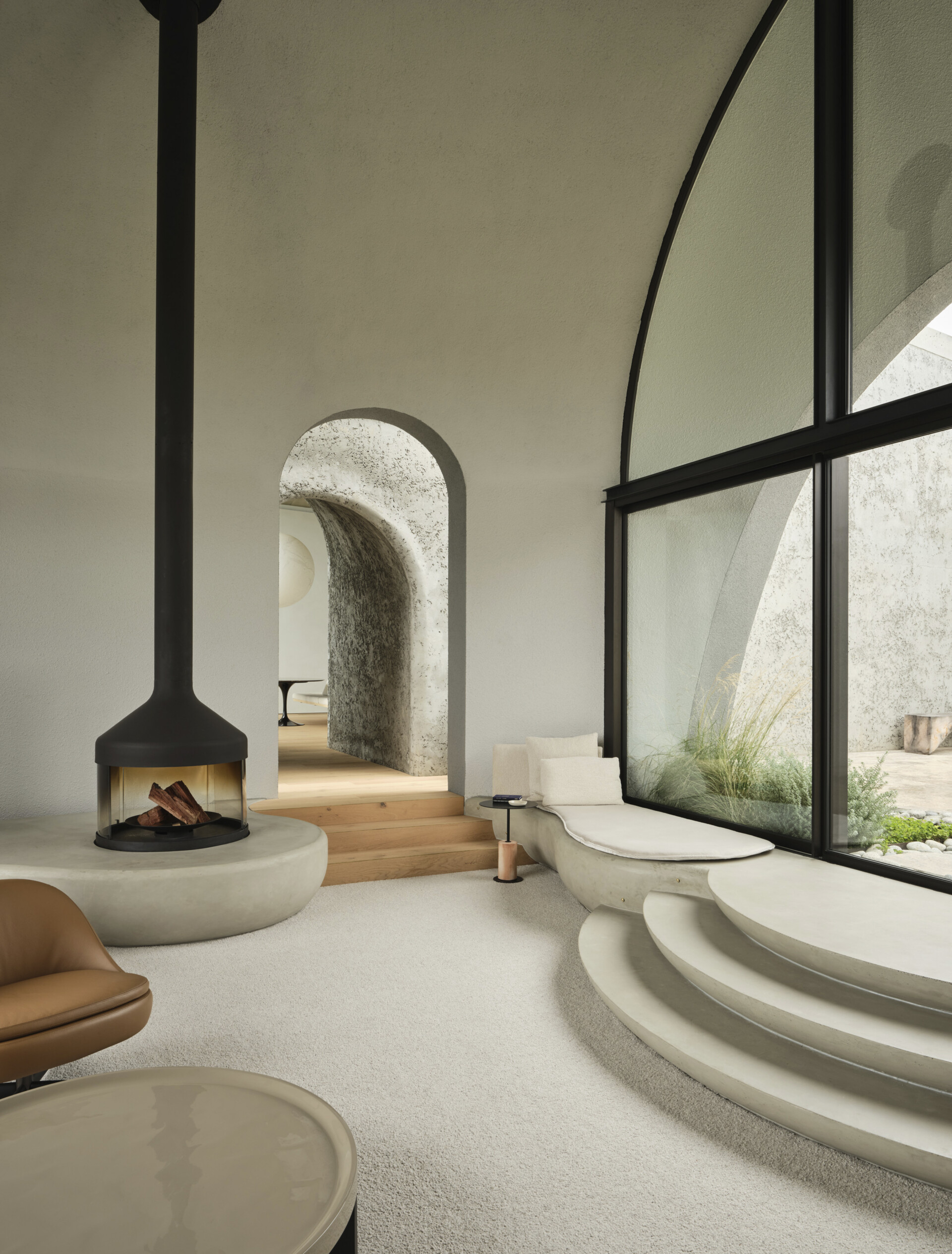
Material choices reinforce a commitment to longevity and environmental responsibility. Reclaimed brick, innovative concrete applications and experimental construction techniques, including dome structures formed using inflatable frameworks, demonstrate a willingness to test new ideas while remaining grounded in durability and performance. Importantly, materials are selected not only for how they perform now, but for how they will age over time.
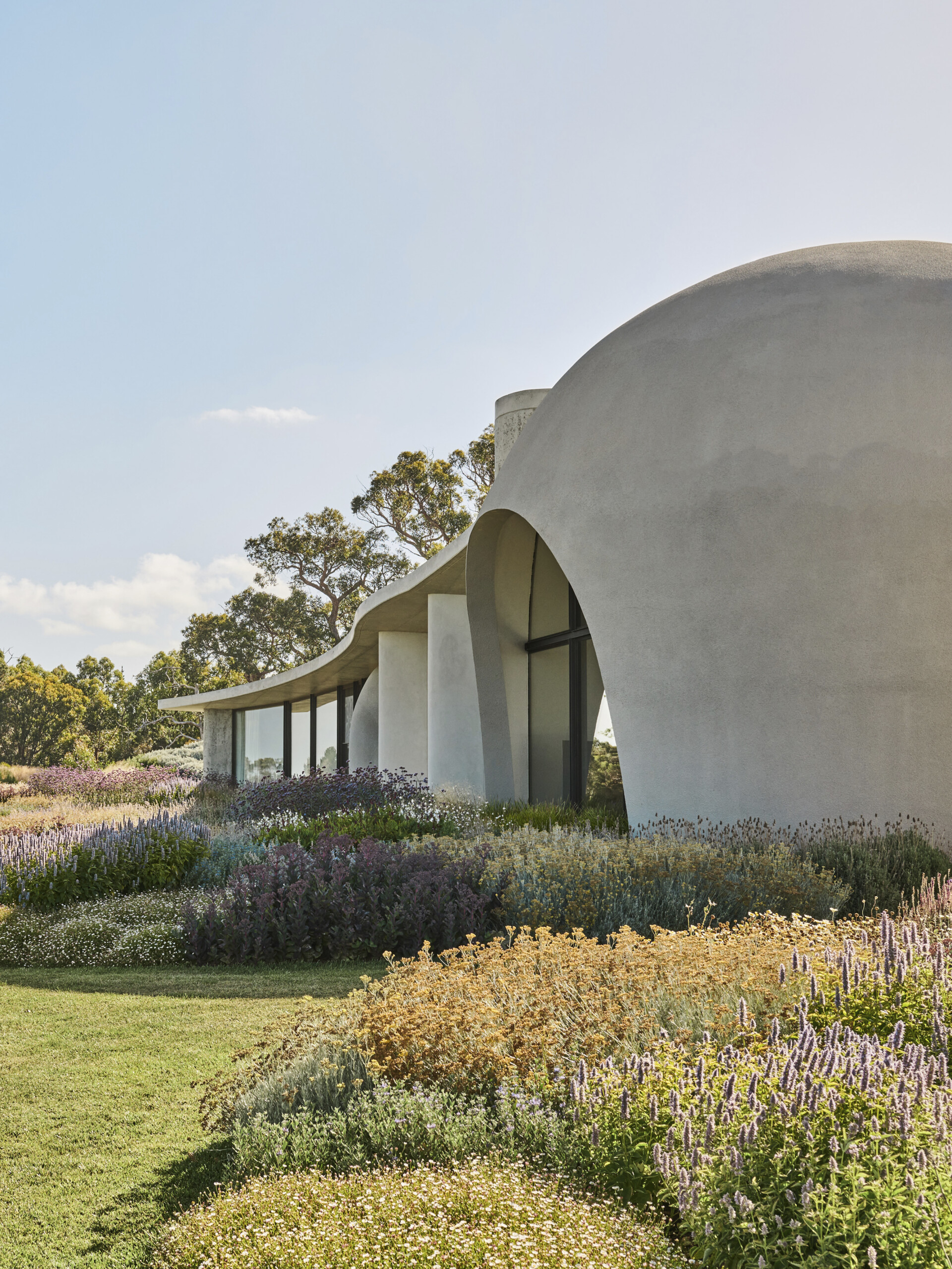
Through projects like this, Leeton’s work contributes to a broader shift in residential architecture, one that prioritises sustainability, adaptability and emotional resonance over excess. His approach reflects an evolving understanding of how we live, particularly within multi-generational settings, and offers a model for homes that are both resilient and deeply human.
A sincere thank you to Michael Leeton for sharing his insights, and to Gaggenau for supporting The Living Space category at the 2026 INDE.Awards.
To hear the full conversation watch the full episode here. Entries to the 2026 INDE.Awards are now closed, stay tuned for the shortlist announcement in July.
INDESIGN is on instagram
Follow @indesignlive
A searchable and comprehensive guide for specifying leading products and their suppliers
Keep up to date with the latest and greatest from our industry BFF's!
The internet never sleeps! Here's the stuff you might have missed