The home of architecture and design in the Asia-Pacific
Get the latest design news direct to your inbox!

Get the latest design news direct to your inbox!
Sanjay Puri shares his approach to designing immersive, dynamic residential spaces that balance innovation, sustainability, and cultural identity.

February 26th, 2025
As part of the 2025 INDE.Awards, the SpeakingOut! series provides a platform to engage with industry leaders and luminaries. In this episode, Jan Henderson interviews Sanjay Puri, Principal of Sanjay Puri Architects, based in Mumbai, India.
The conversation explores Puri’s architectural philosophy, his approach to designing transformative living spaces, and the evolving landscape of residential architecture. This engaging discussion is proudly supported by Gaggenau, the Living Space category partner for the 2025 INDE.Awards. We extend our gratitude to Sanjay Puri for sharing his invaluable insights.
The Journey to Architecture
Sanjay Puri’s journey into architecture was inspired by a book that has influenced many in the field – The Fountainhead. Initially set on becoming an artist, Puri discovered architecture at 16 and pursued it with passion. Before formally studying architecture, he worked in an architectural firm at just 18, gaining hands-on experience while studying at night. This early immersion in real-world projects shaped his practical and innovative approach to design.

The Vision Behind Zen Spaces
Located in Jaipur, Zen Spaces was conceived as an extension of an existing home. The clients wished to remain on the same property but required a separate residence. Rather than relocating, they opted to build a second home on the northern part of their elongated plot, preserving the central garden as a shared space between the two residences.
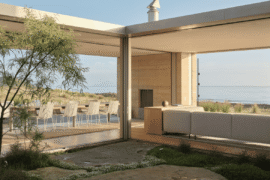
The defining feature of this home is its seamless integration with nature. With 27 mature trees on site, the design was shaped around them, ensuring none were removed. The result is a house that weaves through the trees, with courtyards and open spaces that allow natural elements to flow into every part of the home. The client aptly named it Zen Spaces after experiencing the serenity and harmony it fosters.
Blurring the Boundaries Between Indoors and Outdoors
A hallmark of Puri’s work is the fluid connection between indoor and outdoor environments. In Zen Spaces, every room – whether the living area, dining space, bedrooms, or entertainment zones – opens onto a private deck. These spaces allow the inhabitants to be surrounded by greenery, creating a tranquil retreat from the bustling city.
The home is designed with large shaded spaces that allow residents to sit outside and touch the leaves of the surrounding trees. Unlike Mumbai’s monsoons, Jaipur’s rain falls directly, making it possible to enjoy the outdoors even during the wet season. The design not only maximises comfort but also embraces the natural rhythms of the environment.

Traditional Influences in a Contemporary Home
A key element of Zen Spaces is its use of traditional Rajasthani architectural techniques in a modern context. The home features intricate screening elements inspired by jali, a historical design element used in Rajasthan to mitigate heat and filter natural light. These screens reduce wind impact, provide shade, and help maintain a comfortable indoor temperature, all while adding a striking aesthetic element to the facade.
A Testament to Timeless Design
More than two years after moving in, the client still expresses profound satisfaction with the home, calling it better than any resort or vacation destination. The design fosters an atmosphere of peace, balance, and well-being – true to its name, Zen Spaces.
Sanjay Puri Architects continues to redefine contemporary architecture with a deep respect for tradition, sustainability, and human-centered design. As an INDE.Awards winner, Zen Spaces exemplifies the future of residential architecture: spaces that nurture, inspire, and harmonise with their surroundings.

This insightful discussion with Sanjay Puri offered a deep dive into the principles of designing spaces that blend nature, tradition, and modernity. We extend our sincere thanks to Sanjay Puri for sharing his expertise and to Gaggenau for their continued support of The Living Space category in the 2025 INDE.Awards.
Want to hear the full interview? Check it out here.
Don’t miss the opportunity to showcase your innovative projects – enter the 2025 INDE.Awards now!
INDESIGN is on instagram
Follow @indesignlive
A searchable and comprehensive guide for specifying leading products and their suppliers
Keep up to date with the latest and greatest from our industry BFF's!
The internet never sleeps! Here's the stuff you might have missed