The home of architecture and design in the Asia-Pacific
Get the latest design news direct to your inbox!

Get the latest design news direct to your inbox!
The theatrical approach of the Landmark by Lexus pavilion, designed by Brahman Perera, reflects the brand’s role as a global disruptor in luxury.

November 12th, 2024
There is a clear parallel between the Melbourne Cup’s sartorial trends – fastidiousness and structured silhouettes – and the interior design Brahman Perera created for the Landmark by Lexus Flemington Birdcage Enclosure.
An ebonised pavilion conceived by Koichi Takada Architects plays host to the theatrical interiors, reserved for a selected stratum. The incongruous display of highbrow, contemporary design features, presented a platform for the cadre of collaborators to stage their craft throughout the superfluous three-level guest pavilion. Where it only seemed fitting for the brand to amass those with a mutual appreciation and adoration for ephemeral beauty, as the event is ever fleeting, amassing the likes of mixologist from Maybe Sammy, Charlie Carrington, the Chef-owner Atlas Dining and the dexterous Bryce Heyworth, the Floral artist behind September Studio.

Amalgamating his background in hospitality with his love for theatricality and the arts, Perera has shaped a space that speaks to the transitory nature of the Melbourne Cup experience while leaving a lasting impression. His design speaks to a departure from typical “futuristic” aesthetics, opting instead to convey Lexus’ ethos through a language of quality and memory-making. This pavilion becomes an experience, balancing avante-garde details with purposeful restraint. Perera, known for his assiduous eye, designed an atmosphere where luxury lies in the physical finishes and experiential quality of the space.
Related: A bold canvas of colour and texture

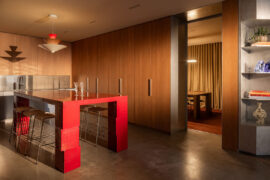
The three-level structure plays host to an array of spaces that alchemise the identity and function of Lexus with the sensibilities found in Perera’s oeuvre. On the top floor, a six-metre Cicchetti Bar serves up Italian gastronomy and Melbournian coffee (arguably the best), while downstairs, guests can pop by the Lexus beauty bar anytime to touch up.
At the crossroads of automotive and interior design, Perera prioritises the occupant’s experience, balancing material quality with spatial interaction. Eschewing typical technological clichés, his approach fosters innovation through a convivial, visually captivating design. The material palette, selected for its durability and tactility, embodies core design principles while avoiding superficial trends.
Photography
Tom Blachford
Interior Design
Brahman Perera
Architecture
Koichi Takada Architects


Next up: A Luchetti Krelle-designed culinary oasis in Sydney’s Western Suburbs
INDESIGN is on instagram
Follow @indesignlive
A searchable and comprehensive guide for specifying leading products and their suppliers
Keep up to date with the latest and greatest from our industry BFF's!
The internet never sleeps! Here's the stuff you might have missed