The home of architecture and design in the Asia-Pacific
Get the latest design news direct to your inbox!

Get the latest design news direct to your inbox!
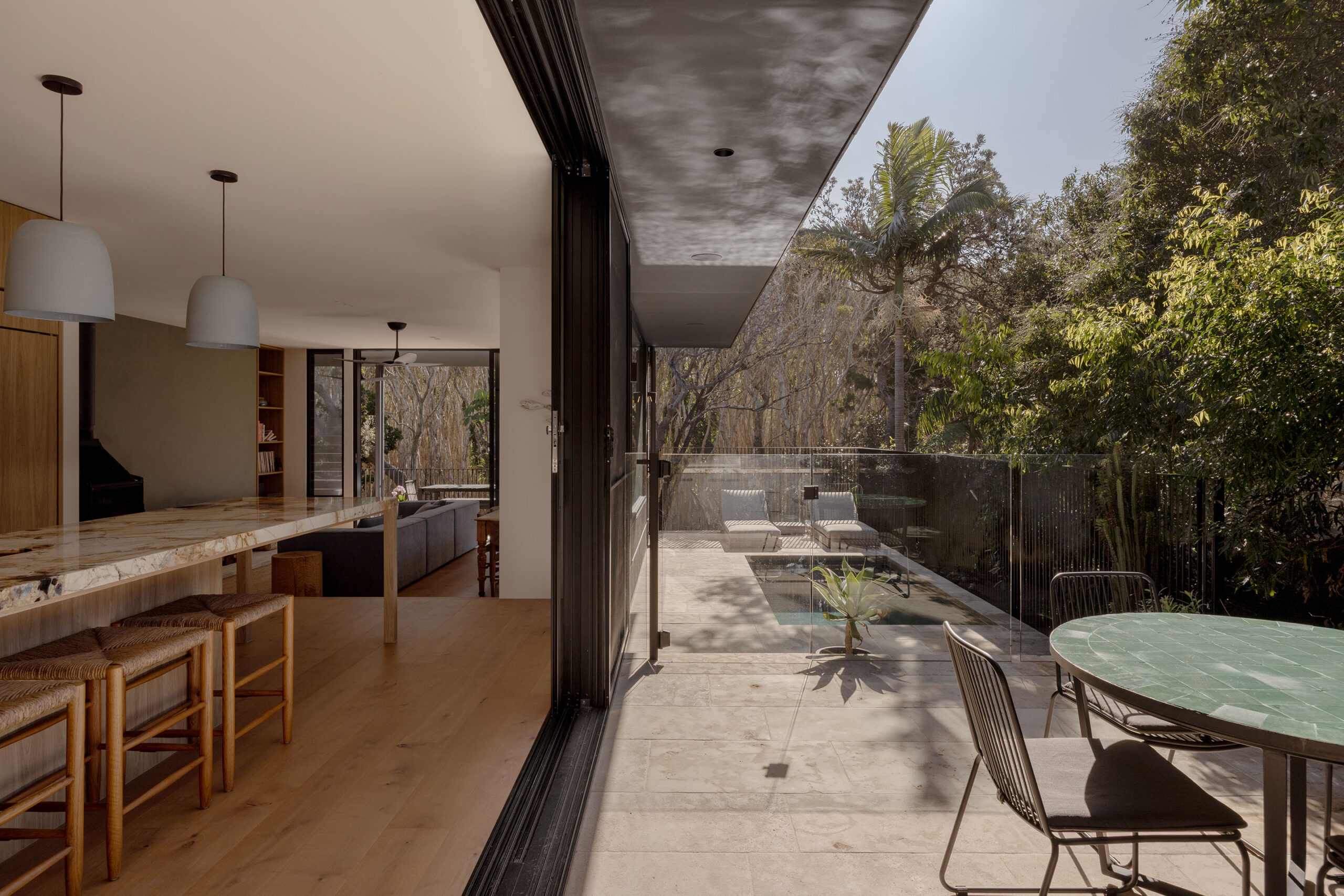
Those sold on the attractions of natural stone would do well to consider these impressive alternatives from Neolith.

Gavin Hepper , Neolith – Abu Dhabi White.
March 13th, 2024
While the benefits of natural stone are clear – and include durability and an undisputed aesthetic appeal – it is not without its drawbacks. Materials like marble, granite, and so on are not only heavy and therefore difficult to work with, but also prone to staining, and limited in terms of colour and design potential.
The good news, for specifiers in 2024, is that there are other options available; products like Neolith Surfaces, which deliver all the benefits of familiar natural stone products and more.
Related content: Exploring the outer bounds of imagination with Neolith

A critical consideration in these times of net zero carbon targets, product stewardship and so on, Neolith surfaces are more environmentally friendly than their natural counterparts.
Made entirely of clays, feldspar and natural mineral oxides, Neolith surfaces are bonded with heat rather than resins. Because of their natural composition, they emit no toxic fumes if exposed to fire or extremely high temperatures, won’t emit gas after installation, and are 100 per cent recyclable. Then, at the other end of the production cycle, some Neolith colours contain up to 98 per cent recycled materials.


In 2019, Neolith become the first manufacturer in its sector to achieve full carbon neutral status. The company uses 100 per cent renewable electricity, up to 100 per cent of the water it consumes is recycled and 90 per cent of the waste it generates is recycled.
In comparison, the ‘environmentally friendly’ claims of natural stone are a little shaky. In large part, they derive from the layperson’s intuitive association of ‘natural stone’ with sustainability. In truth, the extraction, transport, and production of natural stone products, involves air and water pollution, as well as significant carbon consumption.

The extreme heat involved in the manufacture of Neolith surfaces ensure that they are stronger than marble and granite. At the same time, they are much lighter than natural stone, durable and resistant to damage – which means they also come out on top in terms of versatility.
Unlike natural stone, which is limited to specific applications, architectural surfaces such as Neolith can be used everywhere from kitchens, bathrooms, floors, and outdoor kitchens to façades.
As a manufactured material, it can be specified in super-size slabs that measure up to 3600×1200 millimetres. In this way, it delivers architects and designers the freedom to create beautiful surfaces – in bathrooms, kitchens, and elsewhere – that are smooth and entirely seamless.


As mentioned, Neolith surfaces are lightweight and therefore very easy to work with and install. Unlike natural stone surfaces, which are highly porous, they display porosity of less than 0.08 per cent. Apart from ensuring they do not require sealing, this ensures they are resistant to bacteria and therefore are particularly hygienic.
They are designed to withstand heat, scratches, stains, and UV radiation, and require only minimal upkeep.
All of this considered, those attracted by the well-documented appeal of natural stone would indeed do well to look a little further. More than likely, they will end up with Neolith surfaces, products that deliver the benefits of those better-known options and so much more.
INDESIGN is on instagram
Follow @indesignlive
A searchable and comprehensive guide for specifying leading products and their suppliers
Keep up to date with the latest and greatest from our industry BFF's!
The internet never sleeps! Here's the stuff you might have missed