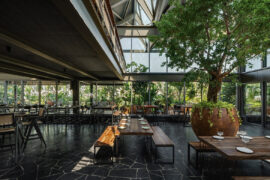
ONG&ONG creates a relaxed and inviting coffee house in Chengdu, China through a combination of warm colours, natural materials and domestic elements.
March 13th, 2014
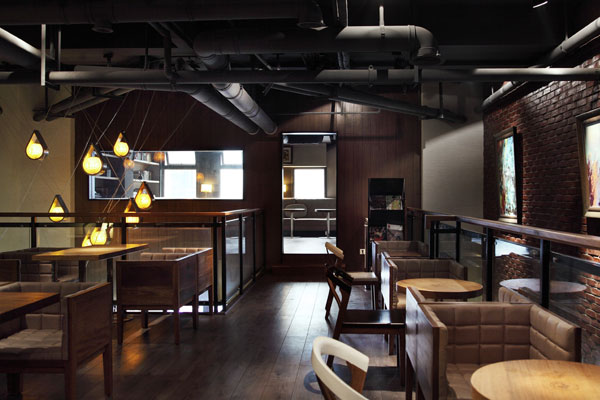
The design concept for the Mocoway Coffee House, located in the Poly Centre in Chengdu, China was derived from the colour of coffee and the handmade process of brewing coffee.
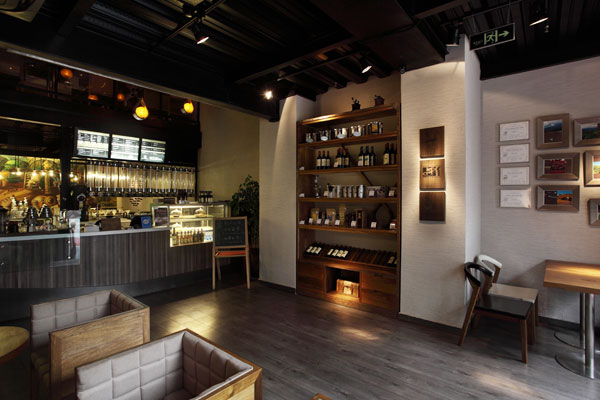
Crisscrossing pipelines on the ceiling remain exposed and red bricks wrap the walls, giving the space a post-industrialist feel.
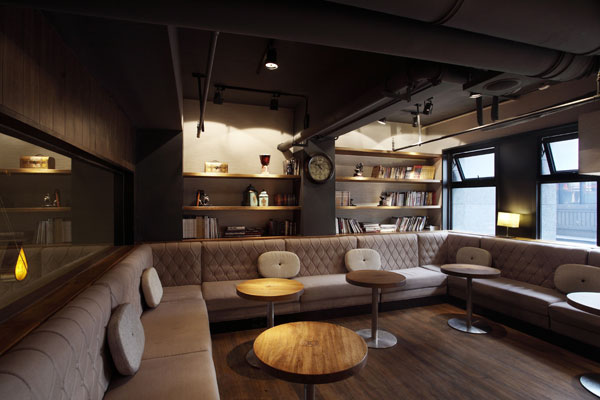
A private meeting area for customers is suspended in mid-air like an intricate box, and is linked to the common area on the second floor via a connecting bridge. The design of the meeting area is meant to invoke warmth and comfort; the hanging wall clock, television, couch and bookshelves lined with books and decorative items all come together to create an inviting and almost domestic-like setting.
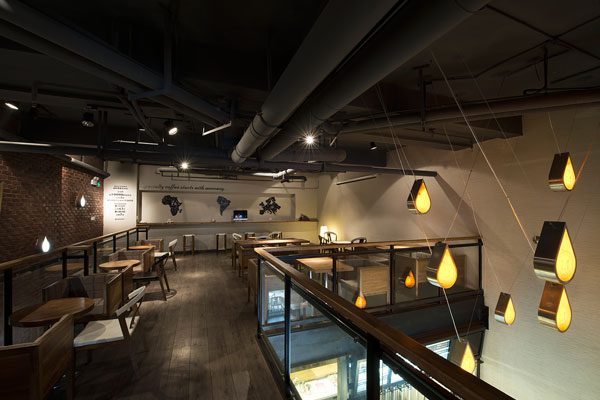
The unique qualities of natural materials have been brought to the fore. The solid wooden flooring, wooden tables and chairs, and vintage photographs hanging on the brick wall were deliberately chosen to infuse the space with an atmosphere of warmth. Bright orange lights in the shape of water droplets hang suspended in the air, adding a level of dynamism to the space.
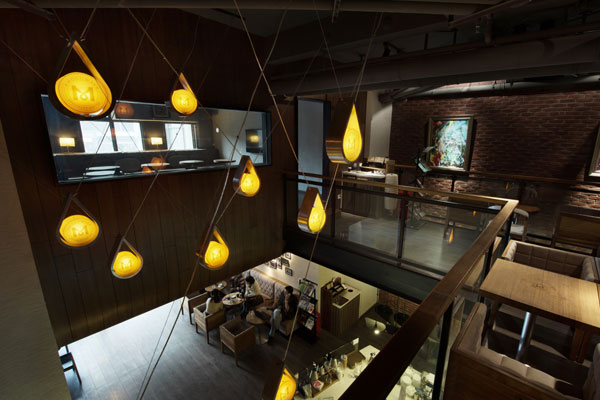
To make their way across the different floors, guests navigate wooden steps that are suspended in mid-air with the use of cables. The space below the steps is paved with white beach pebbles, and the overall atmosphere is light-hearted and relaxed.
ONG&ONG
ong-ong.com
INDESIGN is on instagram
Follow @indesignlive
A searchable and comprehensive guide for specifying leading products and their suppliers
Keep up to date with the latest and greatest from our industry BFF's!
Stepping into Intuit’s Sydney workplace certainly doesn’t feel like walking into an office. Why? In this film, we discover that, when joy takes precedence as a design driver, even a high-performing commercial CBD headquarters can feel like an intuitive wonderland that invites employees to choose their own adventure.
In the last instalment of our three-part performance seating series, Alex Bain from Architectus explains why sitting well shouldn’t feel like sitting at all and explores an unexpected success metric of the hybrid workplace: the grounding power of emotional support.
In the second instalment of our performance seating three-parter, we turn to DKO’s Michael Drescher and Jacob Olsen to peek behind Sayl’s confident architectural form and explore the ideas of inclusivity, adaptability and freedom to move as hallmarks of what sitting your best actually means.
The Geelong College’s Sport and Wellbeing Centre ‘Belerren’ designed by Wardle is designed around bringing in natural light. But Shade Factor’s job was to help modulate and precisely control it for the most important competitive moments.
Throughout his life, Ong Tze Boon has made a real difference to both people and place. He is a man of vision who has changed the architectural landscape of Singapore and South-East Asia and strives to make a better world for the future.
Sydney’s Ferrari, ANZ and Poly Centre have all opted to explore the potential of stretch ceiling design in three recent show-stopping transformations. Join us to explore the flexibility and creativity of Australia’s newest brand of stretch ceilings.
The internet never sleeps! Here's the stuff you might have missed

Brunit by 23 Degrees Design Shift brings together expressive structure, industrial materiality and climate-conscious hospitality on a rooftop site in Vijayawada.
Adelaide Design Week returns in October 2026 with the theme every*one, inviting designers, makers, studios, collectives and creative thinkers to submit expressions of interest.
Presented by Shade Factor
Melbourne-based architect and object maker Adam Markowitz blurs the line between design and craft, bringing a deeply considered, material-led approach to his work. As both a practising architect and furniture designer, Markowitz explores how objects can respond to space, light and human use.