The home of architecture and design in the Asia-Pacific
Get the latest design news direct to your inbox!

Get the latest design news direct to your inbox!
Collette Swindells meets a playful milliner creating iconic design pieces.

July 13th, 2010
Recognised as one of Australia’s most talented milliners, Richard Nylon’s work is nothing short of iconic.
While being respectful of tradition, his hats do not use traditional forms, and often play with the notion of conventionality.

Using a range of self-taught techniques, he creates original pieces of hand-manipulated wearable art – sculptural creations of innovative design and imagination.
Born and bred in country Victoria, Richard moved to Melbourne and immediately buried himself in the fashion world of the 80s, studying fashion and producing amazing outfits to go with his lifestyle.
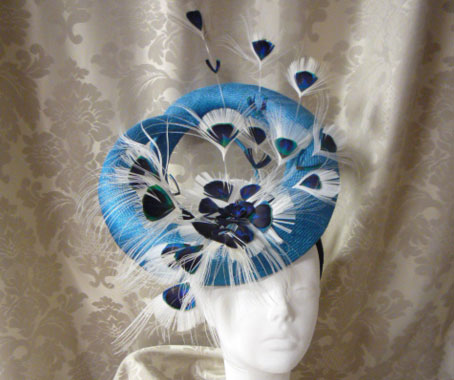
His early work caught the attention of cutting-edge designers at the Fashion Design Council – known at the time for their flamboyant, theatrically choreographed annual fashion parades – and was featured at their retail outlet in Collins Street.
But it is his 11-year collaboration with Melbourne fashion designer Gwendolynne that Richard says really took his work to the next level.
“People did know my name back in the 80s, when I was doing stuff for the Fashion Design Council,” he says, “But it was really with the hats, and putting them on the catwalk with Gwendolynne that made the difference for me.”
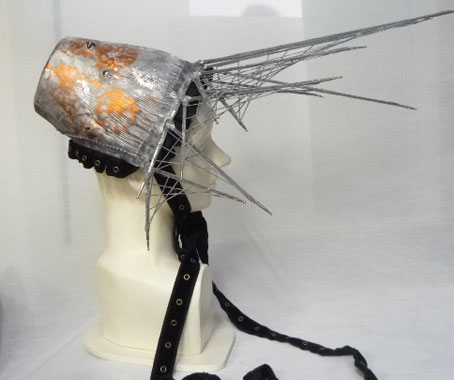
Falling into the role the milliner, Richard has now firmly established himself as a leader in the elite field, teaching regular classes at RMIT and appearing at the recent Hats Off to Melbourne International Millinery Convention.
His work continues to push boundaries, recently being awarded as a finalist in The Hat Designer of the Year competition, held annually at the Premiere Classe trade fair in Paris, during Fashion Week, and will be included in next year’s prestigious Powerhouse Museum International Lace Award competition.
And with plans to experiment with lighting as well, it will be interesting to see how his signature feather-work and transparency translate.
Richard Nylon
richardnylon.com
INDESIGN is on instagram
Follow @indesignlive
A searchable and comprehensive guide for specifying leading products and their suppliers
Keep up to date with the latest and greatest from our industry BFF's!
Entries are now open to students in the Urban SOS: Distressed Cities, Creative Responses competition from EDAW. The competition asks students to submit innovative solutions to environmental, social and economic issues facing the world’s cities. “More than half of the world’s population now lives in urban areas,” says Jason Prior – President of EDAW. “In […]
The competition calls for designs of a 100 meters high tower-museum, containing exhibition areas of 20th century fashion history and becoming a landmark for Omotesando Street.
The internet never sleeps! Here's the stuff you might have missed