The home of architecture and design in the Asia-Pacific
Get the latest design news direct to your inbox!

Get the latest design news direct to your inbox!
Blending two distinct cultures can create some fascinating results, writes Yelena Smetannikov.
October 18th, 2011
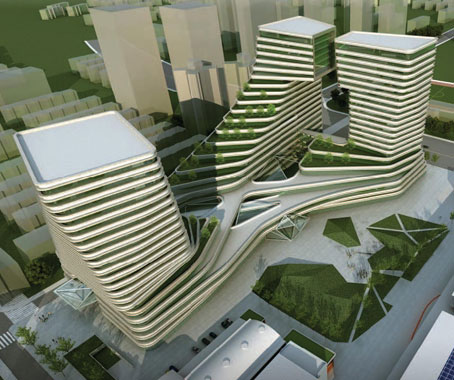
The Shanghai International Design Centre is a collaboration between Milan-based firm AM Progetti, and Tongji Architectural Design Institute. Once completed, the 300 000 sqm Centre will be the largest design complex in the world.
The 2 towers will accommodate a museum, hotel, and library, as well as commercial and office space, which will open onto wide green terraces located on each level.
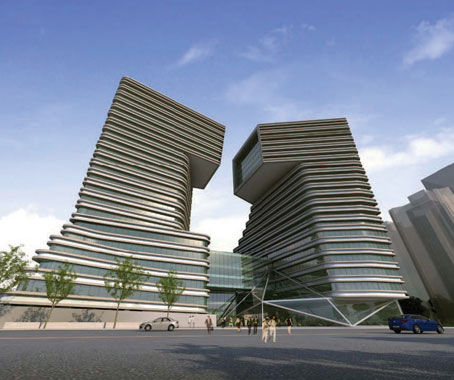
Joseph di Pasquale, head architect for the project, stated that he took on a more philosophical approach for the Design Centre, avoiding the “brand” approach of designing in a signature style like other global architecture firms.
“We wanted our creations to become the result of contamination between our original Western and Italian background with local traditions and culture,” he said.
The crux of Pasquale’s ideas lay in blending Italian, Western and Chinese design influences. Pasquale states, “our expertise is to listen and study the local culture, to try to fall in love with some of the features we consider interesting.”
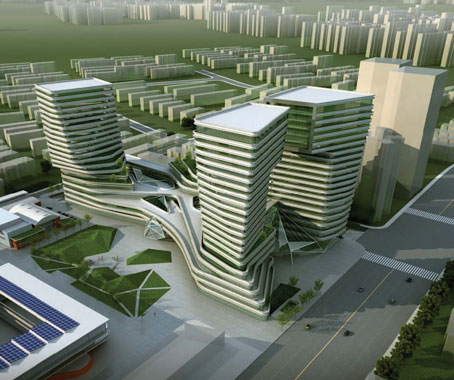
The large, complex spaces of the Centre are organised by vertically overlapping its functions from the most public to private. The uppermost floors conclude with private studios and offices.
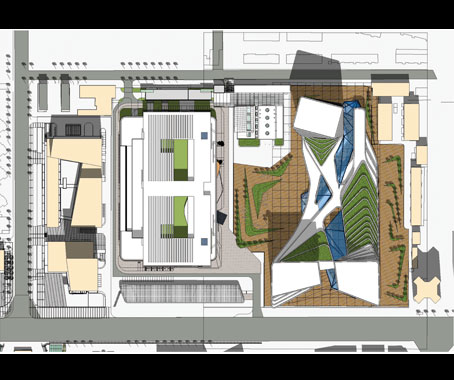
The Centre’s most distinguishing feature is that its façade “multi-tasks” within its surroundings. Its primary frontage is monumental and symbolic of Chinese culture. The north facing façade, facing a residential area, is proportioned to enable for interaction at a more human scale.
Construction begins in October 2011.
AM Progetti
amprogetti.it
Tongji Architectural Design Institute
tjupdi.com
INDESIGN is on instagram
Follow @indesignlive
A searchable and comprehensive guide for specifying leading products and their suppliers
Keep up to date with the latest and greatest from our industry BFF's!
The internet never sleeps! Here's the stuff you might have missed