The home of architecture and design in the Asia-Pacific
Get the latest design news direct to your inbox!

Get the latest design news direct to your inbox!
A new sculptural building designed by Bates Smart that aims to herald an expressive era in architecture has been unveiled by Melbourne-based development partners Golden Age Group and Asian Pacific Group.

October 23rd, 2015
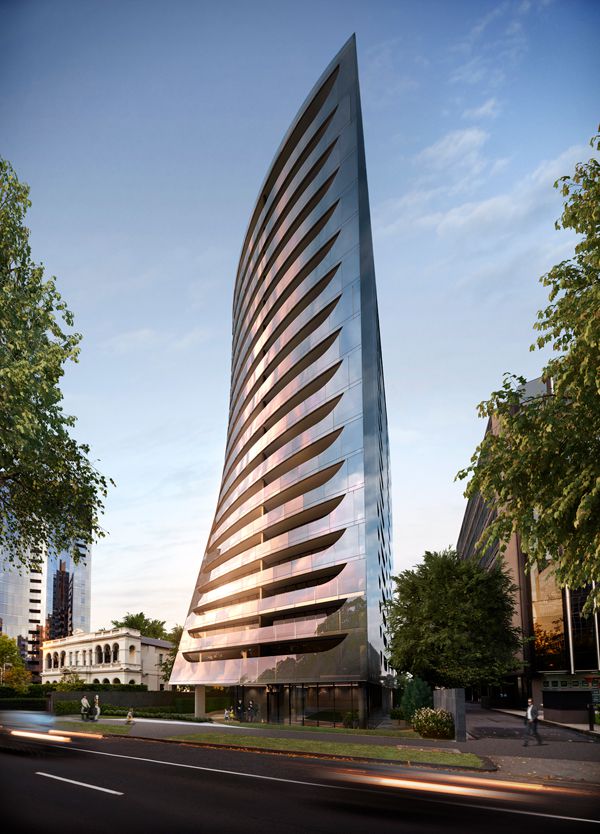
Launching to market on 1 August, 2018, Opèra, designed by award winning Melbourne architectural practice Bates Smart, will be a dramatic addition to St Kilda Road, its delicate smoked glass façade stretching over a form that curves and arcs elegantly skywards into a teardrop shape.
Bates Smart design director Kristen Whittle said the building was a statement and aimed to bring back the beauty and art of architecture in Melbourne. “Opèra is designed as a living sculpture that will enrich this historic area of Melbourne through its expressive form that twists and flares with a curvaceous beauty unlike any other building in the city,” he said. “I hope it stimulates conversation about the next evolution of architecture in Melbourne. The world’s greatest cities place a value on creative architecture as beauty. Melbourne needs to evolve into this space and pursue artistic projects that reshape how we think about architecture, as we hope Opèra does.”
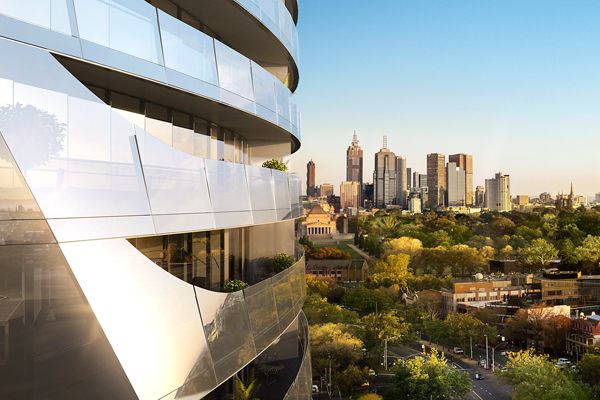
Featuring 228 luxury apartment residences, the $190 million building at 450 St Kilda Road will pay homage to the grandeur and decadence of the boulevard’s heritage as Melbourne’s original aristocratic address. “Opèra is designed as a living sculpture that will enrich this historic area of Melbourne through its expressive form that twists and flares with a curvaceous beauty unlike any other building in the city,” says Jeff Xu, Golden Age Group managing director.
Mr Whittle said engineering the flow of the building had been a delicate process, with the glass curving seamlessly without any fixtures and balconies sliced dramatically into the glass to accentuate the building’s sense of movement. The contortion requires double curved glazing panels to be installed on site – a process known as cold bending – the first of its type in Australia.
Featuring expansive views of the CBD and Albert Park Lake, building will span 19 levels, including expansive living spaces, communal amenities such as a private library, dining lounge and public residential lounge, and a public restaurant. On level one more than 270 square metres will be reserved for a health retreat, featuring a large pool, gym and sauna.
Construction will commence in early 2016, with completion anticipated in 2018.
Opèra
operamelbourne.com.au
INDESIGN is on instagram
Follow @indesignlive
A searchable and comprehensive guide for specifying leading products and their suppliers
Keep up to date with the latest and greatest from our industry BFF's!
The new Tait showroom is now open in Melbourne, 176 Johnston St, showcasing Australian-made furniture, art and lifestyle accessories for the home and garden. With a commitment to encouraging local talent, the Tait store boasts a range of products from regional designers. Tait tait.biz
The internet never sleeps! Here's the stuff you might have missed