When Orbit Design was commissioned to design the interiors of Procter & Gamble’s (P&G) $250 million Singapore Innovation Center (SgIC), the Bangkok-based studio had on its hands a challenge as mighty as the building’s ambition to be an international innovation hub.
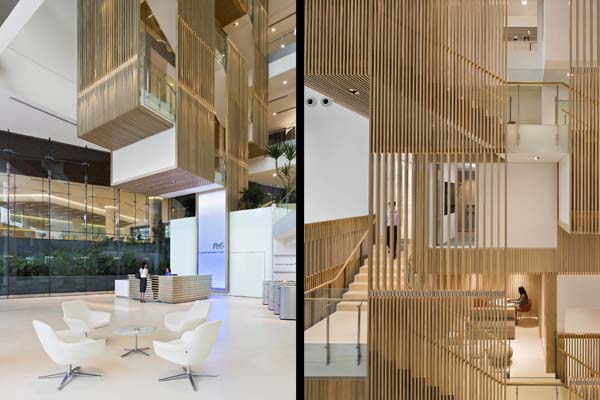
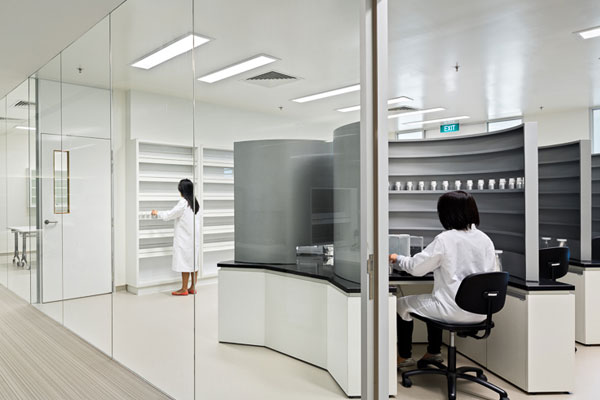
As the largest private research centre in Singapore, the 32,000sqm facility houses a host of programs – from laboratories to training rooms to offices – and an army of engineers, researchers and scientists who develop beauty, hair and skin products. But instead of carving out separate wings for each function, Orbit furthered SgIC’s innovative thrust by opting for an open and flexible plan that encouraged creative collaboration among staff members.
The consumer goods giant noted to Orbit that it wanted to “incorporate the best workplace practices from around the world,” according to the studio. This meant incorporating elements that could support hot desking, remote working and impromptu meetings. To fulfil these goals, Orbit kept all the workspaces open and “100% agile” while ensuring the security of staff members’ personal belongings, says Orbit’s Head of Design Simon Drogemuller.
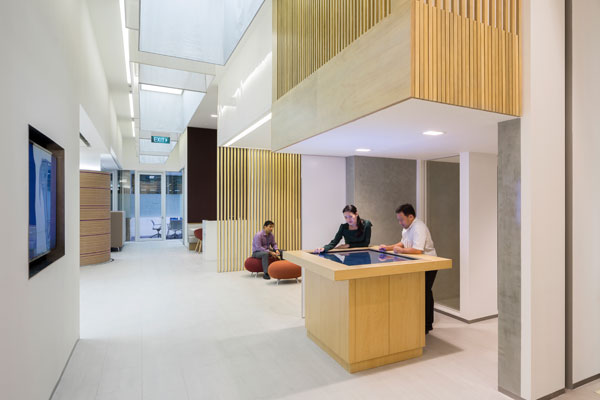
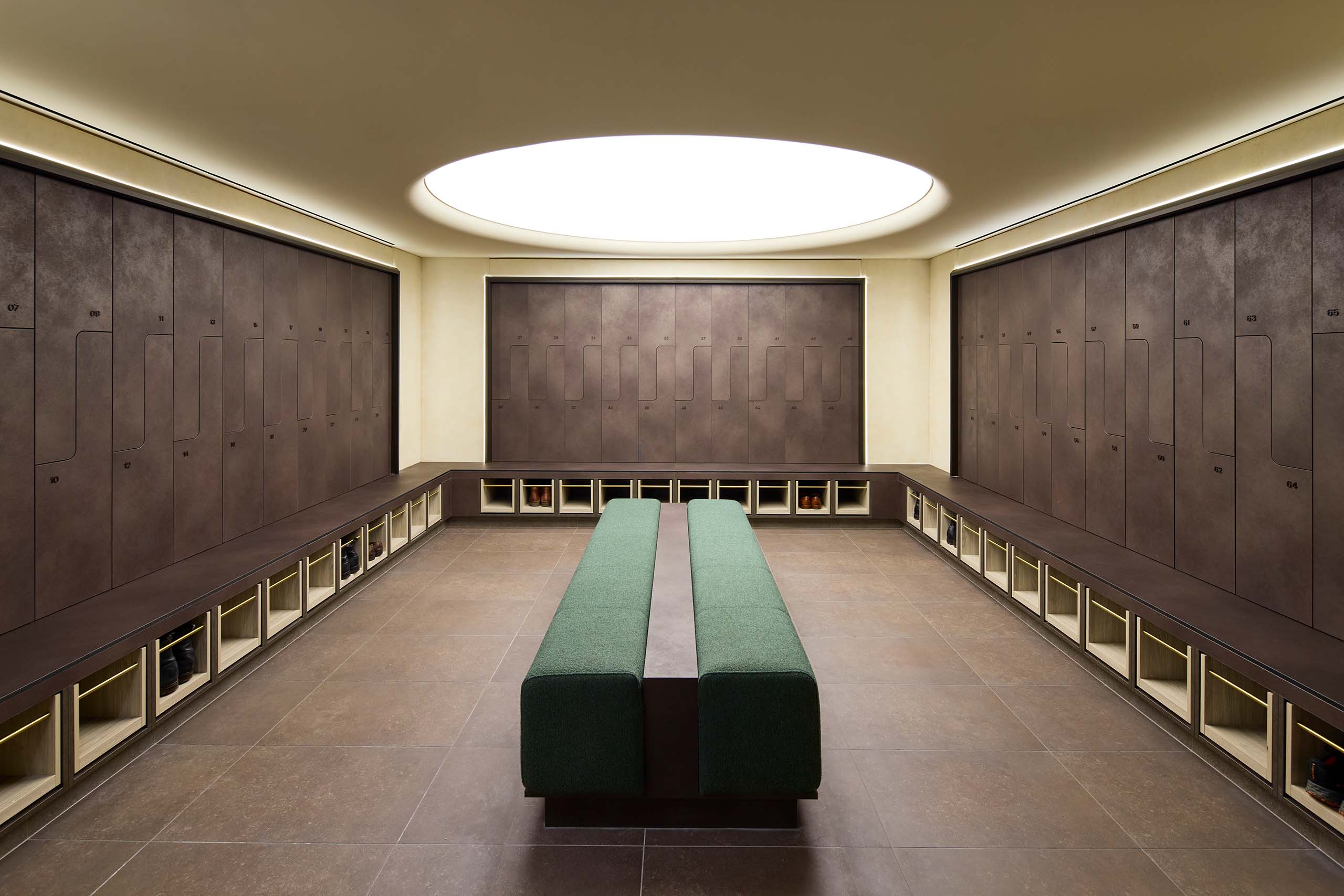
“Lockers allow staff to store personal items while they move freely around the facility, including regular interactions in the multiple group meeting spaces around the central staircase and atrium,” says the studio.
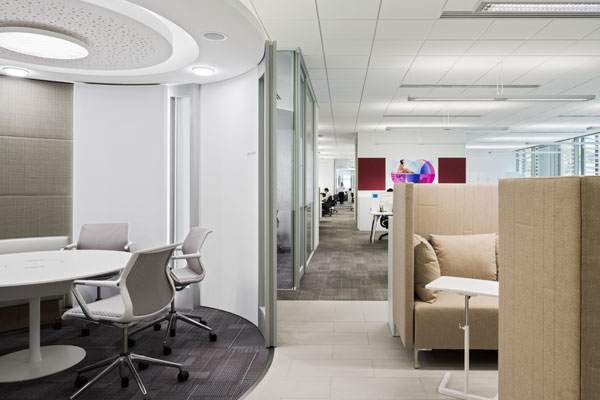
The biggest challenge in keeping to an open plan workspace was to “take standard workstation products and customise them to suit the specific requirements of P&G while also maximising flexibility for different work areas,” Drogemuller continues. For example, Orbit prototyped and developed circular collaboration pods whose curved sliding doors staff members could adjust to control the level of privacy.
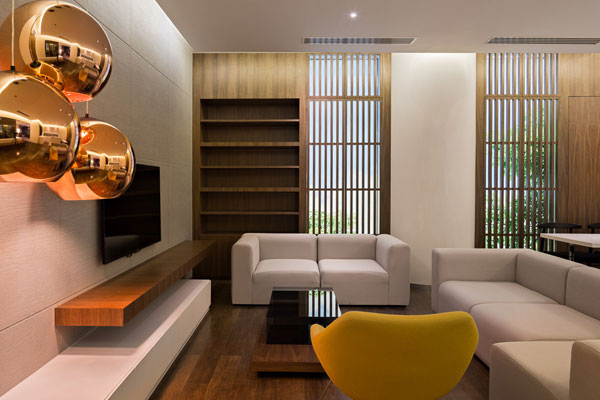
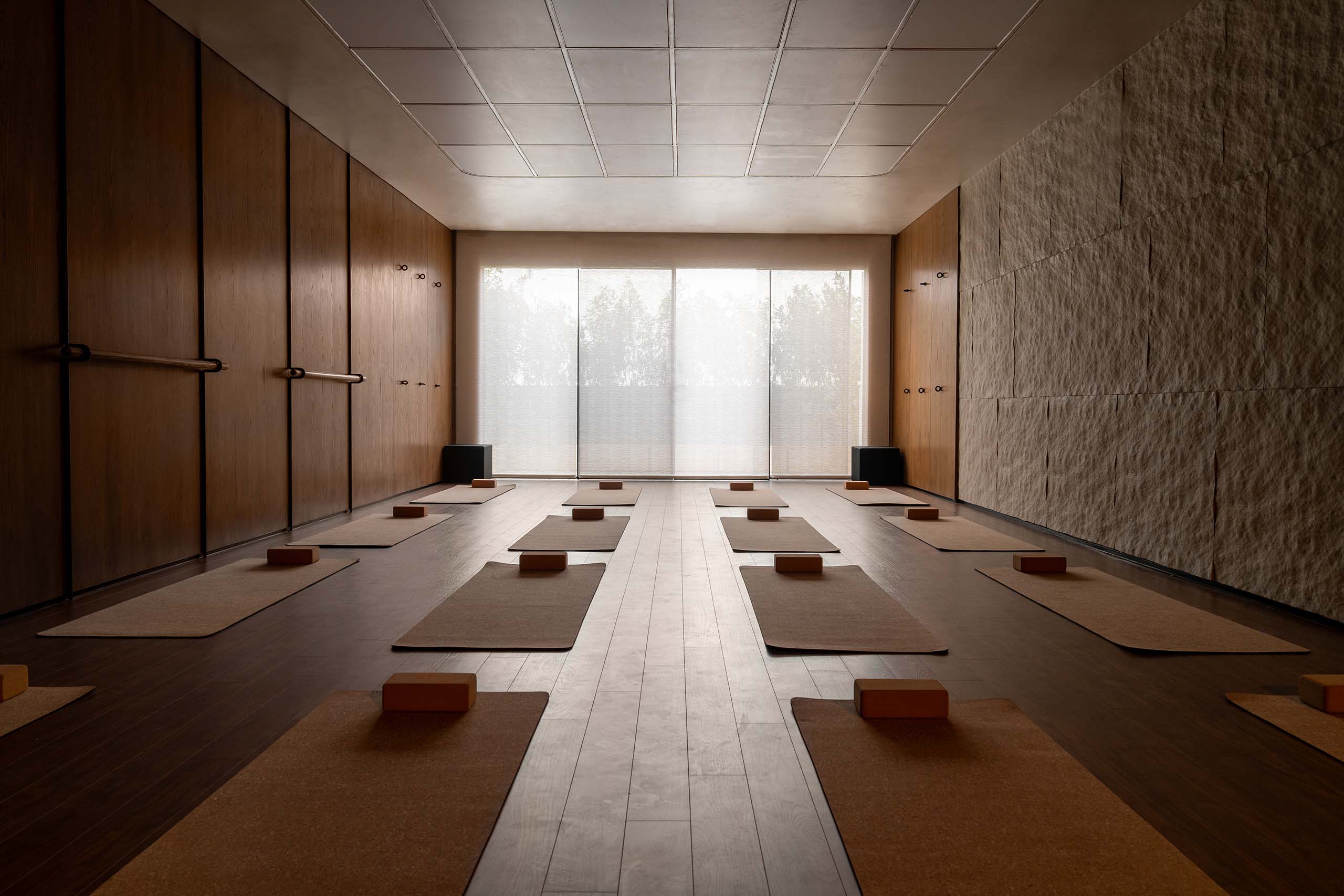
In addition to the pods, Orbit designed open and enclosed collaborative areas, such as four-person ‘huddle rooms’, and even introduced a new flexible bench design – it integrates IT and branding – that Drogemuller says is becoming a standard for P&G. Each floor is also home to a unique enclosed collaboration room. These include, for instance, a ‘Japanese Tatami Room’ that has a no-shoe policy and an ‘Inspiration Room’ that connects to two massage chambers.
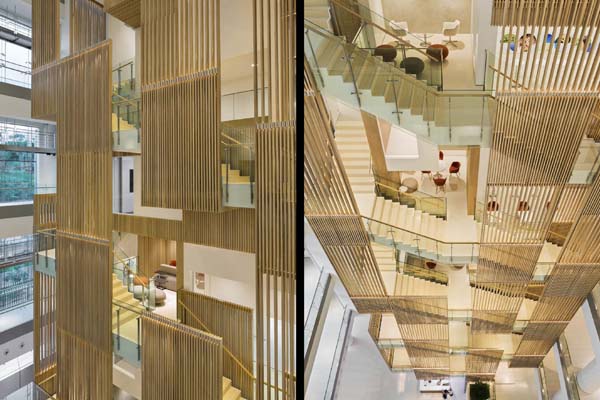
To lend structure to this open plan, Orbit turned its eye towards a central staircase, which links all floors, located in the heart of the facility. The staircase is clad in a vertical wooden louvre carapace, the design of which became a recurring motif that appears throughout SgIC. Drogemuller explains that the louvre is an articulated architectural form that references Asian design and activates the collaborative pods, which sit on “virtual mezzanine floors”.
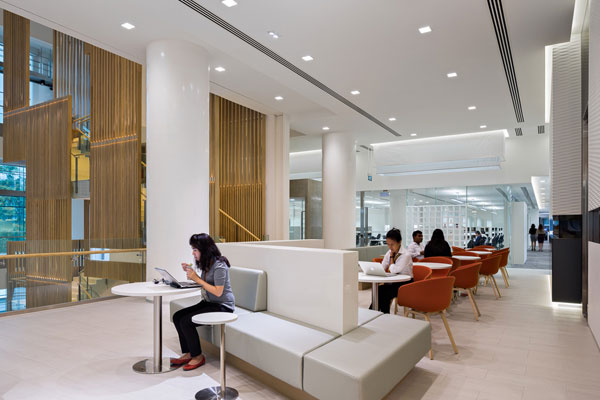
“Each of these spaces is intended to be physically different from a traditional meeting room in order to spark more spontaneous and creative thought,” the studio explains. “These areas tend to be full for most of the day while traditional desks often remain free.”
Photos © Owen Raggett
Orbit Design
orbitdesignstudio.com