The home of architecture and design in the Asia-Pacific
Get the latest design news direct to your inbox!

Get the latest design news direct to your inbox!
How can planners, architects, landscape architects and developers be smart about holistic implementation of design in the diverse ASEAN region? And how are client imperatives changing? CPG Consultants and Consulus share insights.

Rendering of Saradise Kuching development, Kuching, Sarawak
July 20th, 2018
The development challenges in ASEAN nations are keenly felt by those working on urban planning, architecture and landscape developments in the region. Rapid urbanisation, accelerating digital transformations, and social and demographic changes make for complex development contexts. Add ASEAN’s diversity of traditions and values to the mix and it’s clear that there is no one-size-fits-all solution for sustainable development that’s tailored to place and culture. So how can innovative approaches for ASEAN be best strategised?
Generating discussion about this among some key stakeholders was the goal of CPG Consultants when they organised the ‘Shape The World’ conference, which was held at the National Design Centre on 5 July 2018. The day-long program featured local and international speakers from CPG, innovation consultancy Consulus (with which CPG partners on many regional projects), client organisations, as well as professional partners from the private sector and the URA.
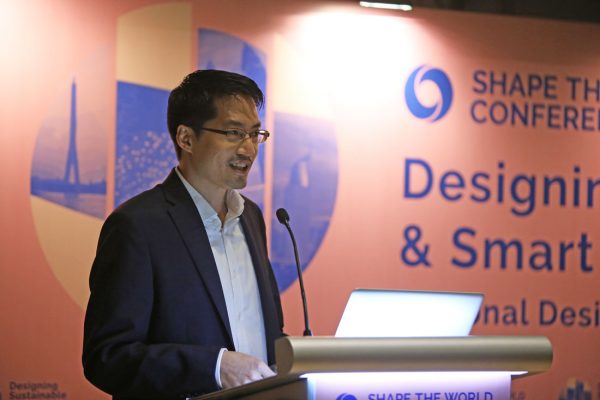
Lawrence Chong, CEO of Consulus, speaking at the ‘Shape The World’ conference
Over lunch, we sat down with Kuan Chee Yung, the Senior Vice President of Architecture at CPG Consultants, and Lawrence Chong, the CEO of innovation consultancy Consulus, to talk in more detail about strategies for designing for inclusiveness and innovation in ASEAN cities.
CPG and Consulus have worked together for 14 years, and jointly developed an ‘integrative development solution’ called PlaceCORE. This is a framework for developments that incorporates master planning, business, design and human development data and insights with the goal of providing governments and developers with a broad view on how a development might result in a place-specific, sustainable and creative outcome supportive of economic and social development.
One of the premises behind PlaceCORE is that while many smart city plans are being proposed in Asia, a lot of them lack holistic implementation, and will therefore be unsustainable. “So far the conversation has largely been about technology, but not about the inclusion of diversity. That’s a huge disconnect,” says Chong. “Many smart city approaches don’t seem to be very relevant to ASEAN in terms of the region’s diversity,” he adds.
For Kuan and Chong, ‘smartness’ is about liveability, sustainability and resilience as much as technology. And that’s becoming more evident as a client concern too. One of the most interesting trends they’ve observed in ASEAN in recent years is the emergence of a new set of demands from developers – often from the younger generation within family-owned development conglomerates. With them comes a concern for elements such as green space and social impact.
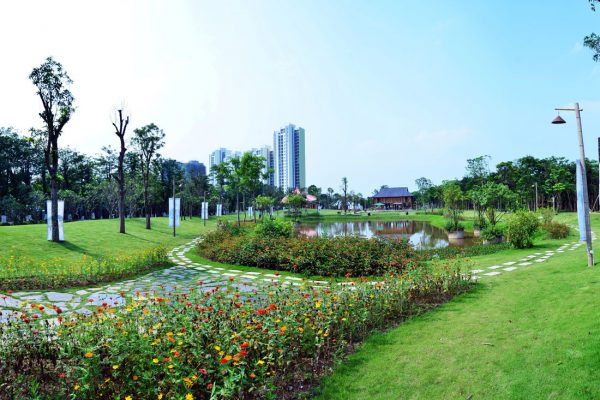
Ecopark, Hung Yen, Vietnam
But does it really go beyond the creation of branding narratives? “I think it used to be about branding narrative, but you need to appreciate that some of the governments in ASEAN struggle with moving things. Some of the family-owned companies are older than the governments in power… The younger ones who come on board realise that they can move a lot of things. They’re asking community engagement questions. They’re challenging us to come up with more creative things because they’ve seen the positive effects.”
For Kuan, CPG’s regional work with Consulus presents an opportunity to help ASEAN nations leapfrog Singapore and move to the next level in a way that’s in line with their own identities and cultures. “We had one client who said they wanted something like Singapore. We found that actually, they just wanted it to work like Singapore, but to have their own flavour,” says Kuan.
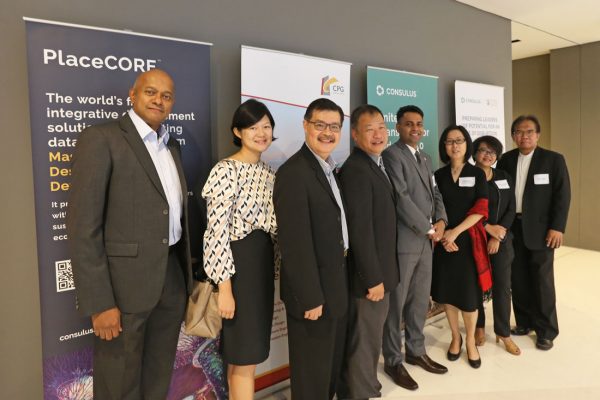
Delegates and speakers at the ‘Shape The World’ conference. Kuan Chee Yung, Senior Vice President of Architecture at CPG, is fourth from the left.
His hope for the ‘Shape The World’ conference is that it would be the starting point for an ASEAN-centric approach to development issues, building on CPG’s relationships with the delegates for action-oriented results.
All images courtesy of CPG Consultants.
INDESIGN is on instagram
Follow @indesignlive
A searchable and comprehensive guide for specifying leading products and their suppliers
Keep up to date with the latest and greatest from our industry BFF's!
The internet never sleeps! Here's the stuff you might have missed