The home of architecture and design in the Asia-Pacific
Get the latest design news direct to your inbox!

Get the latest design news direct to your inbox!
The Creative Director of Viterbo Interior Design tells us how this manifesto informs her work.

February 13th, 2014
For our interview at St Regis, Gracinha Viterbo is wearing a black chequered headdress. This is not unusual for the Portuguese designer; she custom designs each one and wears them at all occasions, even to the park with her kids, as she laughingly tells us.
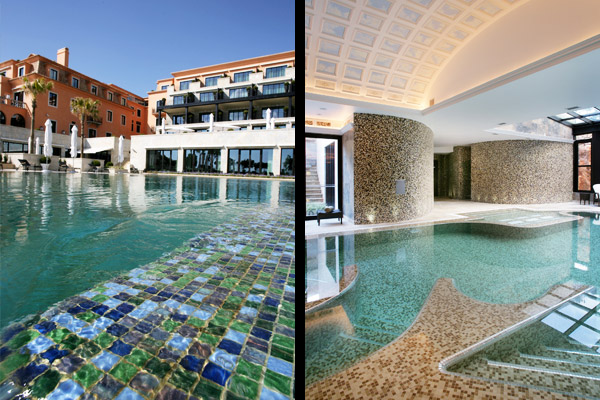
Grande Real Villa Italia Hotel & Spa, Cascais, Portugal
Gracinha heads Portuguese interior design firm Viterbo as its Creative Director together with her husband, Miguel Vieira Da Rocha, the company’s Managing Director.
The firm was founded in 1971 by Gracinha’s mother, Graça Viterbo, and is today known in Europe for its luxury residential and hospitality projects, with many having received prestigious awards and recognition. Having taken over the reigns in 2008, Gracinha’s most recent project has been to establish a Singapore base from which to focus on the firm’s growing portfolio here and in the region. The company also has an office in Africa, where they have worked on a total of 61 luxury hotels to date.
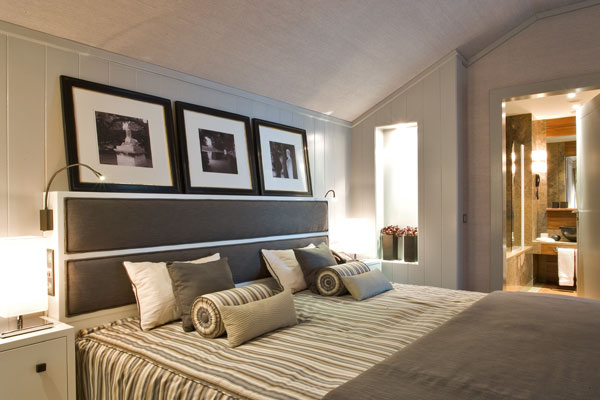
Grande Real Villa Italia Hotel & Spa, Cascais, Portugal
In line with Viterbo’s manifesto, “We Love The Art of Looking Sideways”, Gracinha shares how each project is an opportunity to offer clients a custom design that goes beyond the expected.
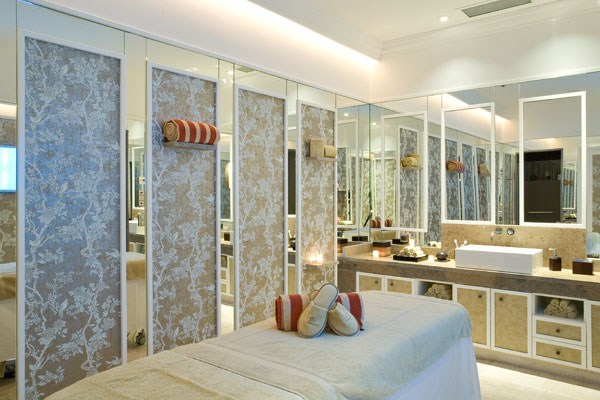
Grande Real Villa Italia Hotel & Spa, Cascais, Portugal
“There is a very important connection between a space and the person that is living in the space,” says Gracinha, “And I’m very sensitive to [both]. I’m chameleonic, like an actress who portrays different roles. For me, each project is like a different role. I try and interpret the life and rituals of the family or the client, translating it into the space, into the lighting… and if it’s a hospitality project I have to also study the personality of the business.”
“I also work with many different cultures and have to adapt to them. Because we work all over the world, I have to really get to know people’s rituals and the way they live, so I can then make the project a better one.”
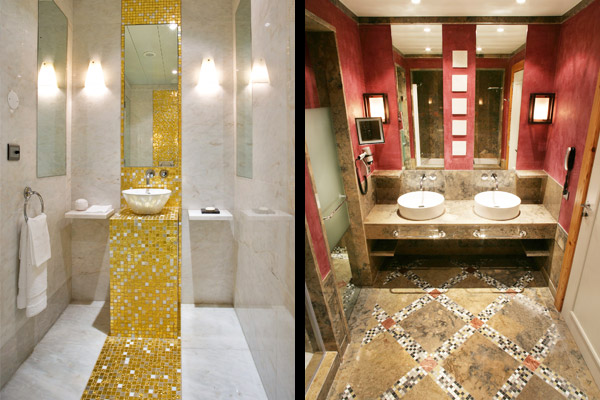
Grande Real Villa Italia Hotel & Spa, Cascais, Portugal
Each project is distinctive and Gracinha explains why this is important. “Do you want to have the same dress that someone else is wearing at a wedding? You don’t. Do you want the same house as your friend? You don’t… [My projects] are never the same.”
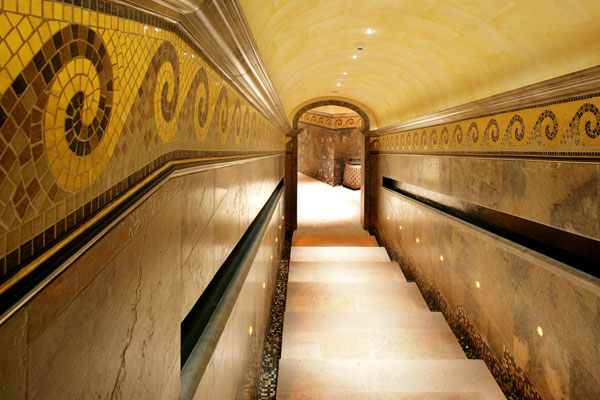
Grande Real Villa Italia Hotel & Spa, Cascais, Portugal
Gracinha knew she wanted to enter a career in interior design at a very young age. “I was born into this business. I accompanied my mother everywhere since I was three… I also had a very engaging mother who was a mentor for many years.”

Former palace in the north of Portugal
But right after graduating from the renowned Inchbald School of Design, Gracinha felt it important for her to start her first job outside the family business, which she did at Kelly Hoppen’s studio in London. Here, she learnt that one needed to be bold with one’s ideas and to believe in one’s ideas. “If you believe in your ideas, this will be translated into your project,” she says.
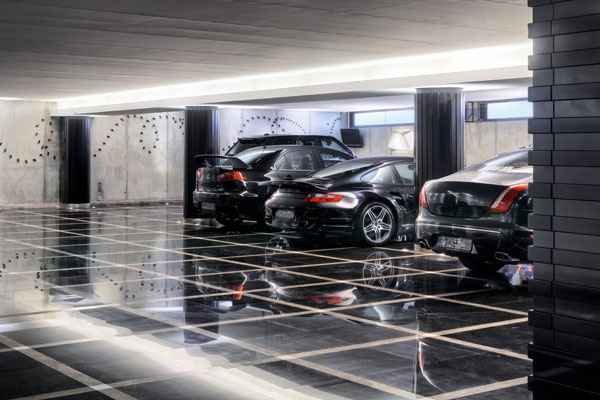
Garage with art installation, in a former palace in the north of Portugal
Gracinha says that with each client, she seeks to pamper and surprise and to “wake up” the senses. She cites a garage with an art installation as an example. “I make very wild garages. I think it’s the new lobby,” she quips.
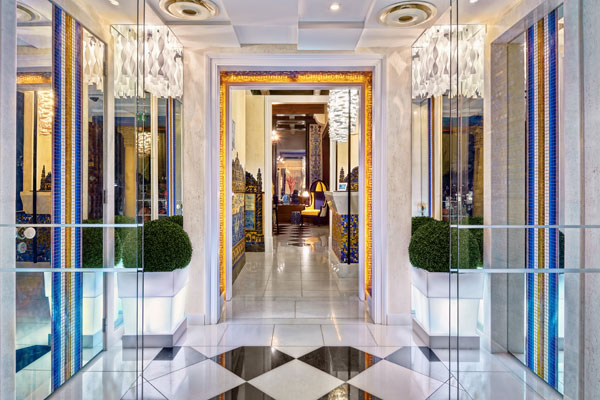
Bela Vista Hotel, Portimao, Portugal
The self-described “art addict” has an art specialist on her team. The firm also employs specialists for all different aspects of design – from lighting to furniture making and it even has a team focused on spas.
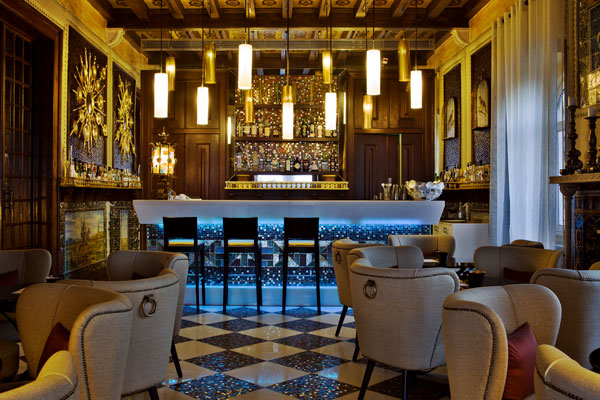
Bela Vista Hotel, Portimao, Portugal
Viterbo collaborates with many different exclusive manufacturers in Italy, France, Portugal and northern Europe, and Gracinha says that the firm’s attention to quality, manufacturing as well as its professional expertise makes the difference in each luxury project it undertakes.

Bela Vista Hotel, Portimao, Portugal
Right not, the firm’s Bela Vista Hotel in Portugal is one of the nominees for this year’s World Luxury Hotel Awards. While the results will only be out in June, Gracinha recounts what a world-renowned hotel critic recently wrote about his stay. “The title was ‘Mersmerising experience, the first hotel I didn’t want to get out of’. We were really happy with that,” she says.

Bela Vista Hotel, Portimao, Portugal
Viterbo Interior Design
gviterbo.com
INDESIGN is on instagram
Follow @indesignlive
A searchable and comprehensive guide for specifying leading products and their suppliers
Keep up to date with the latest and greatest from our industry BFF's!
The internet never sleeps! Here's the stuff you might have missed