The home of architecture and design in the Asia-Pacific
Get the latest design news direct to your inbox!

Get the latest design news direct to your inbox!
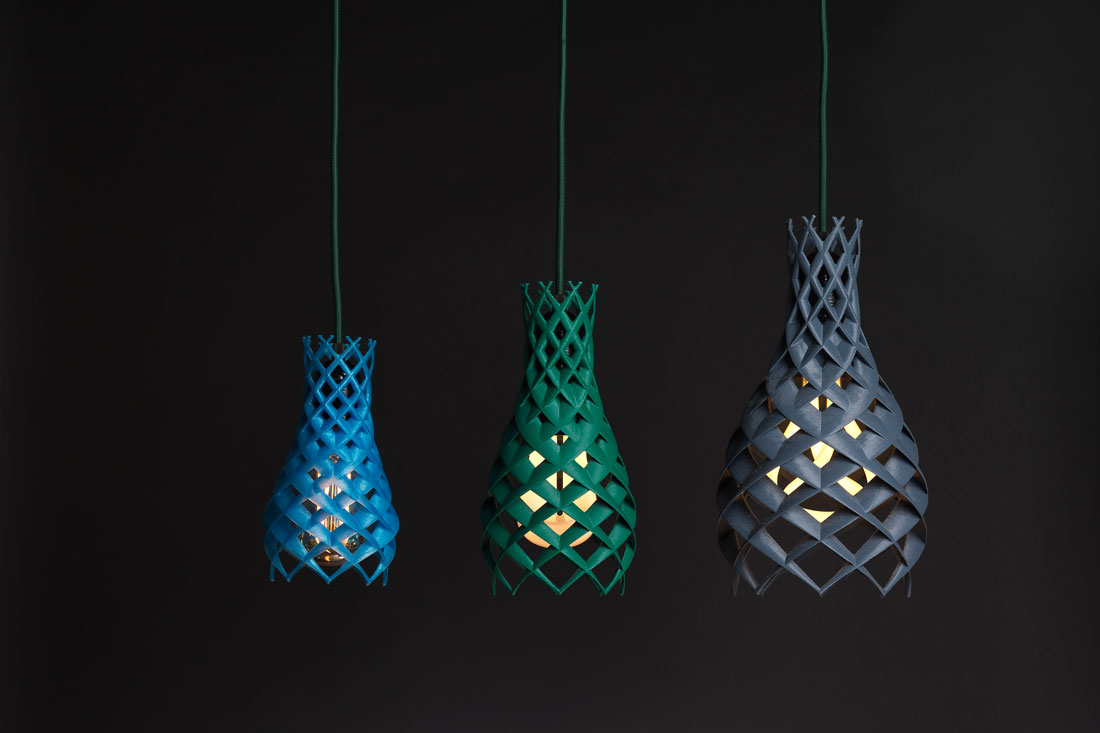
Made to complement its designer bulbs, Plumen’s latest range of made-to-order 3D-printed shades captures the delicacy of shapes found in nature and reduces the carbon footprint of delivery.
November 1st, 2017
With light bulbs, Plumen has been making the same impact as Tesla has with electric cars – encouraging people to adopt new, more sustainable technologies by creating attractive products with them, that is. Since 2010, the lighting brand has reimagined the humble light bulb into a series of low-energy designer fixtures with its own cult following.
In 2015, Plumen added yet another revolutionary technology – 3D printing – to its offering by partnering with design collective Formaliz3D to create Kayan. Designed to complement Plumen’s 001 and 002 bulbs, Kayan was Plumen’s first made-to-order 3D-printed shade.
Now Plumen has added another design to its 3D-printed offering with Ruche. A series of shades designed by UK-based Thai engineer and designer Hook Phanthasuporn, Ruche is Plumen’s exploration of the new forms and aesthetics made possible by 3D printing.
It is also a case study for how 3D printing can reduce the carbon footprint of a product. Ruche is made-to-order and dispatched directly from the manufacturer, eliminating the hassle of being shipped across the globe to take up space in warehouses.
Ruche features a bulbous silhouette and latticed surface made up of repeating fins that mimic the delicate, tapering forms of leaves found in nature. “It’s an impossible configuration that can only be created via the 3D printing technique,” says Plumen co-founder and creative director Nik Roope.
Ruche is available in three sizes to accommodate Plumen’s 001, 002 and WattNott bulbs. The shades are made with biodegradable PLA in a variety of colours, including a glow-in-the-dark option. Recycled material and custom colours are available on request.
INDESIGN is on instagram
Follow @indesignlive
A searchable and comprehensive guide for specifying leading products and their suppliers
Keep up to date with the latest and greatest from our industry BFF's!
The internet never sleeps! Here's the stuff you might have missed