The home of architecture and design in the Asia-Pacific
Get the latest design news direct to your inbox!

Get the latest design news direct to your inbox!
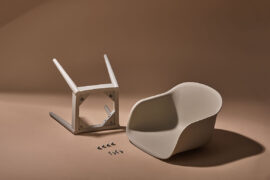
Herman Miller presents a new, more sustainable version of the iconic Eames Moulded Fibreglass Chair.

June 23rd, 2014
The Eames Moulded Fibreglass Chair became the world’s first mass produced plastic chair when Herman Miller presented it to the world in 1950. Arguably one of the most recognisable works by Charles and Ray Eames, the iconic design continued to evolve through the years with new colours, height options, base variations, and the application of upholstery.
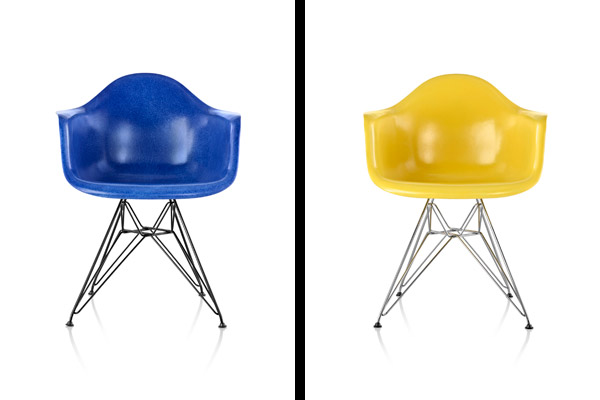
But by the late 1980s, with increasing awareness of the environmental risks associated with fibreglass production, the decision was made to discontinue the fibreglass product until a more suitable material could be found. In 2000, Herman Miller reintroduced the Moulded Plastic Chair in polypropylene. This durable, 100% recyclable material, which gave the chair a softer profile and a subtle matte texture, proved popular.
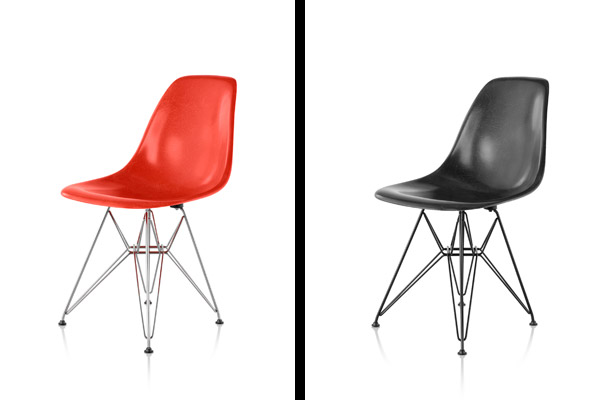
However, the original fibreglass version continued to be admired for its uniquely variegated surface and semi-gloss finish. And now, thanks to a new first-in-furniture process for producing fibreglass-reinforced plastic, Herman Miller is once again able to develop the Eames original Moulded Fibreglass Chair with sensitivity to both the environment and production staff.
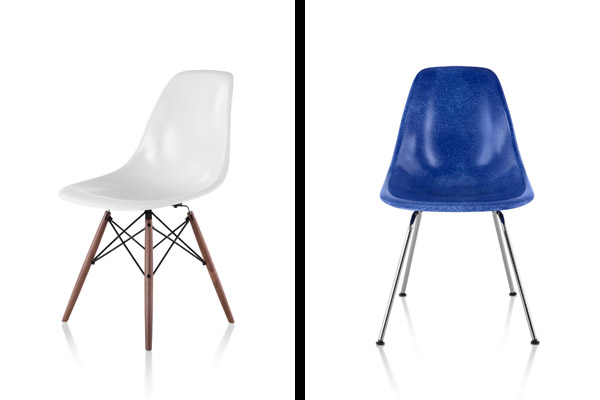
The new process, which originates from the automotive industry, utilises a ‘dry bind’ process that is less volatile and monomer free, without VOC or HAP emissions, and environmentally superior to current conventional fibreglass resin production, while retaining the performance and visual qualities of the original design.
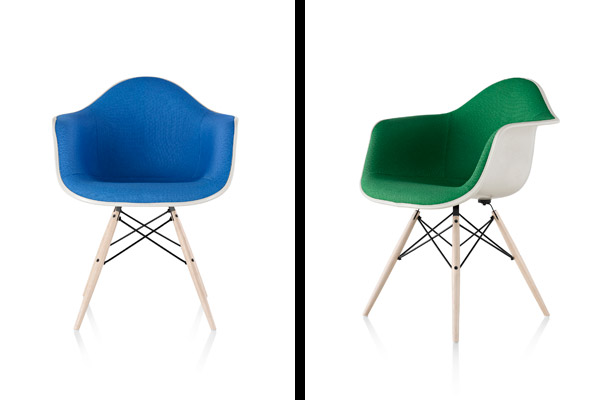
Today’s moulded fibreglass chair is available in both arm and side chair formats, in a choice of bases, and in nine newly formulated archival colours that meet Herman Miller’s Design for the Environment standards. Additionally, the fibreglass and polypropylene chairs can be upholstered, like the original vintage models. The upholstery process has been updated, with a supportive foam padding that uses a safer, greener adhesive for easier disassembly. Customisation options include an array of Hopsak fabrics designed by Alexander Girard (Herman Miller’s Textile Director from 1952 to 1973).
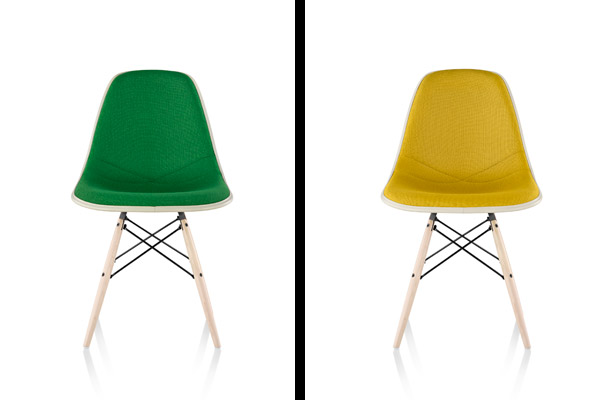
The fibreglass chair joins the family of Shell Chair options that includes polypropylene, wire and new 3D wood veneer versions.
The Eames Moulded Fibreglass Chair is available in Singapore at XTRA.
INDESIGN is on instagram
Follow @indesignlive
A searchable and comprehensive guide for specifying leading products and their suppliers
Keep up to date with the latest and greatest from our industry BFF's!
The internet never sleeps! Here's the stuff you might have missed