The home of architecture and design in the Asia-Pacific
Get the latest design news direct to your inbox!

Get the latest design news direct to your inbox!
The work of architecture firms Troppo Architects and TCL has had a positive and far-reaching impact on the Australian urban landscape.
August 16th, 2011
Last week we received the news of the tragic passing of Greg McNamara and Lena Yali of Troppo Architects, and Kevin Taylor of Taylor Cullity Lethlean (TCL) in a road accident in Darwin.
Their deaths have caused deep reverberations in the architecture and wider communities, garnering countless tributes from those that have met and worked with them. It’s a fitting recognition of the immense impact these 3 individuals have had on the Australian built environment.
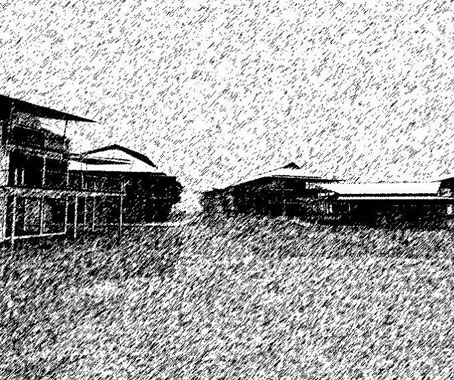
McNamara and Yali took over Troppo Architects in the Northern Territory in 2003, their distinctive work soon coming to characterise a new mode of top end architecture.
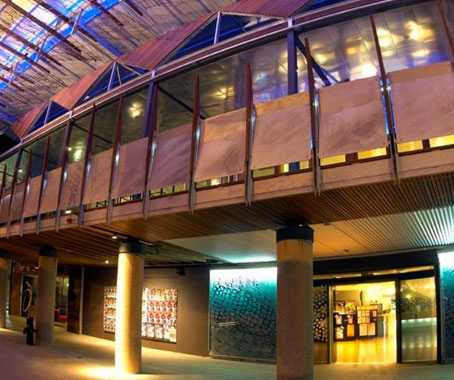
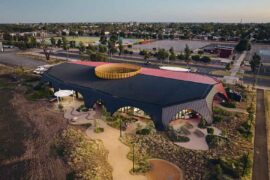
Darwin Entertainment Centre
“They approached each project with the objective of minimising the impact both in the short and long term to the environment,” Richard Layton, Australian Institute of Architects NT chapter president, recently told ABC Darwin.
McNamara and Yali changed Darwin cultural life through their work on the Smith Street Mall, Raintree Park and Darwin Entertainment Centre, creating vibrant public spaces with a unique identity.
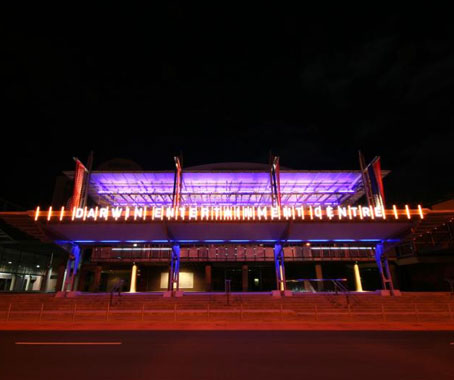
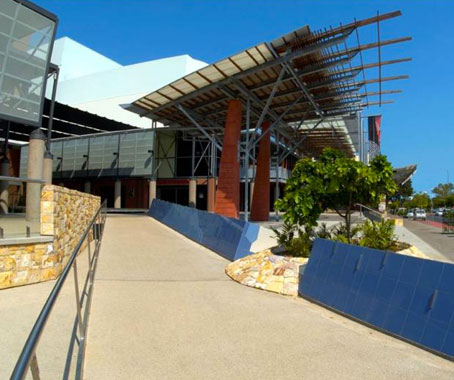
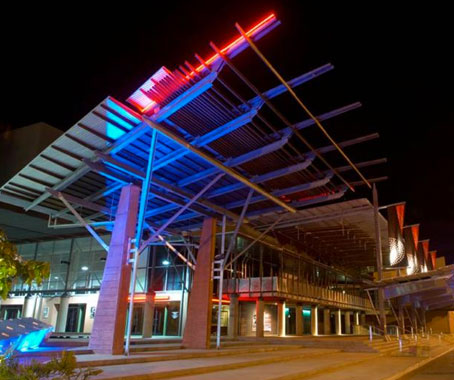
Darwin Entertainment Centre
“As you walk around Darwin, visually you get an image every now and then of a house or a building that you instinctively know has been influenced by the architecture of Troppo,” Layton recalled, describing the Troppo style as possessing “a sense of place, a sense of belonging, a sense of happiness of being in that truly tropical environment.”
2 of their most recent projects, with their characteristic lightness and air, were awarded top accolades at the AIA 2011 NT Architecture Awards.
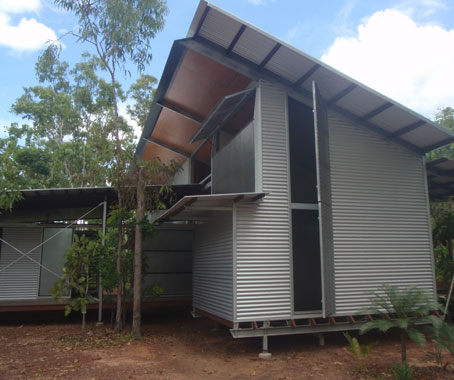
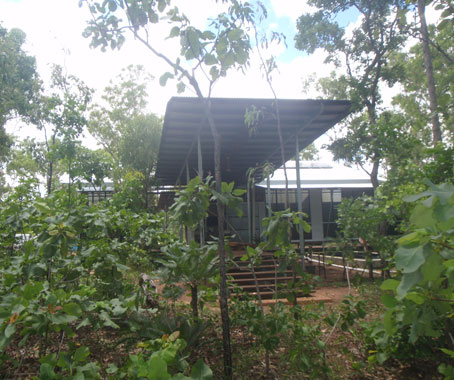
Mortlock Lee House – Burnett Award for Residential Architecture (Houses)
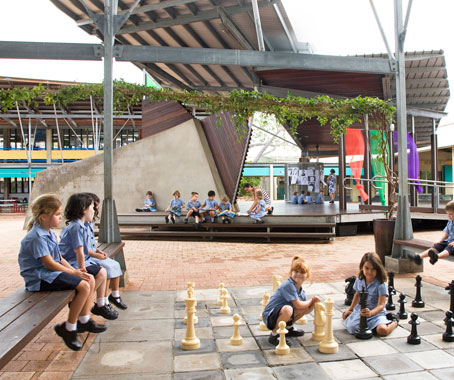
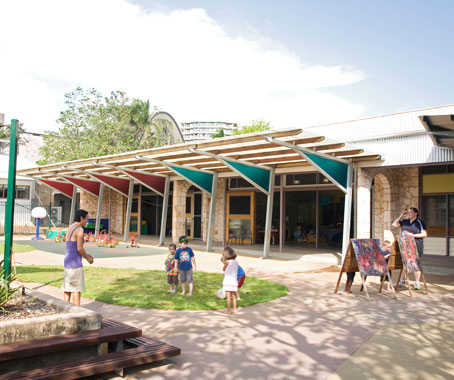
St Mary’s Catholic Primary School New Hall and Library, Reggio Emelia Early Learning Centre and Courtyard – winner of 4 awards, including The Tracy Memorial Award
Kevin Taylor’s imprint on Adelaide’s urban fabric can be seen throughout the city.
The principal of Taylor Cullity Lethlean (TCL) was responsible for some of the city’s largest public realm projects, as well as work in country South Australia and interstate.
In 2010, Taylor and TCL designed the masterplan for the Victoria Square/Tarndanyangga regeneration project. Speaking about the design, Taylor’s passion and commitment to urban revitalisation was palpable.
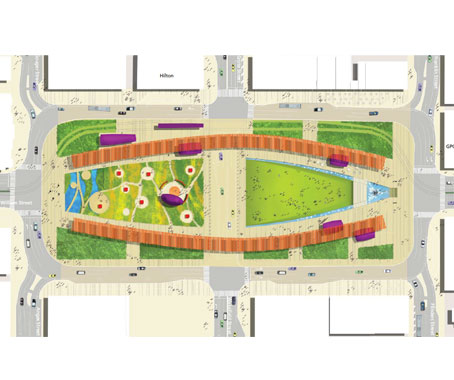
Victoria Square masterplan
He described it as “more than just a physical upgrade.”
“The heart of our city is beating again,” Taylor said. “It’s quite dispiriting to have a centre of a city that feels desolate and a traffic island, and I think to turn that around will have a real significance for people’s level of confidence and sense of vibrancy for the whole city, not just the one space… The most important thing is the Square must become an experienced place rather than purely a symbolic space.”
Taylor was also involved in Adelaide’s North Terrace and Bonython Park developments and, more recently, the Riverbank Precinct masterplan with ARM Architects.
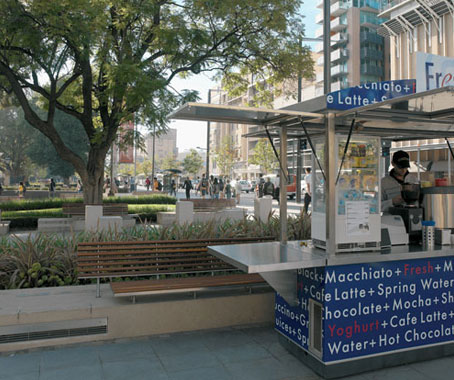
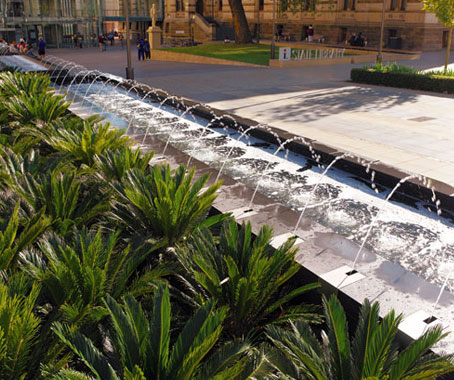
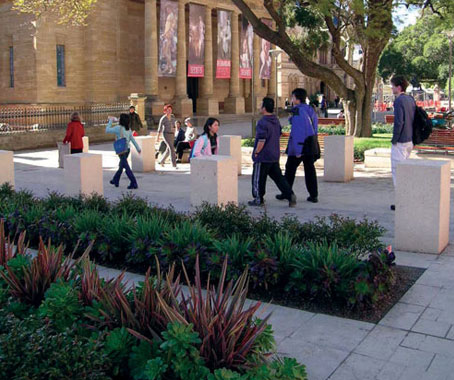
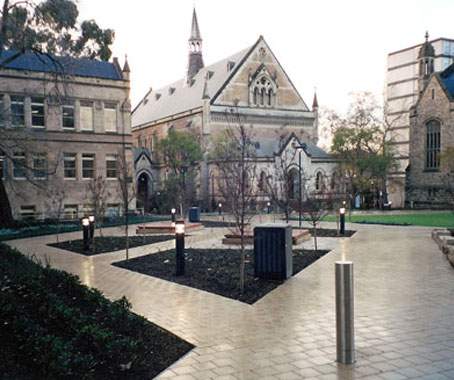
North Terrace – Adelaide
Wendy Sarkissian, who taught Taylor at the then-SA Institute of Technology in the mid-to-late 1970s, commended her former student for his “quiet brilliance, his talent and design skills, his compassion and his love for this friends, colleagues and family.”
“Kevin was one of the brightest students I ever had the blessing to teach,” wrote Sarkissian in an online tribute to Taylor.
David Yencken, who took Taylor on as a graduate at housing company Merchant Builders, described him as “a person of great flair and imagination [who] from the beginning had a rare ecological awareness.”
The work of the talented Lena Yali, Greg McNamara and Kevin Taylor will continue to impact our cities and the way we live, as well as influencing other architects and designers for years to come.
Troppo Architects
troppoarchitects.com.au
Taylor Cullity Lethlean
tcl.net.au
INDESIGN is on instagram
Follow @indesignlive
A searchable and comprehensive guide for specifying leading products and their suppliers
Keep up to date with the latest and greatest from our industry BFF's!
Boral’s 5th annual Design Award is coming to a close on 30 September 2010. Featuring a cash prize pool totalling $34,000, the 2010 Boral Design Award is an opportunity to design innovative concepts in realistic residential design, with a brief incorporating a 125sqm family home and its landscape. First prize is $20,000 in the professional […]
The internet never sleeps! Here's the stuff you might have missed