The home of architecture and design in the Asia-Pacific
Get the latest design news direct to your inbox!

Get the latest design news direct to your inbox!
Art goes outdoors and into the city’s secret laneways.
March 23rd, 2010
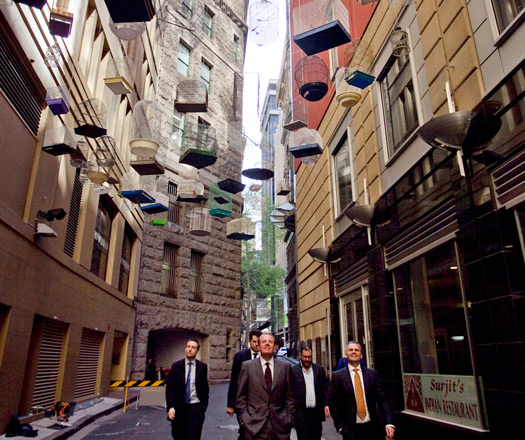
Once the forgotten dark streets off the CBD’s beaten track, Sydney’s laneways are set to become as vibrant as its Victorian counterparts.
The City of Sydney’s plans to develop the city’s dank backstreets are set to take on a new dimension, restoring historical and cultural significance to the city’s veins.
In anticipation of the next Laneway Art Program in October, a search is on to find creative people and teams to take the scheme to another level.
The City of Sydney is looking to attract a new curator or curatorial team to submit proposals for cultural initiatives in up to eight of 20 of the city’s laneways.
“This next chapter in our quest will further empower the look, feel and atmosphere of the Laneway Art Program in time for Sydney’s biggest outdoor arts festival Art & About,” said Lord Mayor Clover Moore MP.
“What we are seeking are new creative voices to help source innovative and exciting ideas to temporarily transform our City laneways with engaging artworks and inspiring ideas – covering the period from September until the end of the Sydney Festival in January 2011.”
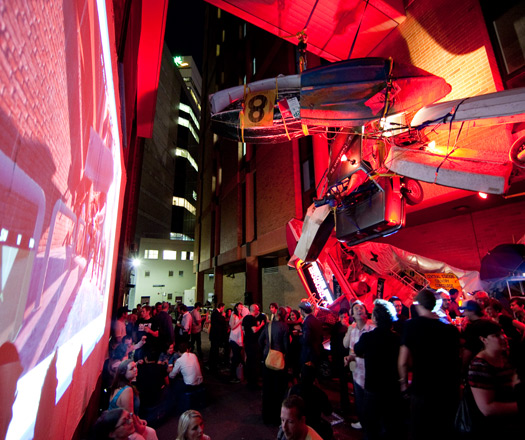
The scheme to create interesting new spaces for the city’s dweller and to breathe new life into the public laneways, builds upon the success of the By George! Hidden Networks art installations last year.
The Laneway Art Program Curator, or Curatorial team, will help develop a curatorial theme and select up to eight artists or collaborative teams to develop high quality temporary laneway art projects in response to that theme.
Further application details can be found online.
All applications must be received by Tuesday 20 April 2010.
By George! Laneways
lanewaysbygeorge.com.au
INDESIGN is on instagram
Follow @indesignlive
A searchable and comprehensive guide for specifying leading products and their suppliers
Keep up to date with the latest and greatest from our industry BFF's!
The internet never sleeps! Here's the stuff you might have missed