The home of architecture and design in the Asia-Pacific
Get the latest design news direct to your inbox!

Get the latest design news direct to your inbox!
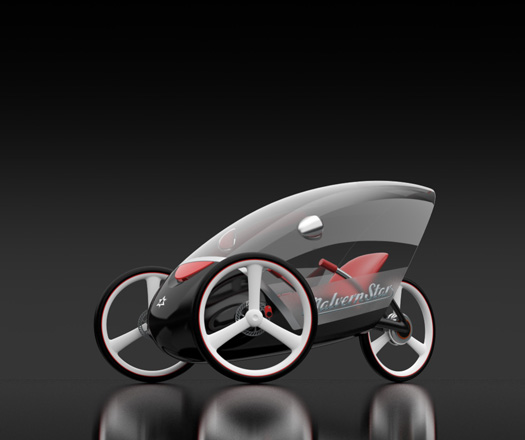
For Human Powered Vehicles it seems there’s Blue Sky ahead.
December 28th, 2008
It goes without saying that pedal power is better for your health, the environment and the hip pocket, but a realistic alternative to car travel, for many, remains out of reach.
Although human powered vehicles (HPV) – including the traditional bicycle – have been around for a long time, a mode of HPV commuter transport that keeps you safe, dry and comfortable is still not readily available. This is where the Blue Sky Design Group has stepped in.
Collaborating with two universities and iconic Australian bicycle brand, Malvern Star, Blue Sky Design has taken on the challenge of making a usable HPV a reality.
Trainee industrial designer, Jerry Thong from The Hague University, is currently working on the project with Blue Sky Design and two teams of mechanical engineers from the University of New South Wales.
The engineers have developed a new drive system for a bicycle without traditional pedals and chain, while Thong has developed the concept with research into ergonomics, safety, layout and vehicle access.
Determined to bring the project to fruition, Blue Sky’s Mark Armstrong engaged the manufacturing and marketing expertise of Malvern Star.
“I want to have a channel by which we can bring it to reality, I don’t want it to just be experimental and then have nothing happen,” says Armstrong.
The project is attracting a great deal of interest and all those involved are committed to getting the concept to prototype and production.’¨
Blue Sky Design Group
(61 2) 9669 4644’¨
marmstrong@blueskydesigngroup.com.au
blueskycreative.com.au
INDESIGN is on instagram
Follow @indesignlive
A searchable and comprehensive guide for specifying leading products and their suppliers
Keep up to date with the latest and greatest from our industry BFF's!
The internet never sleeps! Here's the stuff you might have missed