The home of architecture and design in the Asia-Pacific
Get the latest design news direct to your inbox!

Get the latest design news direct to your inbox!
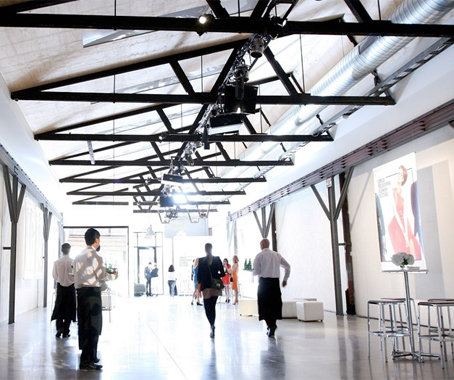
TwoTonMax in North Melbourne is a multi-faceted new function venue, with a view to it’s colourful past we assess the conversion of this dynamic space
September 25th, 2012
Just a few years ago twotonmax was a small part of a rambling industrial workshop in North Melbourne involved in the manufacture of generator equipment. As the business grew and its products evolved, the workshop proved inadequate for the daily movement of bulky items – sometimes as big as shipping containers.
Once the engineers had vacated the building in favour of wide roads and high clearance, the building that remained began to tell a long story of hard work.
An assessment of the building’s key industrial elements by the new owners took in the array of columns, beams, the patchwork brick and concrete floor, interconnecting doorways and lots of ad hoc additions within the space. These things were a strong part of the character and also made it possible to understand the chapters of the building’s life. Ultimately, beneath the thick layer of diesel soot was a relatively unmolested gem.
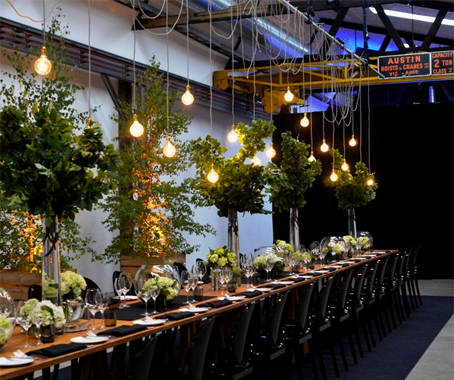
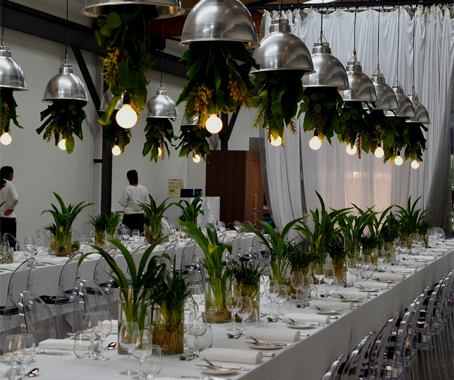
In writing the next chapter of this building’s story, the new owners have made the addition of modern commercial kitchen and bathroom amenities as well as restoration of primary, though now dormant, industrial elements. Wherever possible, materials have been recycled and re-deployed to a new use.

Today, large pulleys, beautifully detailed in steel and laminated timber, hang overhead as a reminder of a time when enormous engines drove canvas belts, that in turn gave motive power to equipment in the factory.
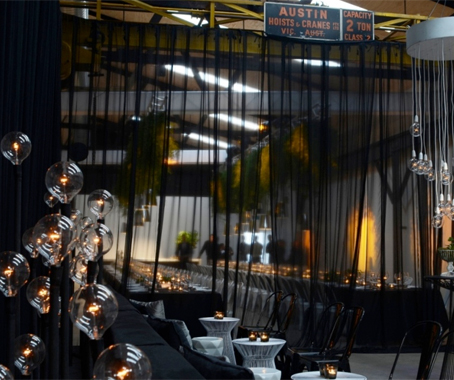
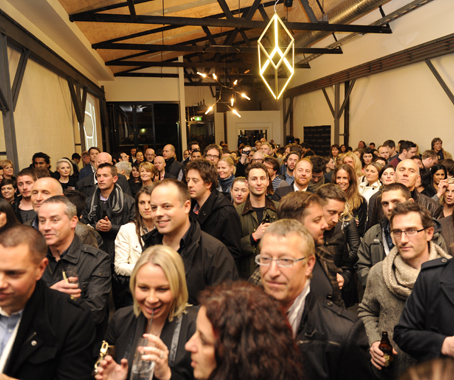
This versatile new venue draws its style cues and has its tone set by the ever-present spectre of the yellow crane, spanning the space, overhead. Its max. capacity is of course, Two Ton.
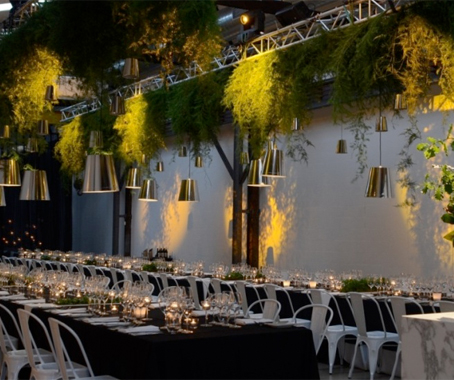
TwoTonMax
INDESIGN is on instagram
Follow @indesignlive
A searchable and comprehensive guide for specifying leading products and their suppliers
Keep up to date with the latest and greatest from our industry BFF's!
The internet never sleeps! Here's the stuff you might have missed