Ormond Esplanade House
Published
By
jesse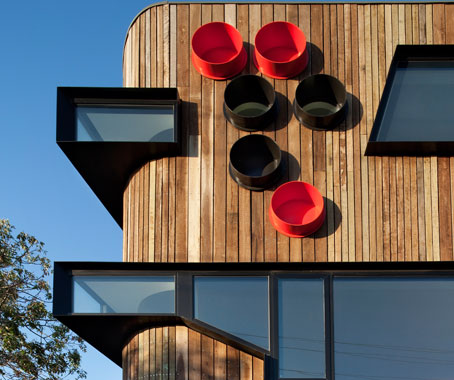
Architect Jesse Judd has referenced the owners’ love of the beach and indigenous art in this relaxed family home, writes Stephen Crafti.
The owners of this house in Elwood, Melbourne, weren’t quite sure whether to retain the existing 1920s duplex or build a completely new house.
After numerous schemes were presented to the owners, a couple with 2 children, the decision was made to proceed with a new house.
“The owners wanted me to respond to the beach, something slightly playful that would also engage with their children,” says Judd.
Spread over 4 levels (including 2 half levels), the house features a concrete block base with the upper levels clad in rough sawn spotted gum.
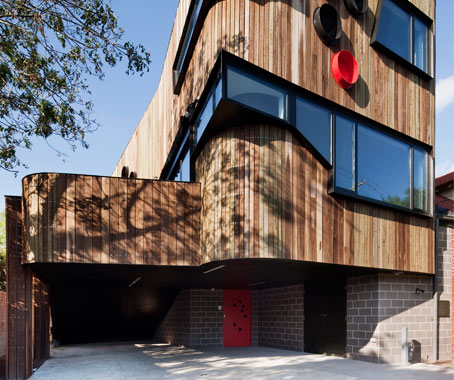
The owners wanted the house to respond to the local context, as well as capturing views of the foreshore directly ahead.
Judd took his cue from the nearby Elwood pier, with its rough timber construction.
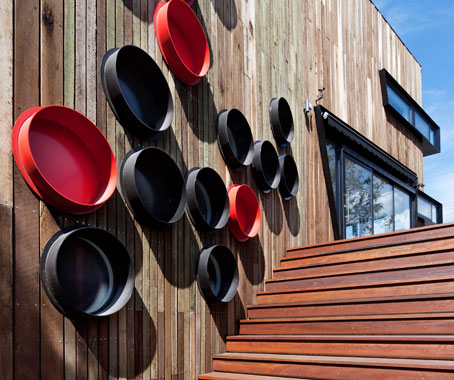
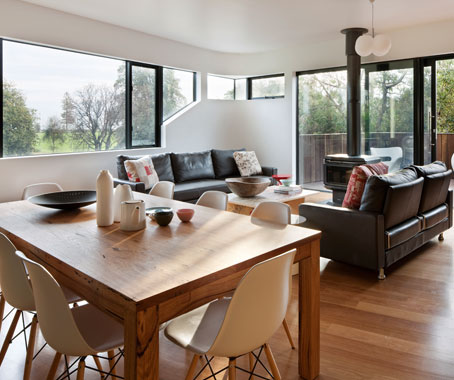
To allow for views of the foreshore, Judd located the main living areas on the first floor of the house.
The vistas have been created by steel cased and porthole windows, with generous sliding doors increasing light and giving access to the rear garden.
Judd worked with textile designer Stewart Russell from Spacecraft on the interior. Russell’s graphic designs have been printed on the timber balustrades, as well as the kitchen joinery.
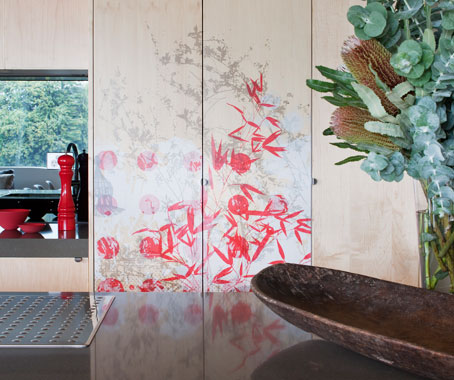
The design on the balustrade features a gradual change from native to more exotic plants.
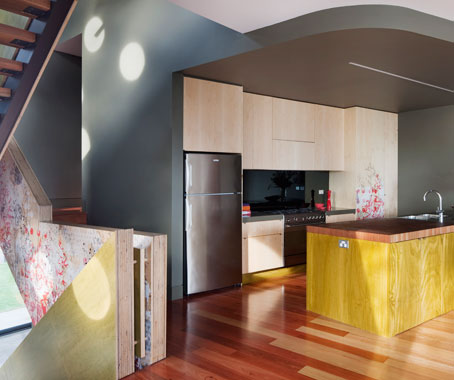
There are also random dots in Russell’s work, referencing the owner’s appreciation of indigenous art.
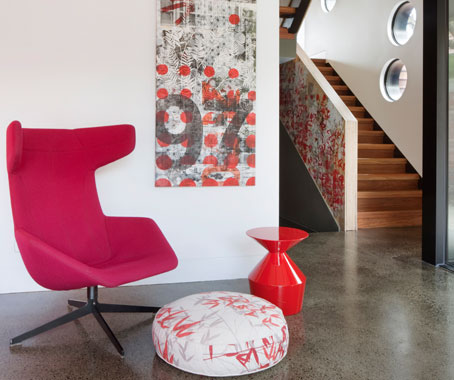
Being near the sea, Judd was keen to not only make the most of the outdoors, but also ensure the house was well ventilated with the changing breezes.
The stairwell linking the different levels includes a skylight and an operable window in the ceiling to purge hot air during the warmer months.
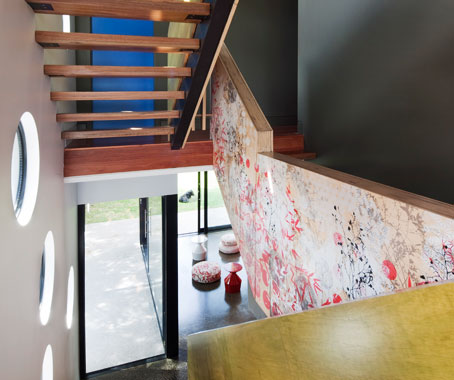
Open timber treads in the staircase also ensure that air and light penetrates the core of the home.
“It’s an extremely comfortable family home,” says Judd. “But it’s not precious.”
Photographs by Shannon McGrath
Judd Lysenko Marshall Architects
jlma.com.au
Spacecraft
spacecraftaustralia.com
Latest Projects
QLD
Living outside the box
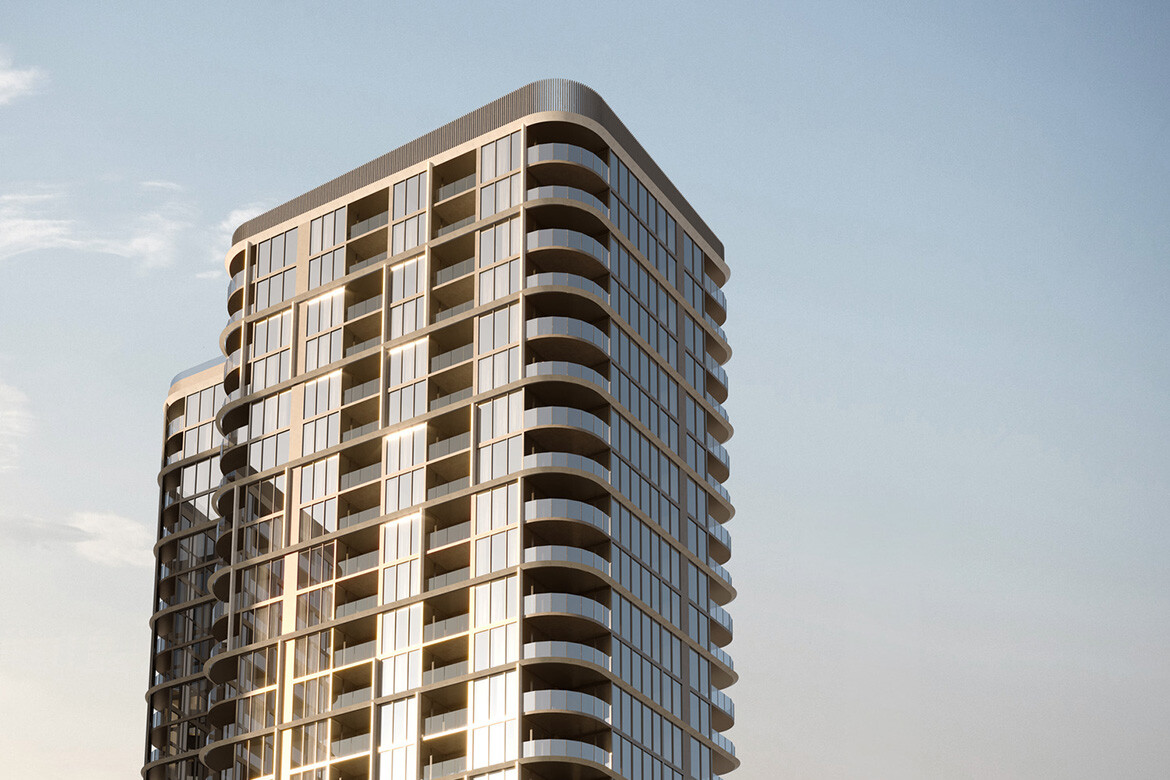
At Northshore Hamilton, Plus Studio’s Danny Juric is looking beyond the apartment tower as an isolated object, drawing on mature trees, Brisbane’s subtropical climate and the rituals of outdoor living to shape Duet.
Project
A civic gateway for Pakenham
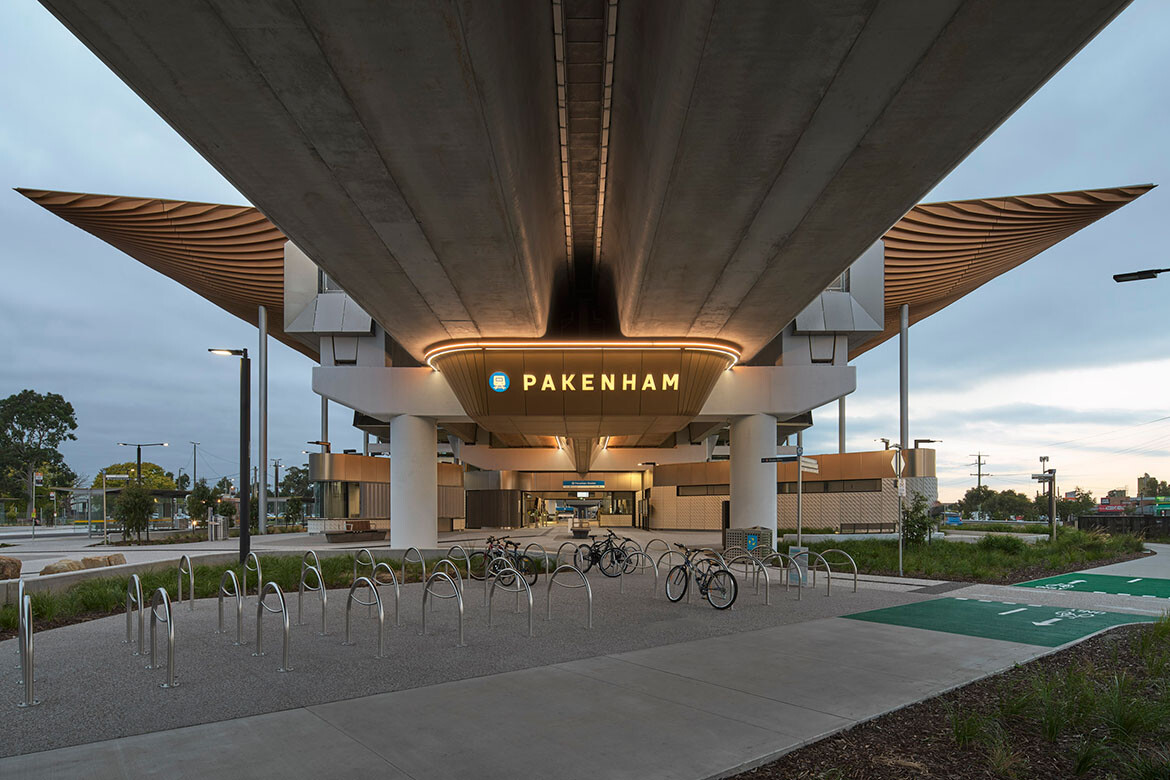
Genton’s Pakenham Station transforms a utilitarian transport interchange into an open civic landmark, reconnecting the town through landscape, public space and infrastructure designed around Country.
Workplace
Per atria ad astra
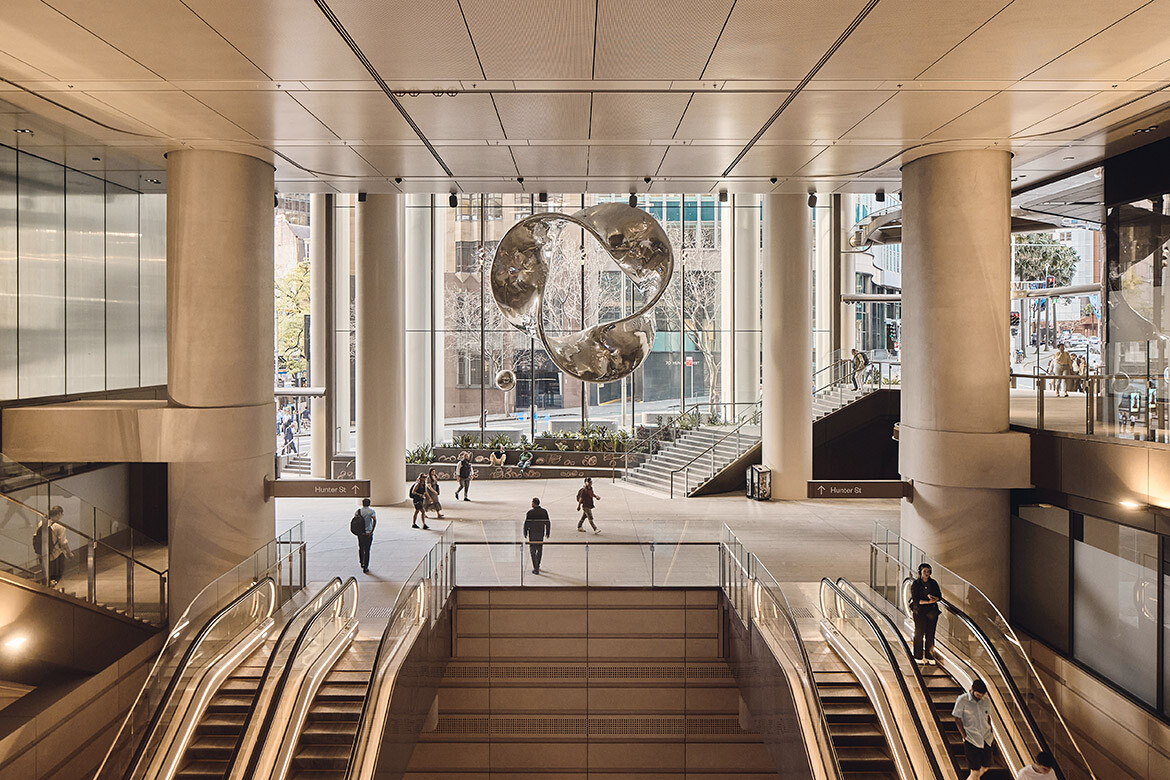
In the very heart of Sydney’s CBD, 1 Elizabeth is a vast civic-scale project that integrates workplace design, transport infrastructure, event spaces, and hospitality around some dramatic void spaces.
Workplace
Seidler, Nervi and fjcstudio walk into an office tower
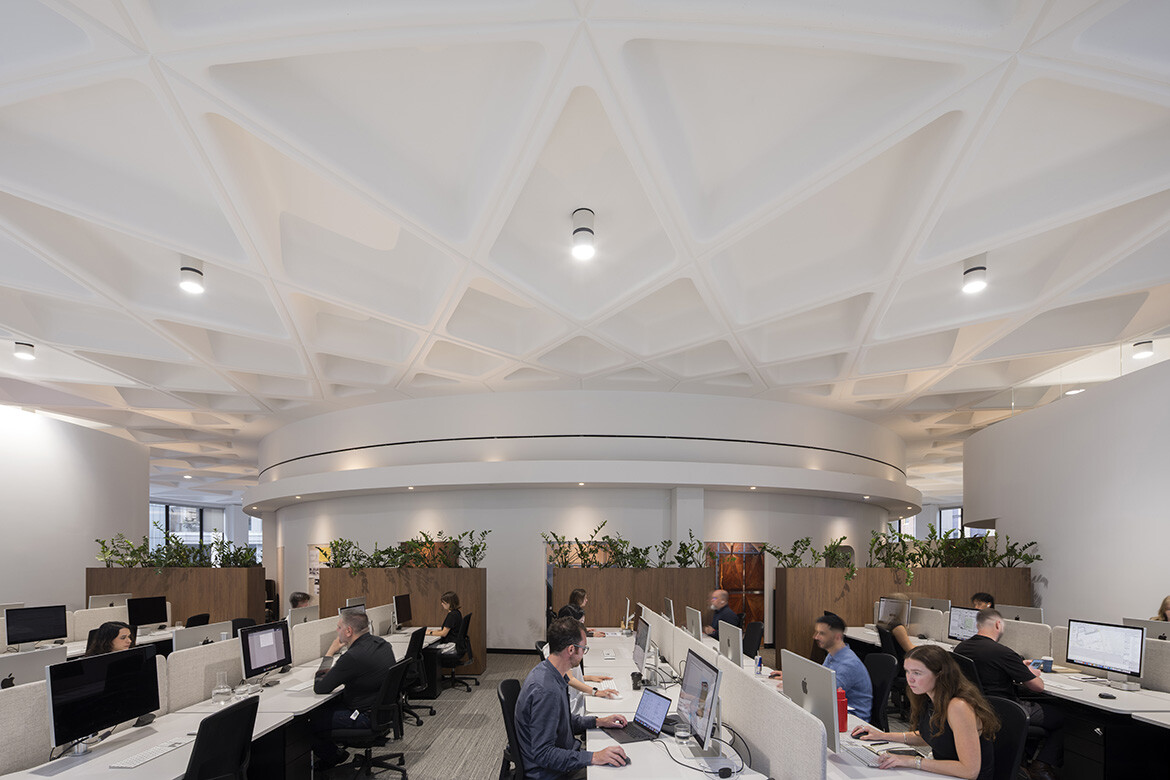
Set within hallowed architectural surroundings amidst the ghosts of Harry Seidler and Pier Luigi Nervi, fjcstudio’s new Sydney home brings geometric clarity and a spirit of creative exchange to a challenging workplace fit-out.