The act of travelling – flying in an aeroplane, boarding a ship, taking a train cross country or staying in a hotel – isn’t what it used to be. While today it is a convenience (which can often feel like an inconvenience), it once was a glamorous, sophisticated and luxurious experience available to only the privileged few.
“Glamour, luxury and the promise of adventure were central to the Golden Age of Travel,” says Adele Winteridge, founder and director of Foolscap Studio. “Mini Bar represents the New Golden Age in which travel has been turned on its head, driven by contemporary culture, technology and changing expectations.”
Mini Bar is located on a site that once housed an iron foundry producing boilers for Australia’s first railway locomotive and is adjacent to the railway and docks of the Yarra River. “This naturally led us to research the history of travel by train and ship in Australia and how advances in technology opened up passenger travel around the world,” Winteridge says. “But it was important that our concept also reflect a more contemporary context in which travel is available to the masses and ideas of luxury have been redefined.”
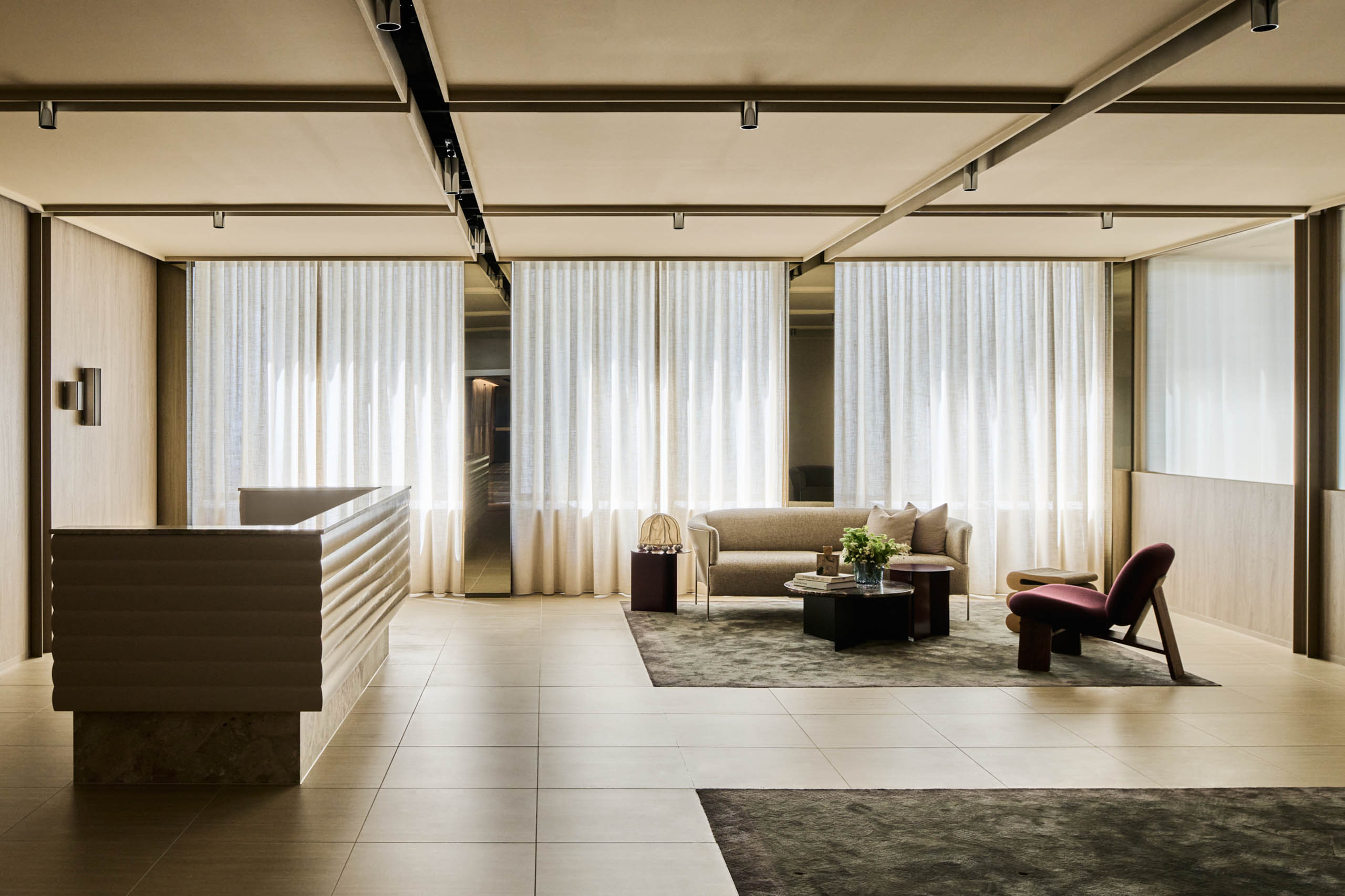
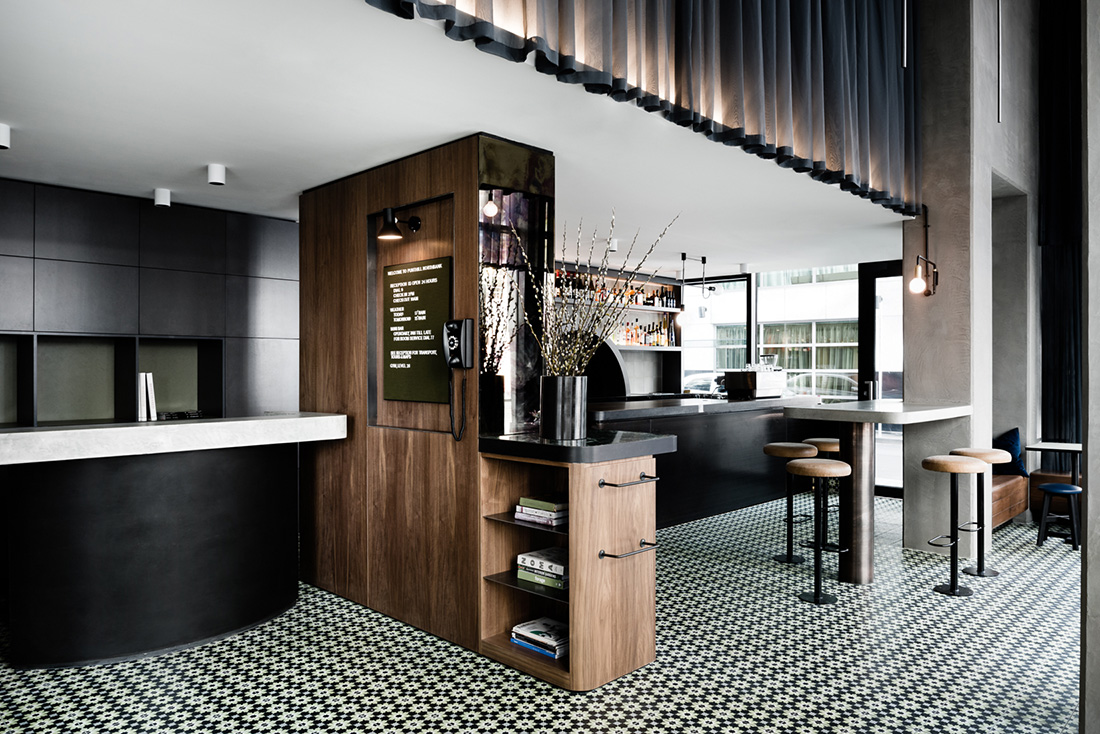
Sitting at the base of the Punthill Northbank hotel, Mini Bar is a multifunctional space that provides a reception area, café and bar, and all in less than 60 square metres. With the need to create such a compact design, Foolscap looked to objects such as a hotel mini bar, steamer trunk and drinks cabinet for inspiration. As such, Cara Gabriel, Interior Designer at Foolscap, describes Mini Bar as “a highly crafted space with functionality at its core.”
The windows are a functional seating element, much like an aeroplane, and the soft and layered curtains draw attention to the high-ceilinged void above. The natural, raw and recycled material palette references the rich and luxurious surfaces of cruise liners in the Art Deco era. “Marble, timber and bronze are juxtaposed against a backdrop of concrete and blackened steel, and new materials such as pigmented MDF, Marmoleum and perforated steel position the design within a contemporary context,” saysGabriel. The long banquette and high bench are made from reclaimed railway timber, referencing the history and location of the site, and the encaustic cement floor tiles have a decorative pattern (Fez Noir) that, like Art Deco motifs, is flat and abstracted, as if frozen in place.
“We wanted Mini Bar to offer the experience of the great hotel bars around the world, somewhere to sip a classic cocktail or snack on a club sandwich,” says Winteridge. Certainly hotel bars once held the allure of romance, sophistication and exoticism, and although they lost much of their glamour – like the act of travelling – there has been a global renaissance in which hotel venues like Mini Bar are reclaiming their former appeal.