The home of architecture and design in the Asia-Pacific
Get the latest design news direct to your inbox!

Get the latest design news direct to your inbox!
Art and architecture have come together for a community in Belgium. Amelia Chandler takes a look at the meditative results.
September 4th, 2012
Belgian art has come a long way since Peter Paul Reubens (who might technically be Flemish, but lets not quibble).
In any case, Reubens painted for the wealthy elite, in Belgium today the contemporary art initiative Z33 have taken a more democratic approach to promoting culture and identity.
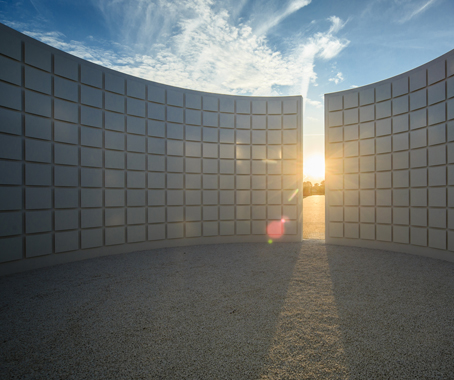
Z33 commissioned local lad Wesley Meuris to create something for the public, in the public domain. Meuris produced ’Memento’, a site specific installation, located on a burial ground in Borgloon, east Belgium.

The results are striking and thought provoking, and despite the lack of chubby nude ladies so popular with local patrons a few hundred years ago, Meuris’ creation draws in the viewer: philosophically as well as physically.
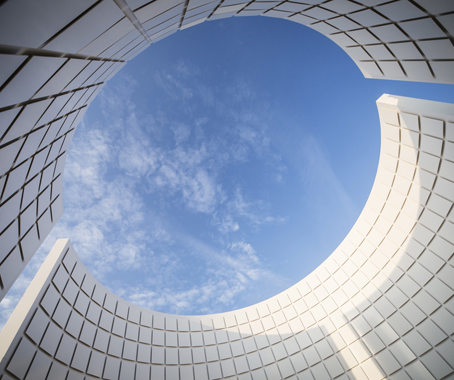
It challenges passers by to look at the world in an entirely different way, fulfilling the central mantra of Z33’s artistic manifesto. The installation explores the concept of ’remembrance’ posed by its title.
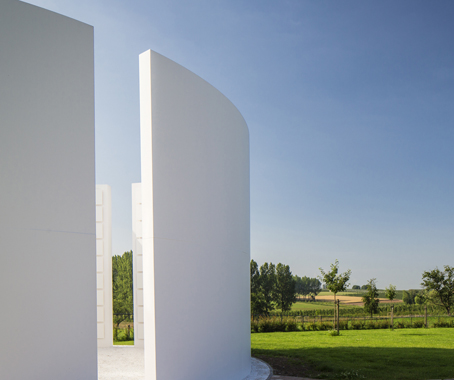
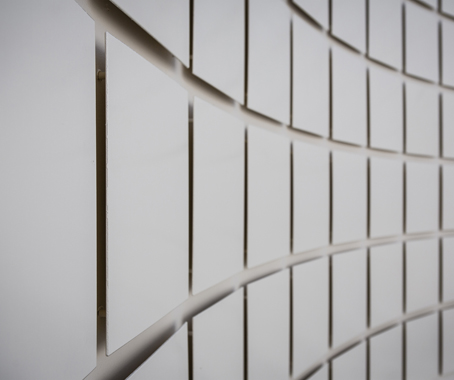
It is a white cylindrical vessel with a strong architectural language. The pure white of the monument sits in stark contrast to the open space which frames it.
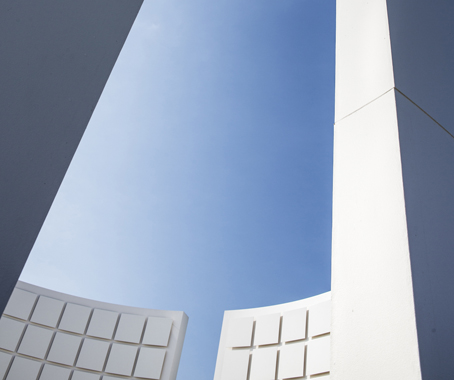
Its stately proportions (5m tall and 10m wide) make it a marker in the rolling landscape of the cemetery, inviting visitors to explore and approach.
Entering via an elegant slit in the wall of the structure, the visitor is enclosed in an intimate but disorientating space. The eye is drawn to the open sky above and the lack of any focal point within the space frames tantalising views of the outside world.
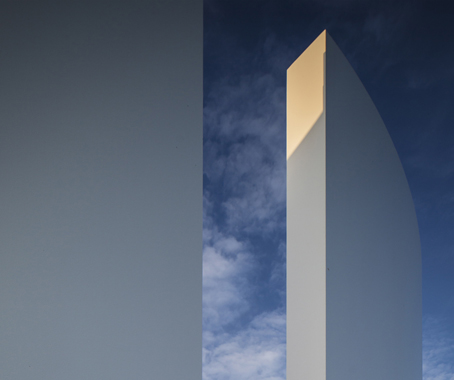
Memento promotes a secluded environment for reflection and peaceful thought. It has the capacity to transport and reorientate which is more than you’d expect at first glance.
With Memento, Wesley Meurius has clearly enjoyed playing with the conventions of architecture and human behaviour.
Images © Kristof Vrancken
INDESIGN is on instagram
Follow @indesignlive
A searchable and comprehensive guide for specifying leading products and their suppliers
Keep up to date with the latest and greatest from our industry BFF's!
The internet never sleeps! Here's the stuff you might have missed