As workplaces evolve to take a more wellness and people-centric approach, we are seeing biophilic design principles take hold in modern office design. Nature-inspired surroundings, natural light and green spaces not only enhance the look and feel of an office, but they have also been shown to alleviate stress, improve air quality and inspire employees to be more creative and productive.
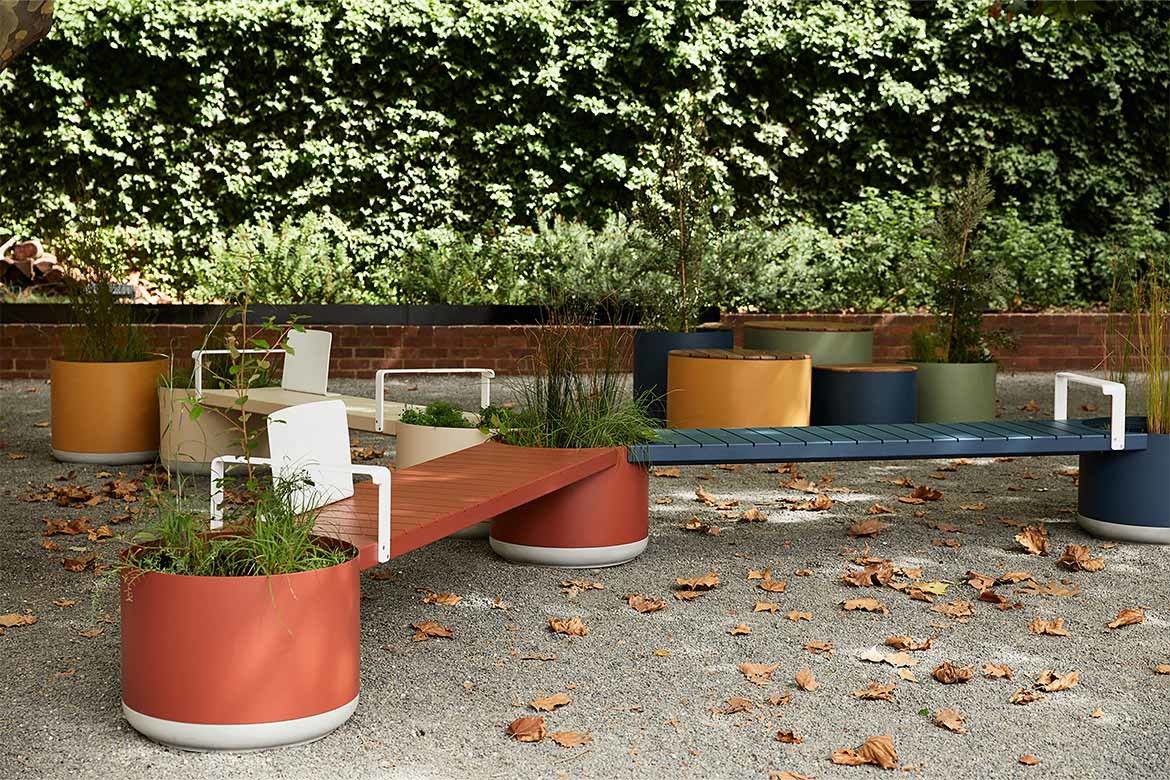
Leaning heavily on biophilic design principles, the Xylem collection by leading Australian designer, Adam Goodrum, and Australian outdoor furniture manufacturer, Tait, is a modular planting and seating system that integrates greenery and seating into any outdoor setting, reminding us of our interconnectedness and dependence on nature.
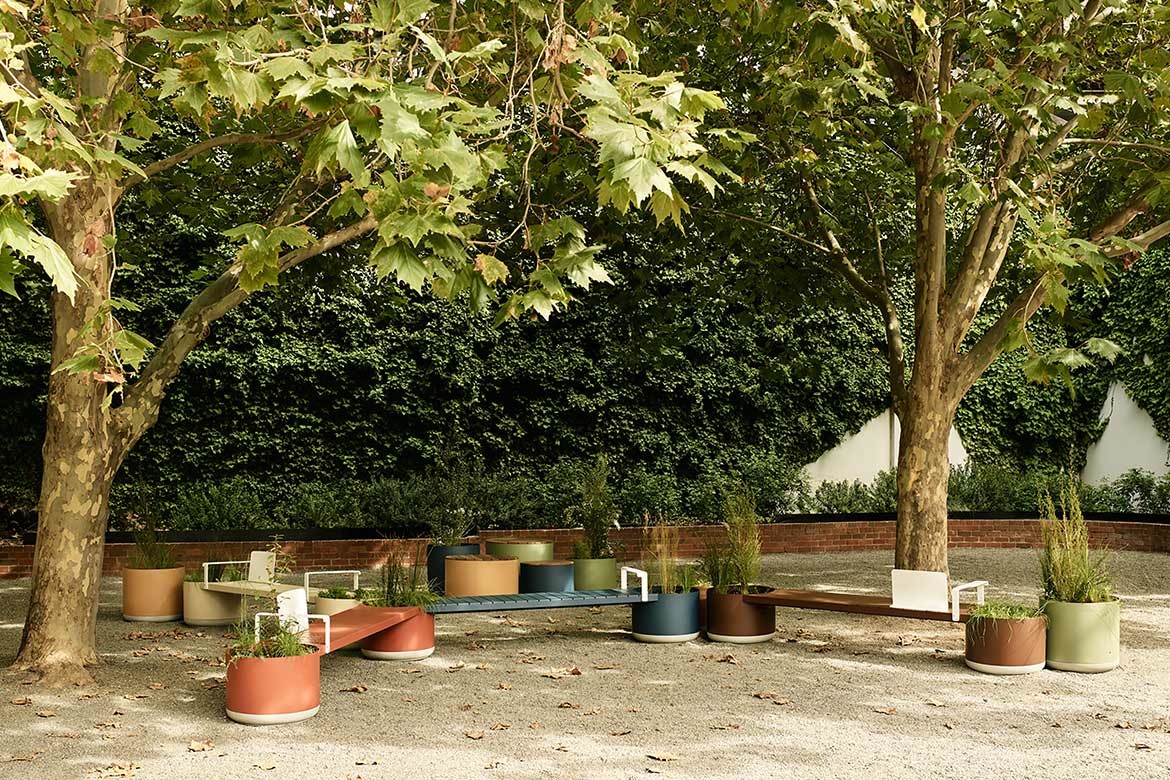
Nature-inspired seating
The collection takes its name from a biological term referring to the branch-like vascular tissue in plants that transports nutrients from roots to leaves, and allows them to photosynthesise. Xylem applies this concept to modular outdoor seating, with a system that intimately connects people with the health-promoting benefits of plants while extending agile workspaces into the outdoors. The collection is just as relevant for indoors too, allowing designers to bring the “outdoors-in”.
Xylem’s modular design mirrors that of a root system meaning it can form endless configurations, including clusters, circular formations or snaking along a single line in narrower spaces. Modules can be oriented to support spaces for socialisation or collaboration, or set up to provide people with solitude. Armrest and Backrest components can be added to support various modes and user needs.
Buildable by design
Building your own Xylem configuration is simple. For the planters, select between a self-watering wicking plate, mulch plate or timber lid. For the bench, select up to three armrests and three backrests. You can join one or two benches to an existing bench at an array of angles.
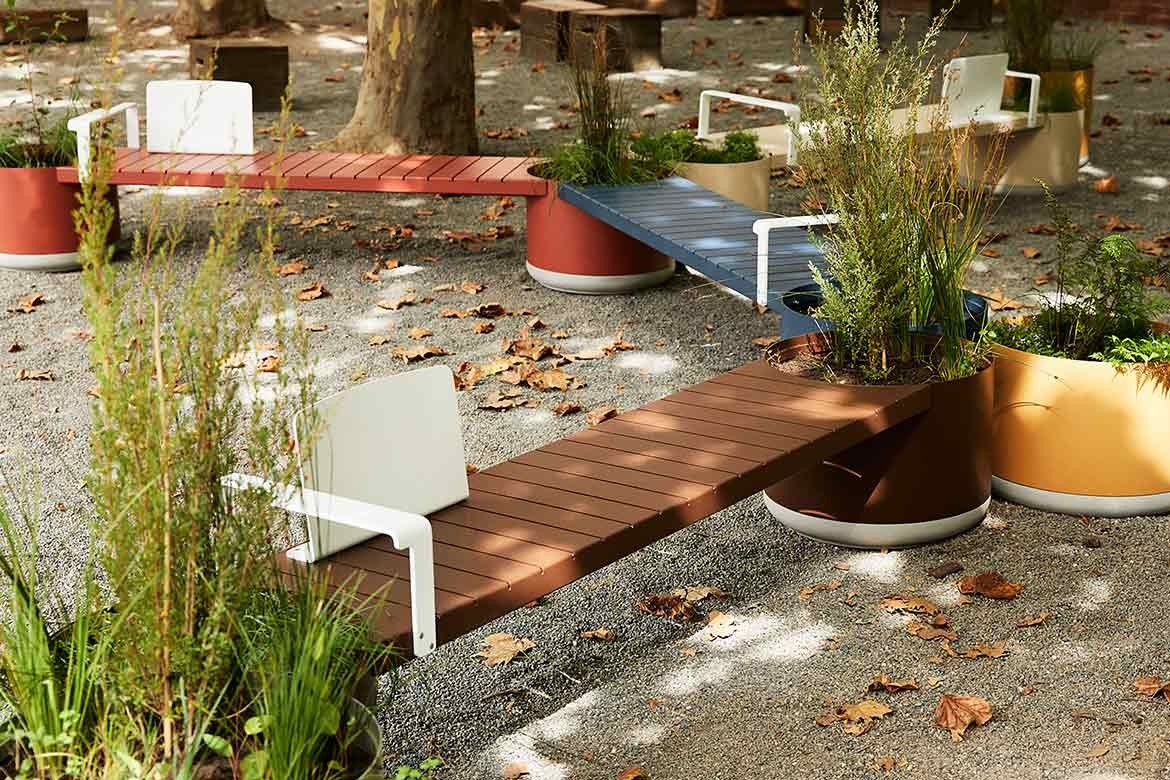
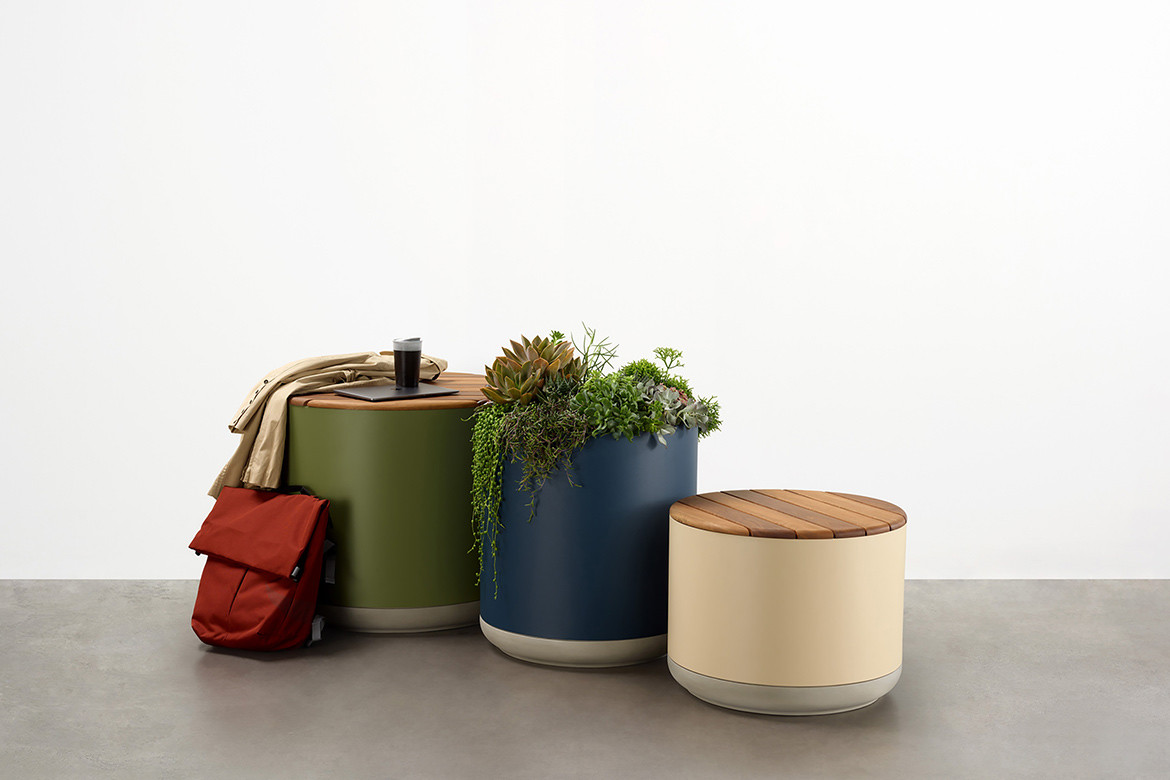
Singular Xylem Pods and Planters of various heights and diameters can used to form clusters that allow people to rest, work, or even dine informally. The glass-reinforced concrete (GRC) base of each Pod and Planter provides durability and ample weight, making it ideal to withstand use in public, high-traffic and wind-prone sites. Part of Xylem’s unique design, the GRC base also acts as a waterproof reservoir to retain water, with an additional self-watering wicking system available (aiding plant maintenance).
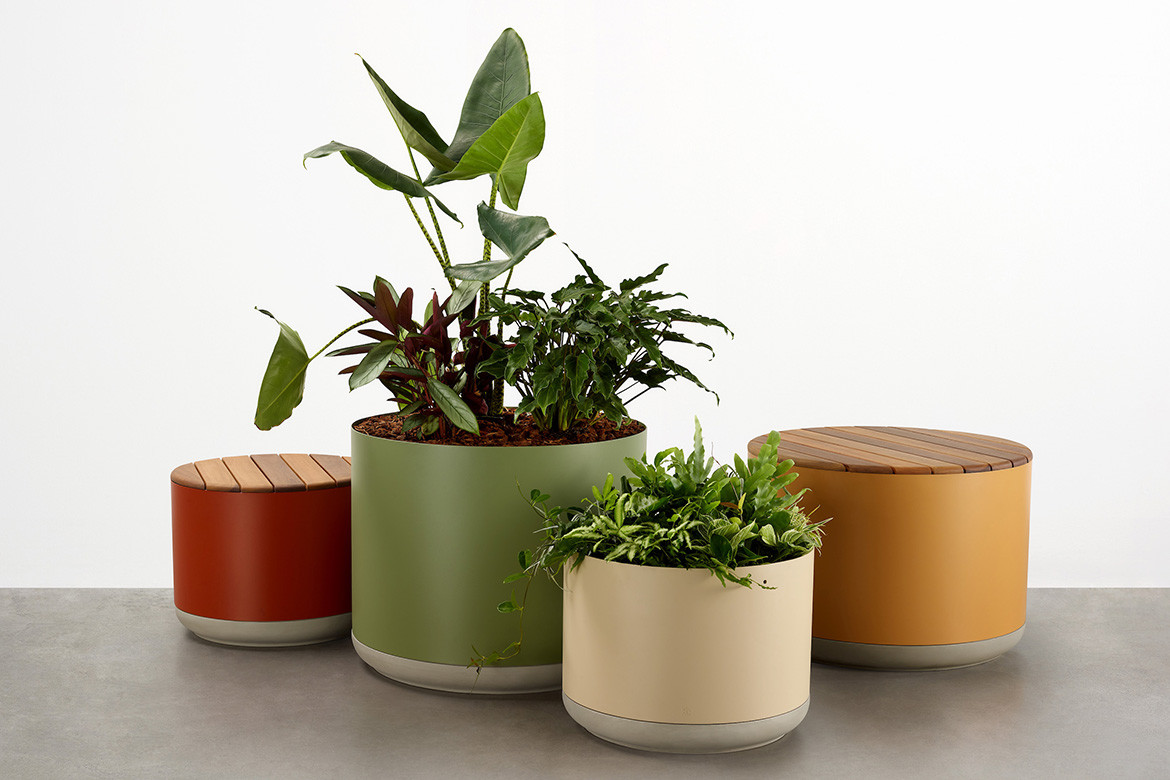
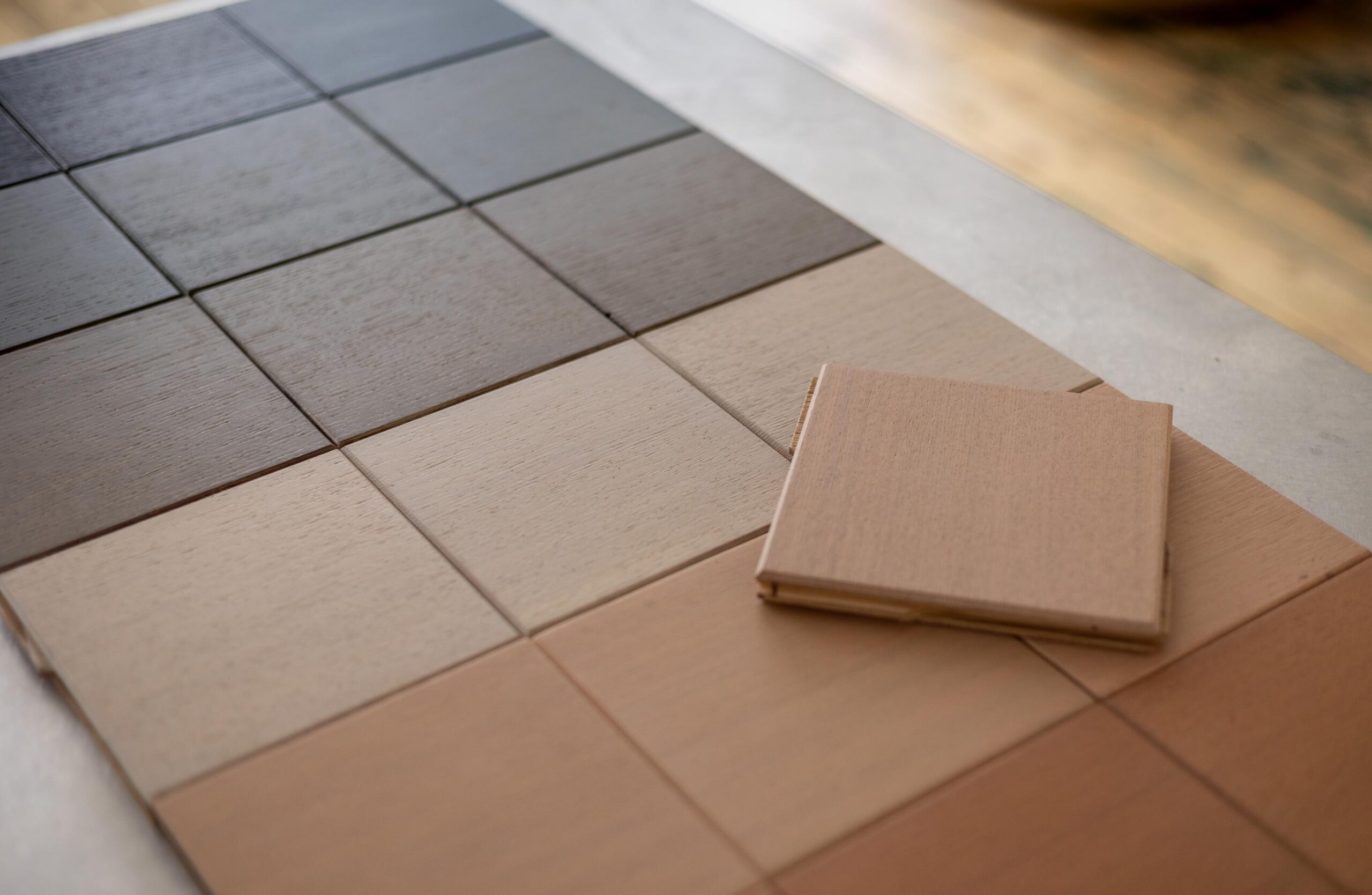
True to its nature-inspired concept, the Xylem Pod seat is crafted from sustainable FSC®-sourced Spotted Gum, with smooth, curved edges that provide a comfortable place to sit. The raw concrete elements of Pod and Planter are complemented by Tait’s range of fifteen Australian-landscape inspired textured powder coat colours. Each component – Bench, Planter, Pod, Armrest, Backrest and Side Table – may be powder coated in the customer’s color of choice.
Xylem is delivered completely disassembled, and the collection is effortlessly transported and installed on any site.
Authentically Australian
Xylem’s organic, chameleon-like design lends itself to workplace, schools, universities, shopping centres and healthcare facilities, but is equally relevant in residential applications to incorporate informal seating and greenery.
Xylem continues Tait’s tradition of creating iconic outdoor products that are renowned for durability and longevity. Proudly manufacturing 95% of their products in Australia, Tait has built its reputation on its passionate and skilled craftspeople. Each piece is made to order locally, guaranteeing not only the highest quality, but also ensuring fewer natural resources are wasted.