The home of architecture and design in the Asia-Pacific
Get the latest design news direct to your inbox!

Get the latest design news direct to your inbox!
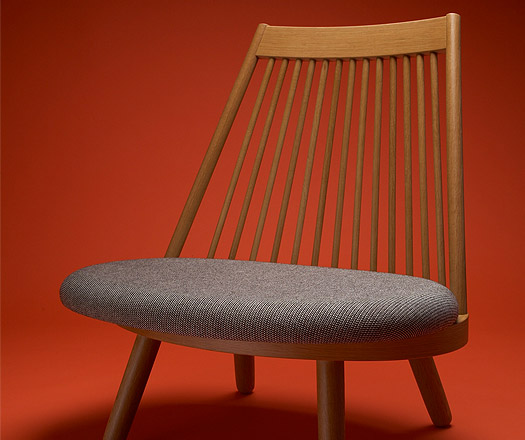
Carl Hansen & Søn has re-instated one of Hans J. Wegner’s early designs – the 1950 CH22 lounge chair. They’ve also released the never before seen CH26.

CH26 Oak-Walnut mix detail

CH22 Oak Black

CH26

CH22 Oak Walnut

CH22 Oak-Walnut mix detail

CH22 Oak Walnut

CH22 Oak and CH417 tray table

CH22 Lounge Chair, CH26 Dining Chair

CH22 Oak


CH22 Walnut and CH 22 Oak-Walnut mix with CH417 tray table
The 1950 CH22 lounge chair bears the first actual model number from the first joint collection between the innovative designer and Carl Hansen & Søn.
Wegner’s debut collection featured iconic chairs that have achieved classic status the world over. It also inspired Wegner’s previously unknown CH26 chair design, which until today has never been produced. The CH22 was the first model in Wegner’s debut collection created exclusively for Carl Hansen & Søn in 1950 – a series that also included such iconic designs as the CH24, better known as the Wishbone Chair, and the elegant CH25 lounge chair.
The designs clearly illustrate Wegner’s ability, even early on in his career, to simplify a construction until it is distilled down to its essence and is full of character. In designing the CH22, Wegner also created a blueprint for transforming the lounge chair into a dining chair – a design that has never been manufactured and was evidently not even produced as a mockup.
This previously unknown design, with the model number CH26, bears a striking resemblance to the CH22, sharing many of the design elements so characteristic of Wegner: organic shapes, bold backs, light-colored wood and woven seats.
INDESIGN is on instagram
Follow @indesignlive
A searchable and comprehensive guide for specifying leading products and their suppliers
Keep up to date with the latest and greatest from our industry BFF's!
The internet never sleeps! Here's the stuff you might have missed