The home of architecture and design in the Asia-Pacific
Get the latest design news direct to your inbox!

Get the latest design news direct to your inbox!
Straddling tradition and modernity, Vilhelm Lauritzen designed the VL Ring Crown light in the 1940s with a keen eye for practicality and beauty. Now Louis Poulsen has re-issued the design classic for contemporary times.

In 1934 Vilhelm Lauritzen was invited to be a part of the team commissioned to design a new building for the Danish Broadcasting Corporation (known at the time as Statsradiofonien). At that time radio studios were an entirely new form of building. The first public news and entertainment broadcasts over radio had only been made in the USA in 1920, bringing the sounds of the world into the living room – and disrupting the pre-recorded formality of the phonograph with live human entertainment.
The shift within the sanctuary of the private domestic realm must have been felt intensely. “Like aviation and motoring, the radio represented new, modern technology, shortening distances between people and creating a totally new way of existing in the world,” writes Vilhelm Lauritzen Architects. And the design of the Danish Broadcasting Corporation building (Radiohuset) in Copenhagen picked up on this current with a purposefully modern and asymmetrical design.
The building, says Lauritzen’s studio, was given “a really rough ride” when its design was published. It was inaugurated in 1945 but it was not until 1994 that its significance was formally recognised with heritage listing. “Since then, all major conversions, renovations, and maintenance tasks have been subject to approval by the Danish Agency for Culture and Palaces,” describes Vilhelm Lauritzen Architects.
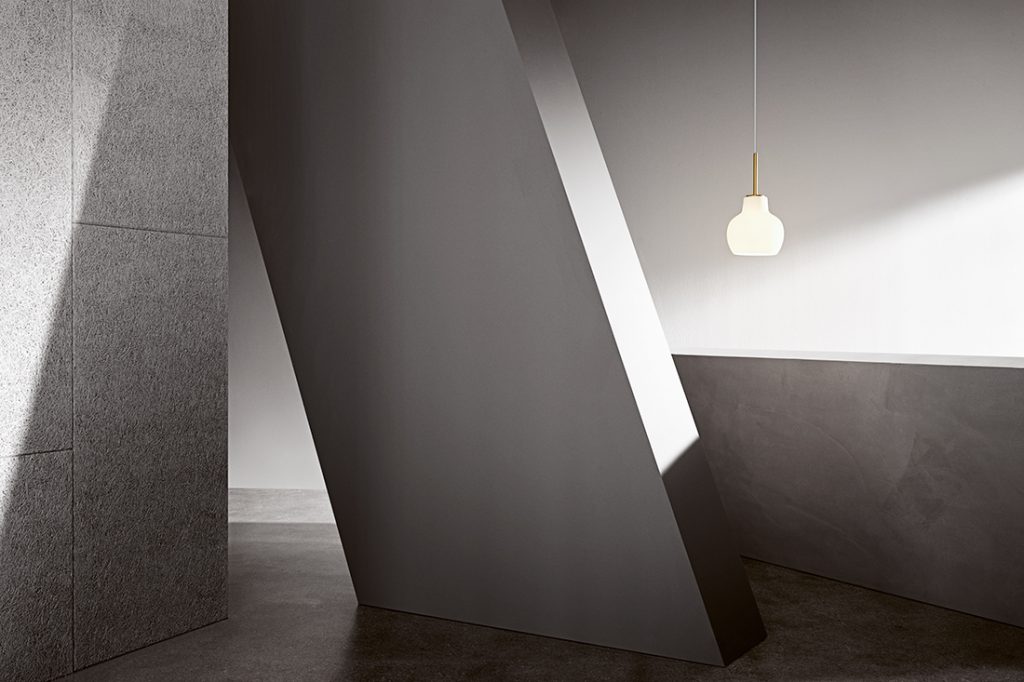
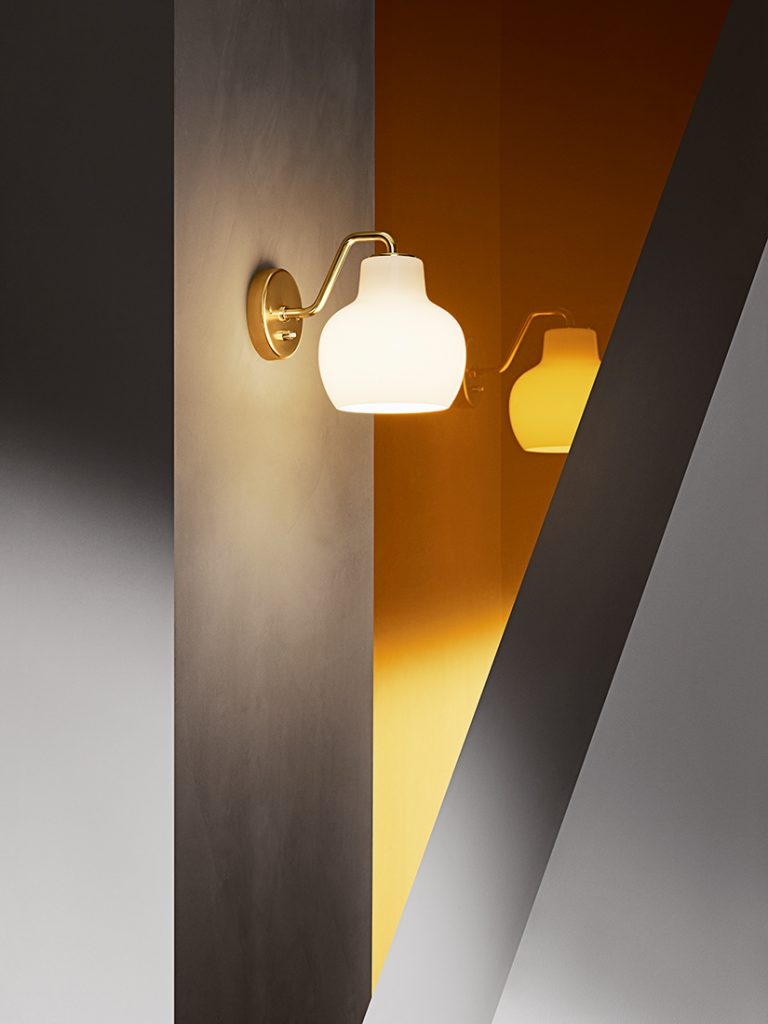
Alongside the architecture, Lauritzen also contributed lighting designs to Radiohuset, including the VL38 lamp. Wall lamp and pendant versions of Louis Poulsen’s VL Ring Crown were also installed within the mahogany-rich interior. Their white opal glass shades create striking outlines against the dark timber.
The young architect Finn Juhl was working for Lauritzen at the time. Soon after the completion of Radiohuset he incorporated the VL Ring Crown into an award-winning interior for the flagship store of Danish porcelain manufacturer, Bing & Grøndahl, in Copenhagen in 1947. This was the first time VL Ring Crown had been used in its multiple-shade format, which had in fact been designed at the same time as the wall lamp and single pendant versions.
Lauritzen received plenty of orders for the VL Ring Crown. Perhaps this is owing to its fusion of a satisfyingly simple organic form with deep consideration for practicality. Imagining the VL Ring Crown in the context of the Radiohuset – which had so shaken the community with its modernity – it makes sense that Lauritzen sought a lighting form that neither revolutionised in terms of form nor bowed entirely to historic precedent.
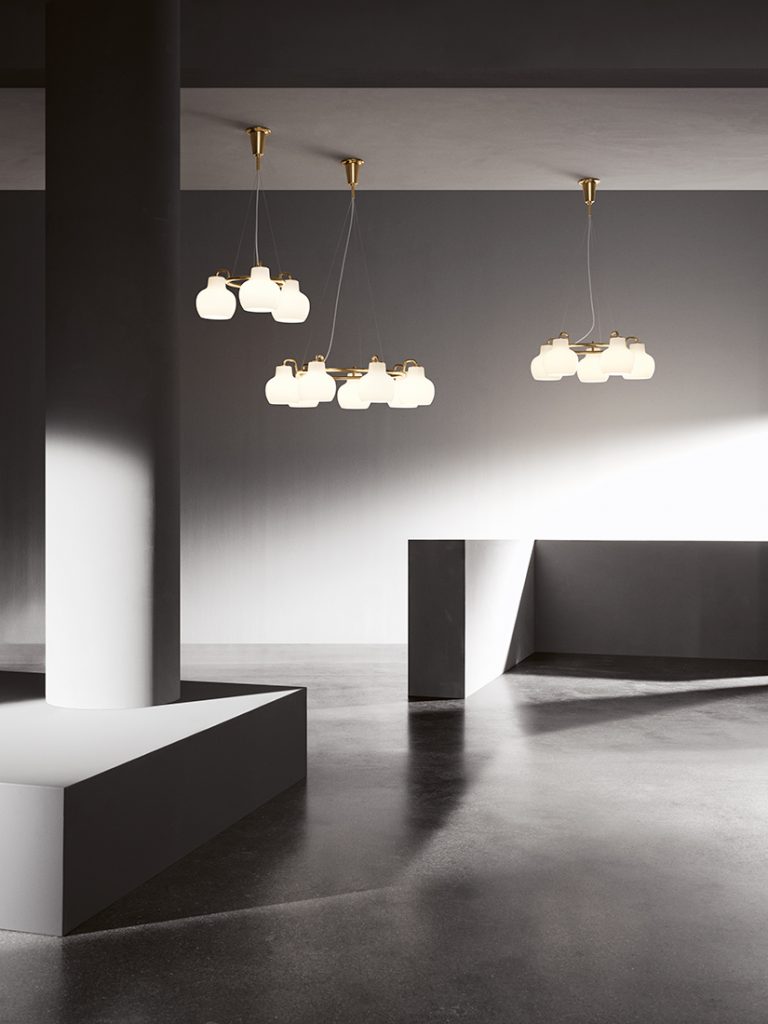
VL Ring Crown has a distinctive bulbous shape that emerges from a cylindrical neck with glossy white triple-layered, mouth-blown opal glass offering warm light and soft illumination. It is anti-glare, of course, in line with the Louis Poulsen way. Its untreated polished-brass hanging structure supports three, five or seven shades. Every part of the design bears a purpose.
In a 1953 article in Louis Poulsen’s magazine, NYT, Lauritzen described his straightforward intentions with VL Ring Crown: “It should be easy to dust, not collect dirt at the bottom, not break in one go if damaged, be easy to change the bulb, be as glare-free as possible (without dimming) and be available for downward lighting and for evenly rounded light as needed. And it should look neat.”
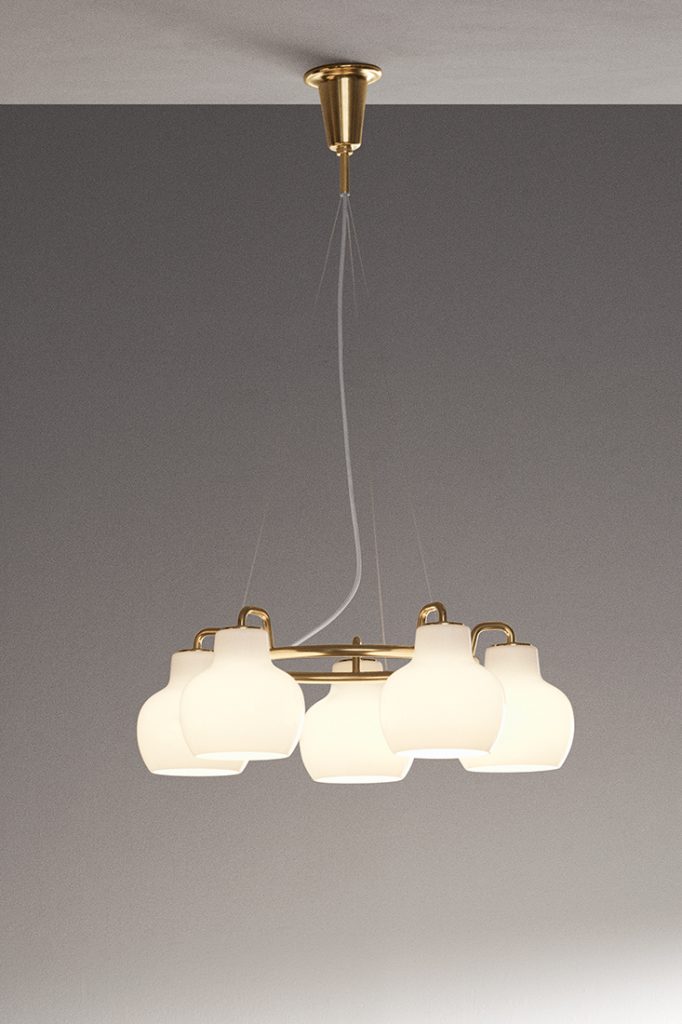
Practical, glare-free and neat, VL Ring Crown brings not only a distinctive look to contemporary interiors, but also gentle light that rings true to the Louis Poulsen emphasis on human experience – no matter the spatial context.
INDESIGN is on instagram
Follow @indesignlive
A searchable and comprehensive guide for specifying leading products and their suppliers
Keep up to date with the latest and greatest from our industry BFF's!
The internet never sleeps! Here's the stuff you might have missed