The home of architecture and design in the Asia-Pacific
Get the latest design news direct to your inbox!

Get the latest design news direct to your inbox!
An idea has the power to influence, inspire and perhaps even change the world. TED shows us how, writes Hande Renshaw for Design Quarterly Magazine.
May 14th, 2008
Each year, 1,000 people flock to Monterey, California, to partake in the four-day TED conference. TED brings together the worlds of Technology, Entertainment and Design (T.E.D.), and the people that form these very diverse worlds. From architects and Harvard biologists to concert pianists and Buddhists, standing up on the TED stage at an annual conference is a powerful tool for inspiring not only the immediate audience, but also the world.
“Our goal is to inspire, delight and surprise people each year,” explains June Cohen from TED. “In planning each event, we ask ourselves: What are the most interesting things happening in the world right now? Who are the people that fascinate us most? And what are the most important questions to ask?”
“I am known as captain organic!” exclaimed industrial designer Ross Lovegrove during his presentation at the annual TED conference in 2005, which revealed his passion for nature and offered a glimpse into his life. “You never see architects showing you their real world”, says Lovegrove, but luckily for the audience he allowed them to see what makes him tick.
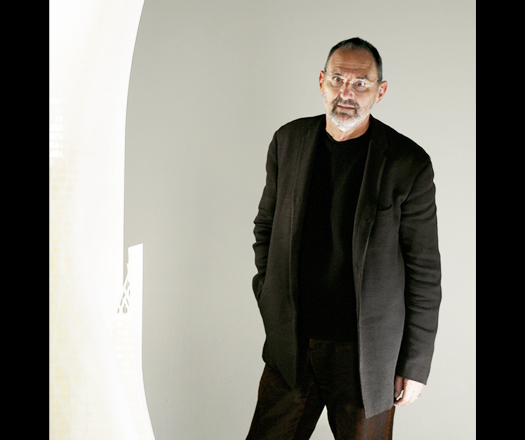
At the same conference, Thom Mayne, founder of the influential studio Morphosis, also delivered an insight into his work, “An architect versus, let’s say a dance company, is a negotiation between one’s private world and one’s conceptual world, the world of ideas and the world of their aspirations,” said Mayne. During the course of his career, Mayne speaks of how he was repeatedly told, “you can’t do that”, and how he overcame such hurdles.
For those of us not fortunate enough to attend a conference, TED.com offers talks to their ever-expanding global community. “You no longer have to attend a TED conference to consider yourself a ‘TEDizen’,” exclaims June Cohen. TED.com now offers nearly 200 talks and a vibrant international community that is hundreds of thousands of members strong….
This is an extract of a feature article by Hande Renshaw, published in Design Quarterly (DQ) magazine. For the full article pick up a copy of DQ #29, April 2008.
INDESIGN is on instagram
Follow @indesignlive
A searchable and comprehensive guide for specifying leading products and their suppliers
Keep up to date with the latest and greatest from our industry BFF's!
Poliform currently have an up to 50% off sale on a range of furniture and lighting products. Mention indesignlive.com and receive a further 5% off your purchase. Pick up great design at a great price this Australia Day long weekend. WhenNow! Ends Monday 26 January. Where:POLIFORM SYDNEY 184 CHALMERS STREET SURRY HILLS T 02 9690 […]
The internet never sleeps! Here's the stuff you might have missed