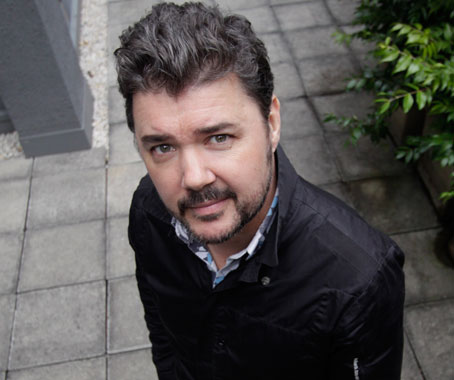
Interior designer Gavin Harris is a man who isn’t afraid to diversify. When the recession hit in the early 1990s, Harris put his design credentials and his childhood dinosaur obsession to good use, working for a Brisbane-based company that created artificial environments for natural history museums and the like.
“We made artificial rainforests, robotic dinosaurs, rocks, trees; we worked with zoologists and palaeontologists,” Harris recalls. “It was a great job, totally out of the field – still design I suppose, but [incorporating] some of my passion as a kid.” One of his scale models still has pride of place in his living room.
Stints in Australia with Bligh Voller (now BVN) and Woods Bagot working on “everything from call centres to corporate fitouts, restaurants, hotels” followed a stint in London with Mackay and Partners, a firm whose portfolio included an impressive 70,000 sqm space for pharmaceutical company Merck Serono and a fitout for Deloitte Consulting, both early examples of activity-based working before it had a real name to it.
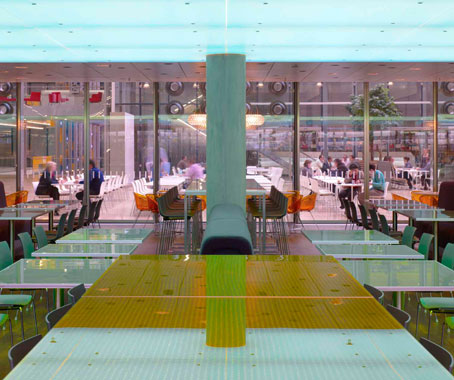
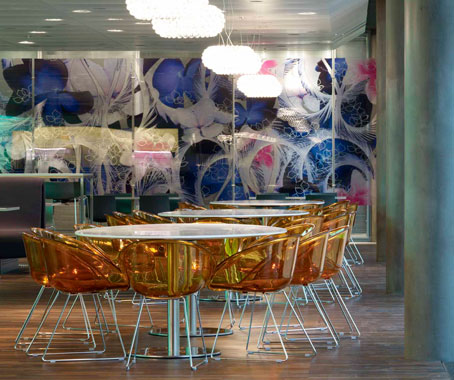
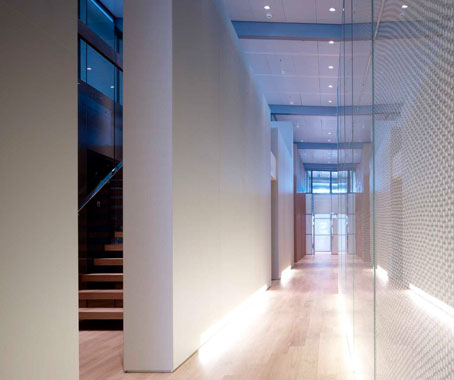
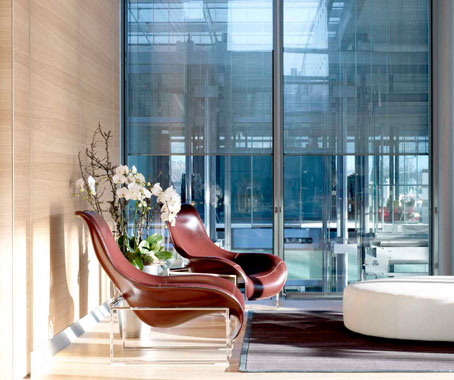
Merck Sorono by Mackay and Partners
Harris joined futurespace’s Sydney office as Senior Associate in 2009, where his experience in designing progressive corporate fitouts became a great asset in an environment that was quick to embrace new ways of working.
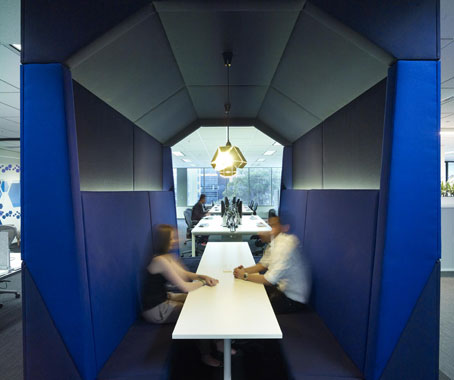
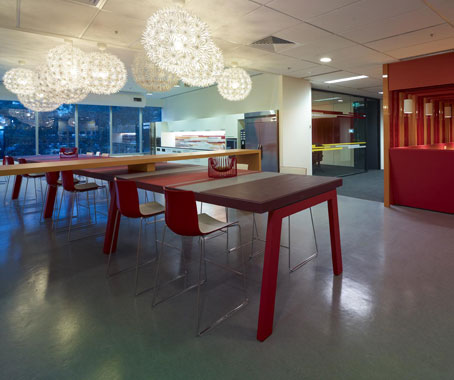
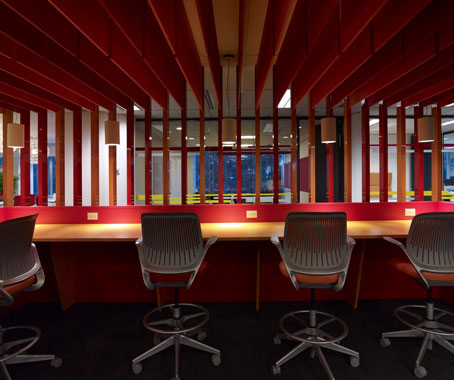
futurespace, activity based workplace for technology and business
“Australia is very advanced in how we work,” he says. “In its activity-based working, in the open planning, all those kinds of things, Australia really leads that process against the more traditional companies.” Among futurespace’s most recent work are new corporate fitouts for John Holland, Jones Lang Lasalle, McCann CMG advertising and Microsoft – multi-level, multi-use spaces embracing the concepts of activity-based working and demonstrating a shift in how Australian workplaces operate.
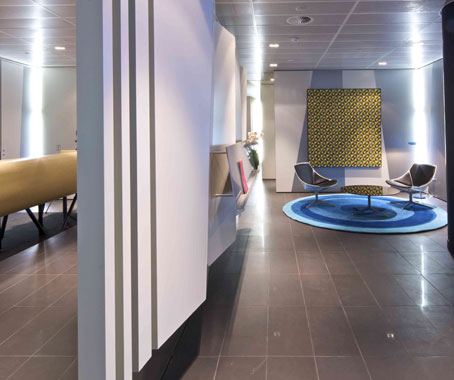
futurespace, activity based workplace for a service provider
Harris’ success as a designer isn’t limited to interiors – he’s also a keen product designer, having won Corporate Culture’s Design Journey for his ’Takushi’ table and Designer Rugs’ Evolve competition for his ’Squiggle It’ rug in 2010. A competition in London run by lighting company Whitegoods led to the production of his winning design, Line of Light – a concept that was born when Harris identified a lack in an interior project he was working on.
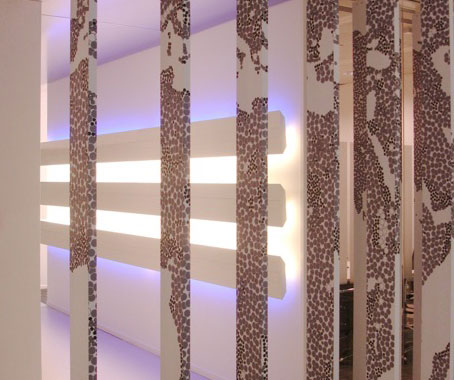
“We wanted a light that you didn’t see; something that was very simple,” he explains. “There are things in the market now that do that, but at the time there wasn’t anything. So I thought, that will be my competition entry, to make this thing almost disappear like a blade.”
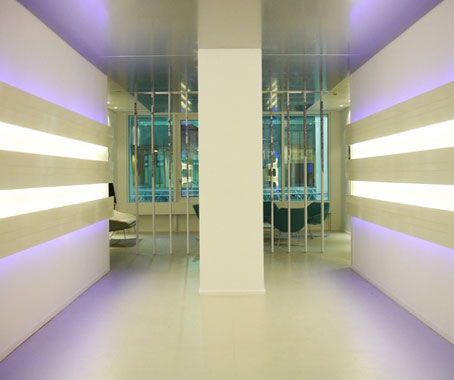
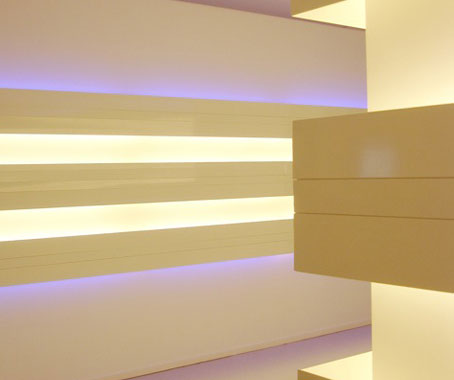
Line of Light
Harris’ product design informs his interior design and vice versa, his ideas for products often arising out of a need for a particular object in his fitouts.
“With interiors, I get to see what we don’t have – something that’s fallen short, like a product,” he explains. “It’s nice having the practice of using these things and finding what the gap is.”
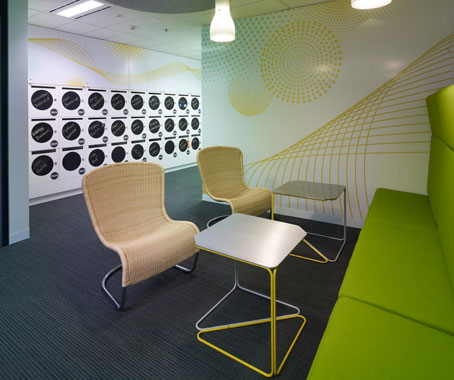
futurespace project incorporating Harris’ Follow the Line coffee table
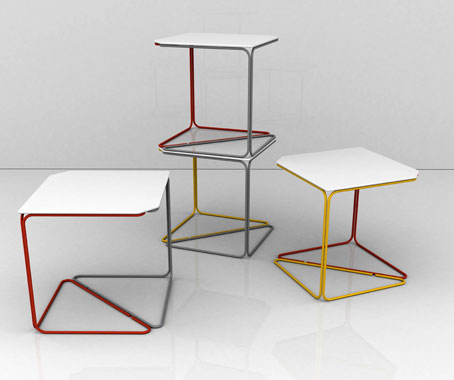
Follow the Line, Gavin Harris
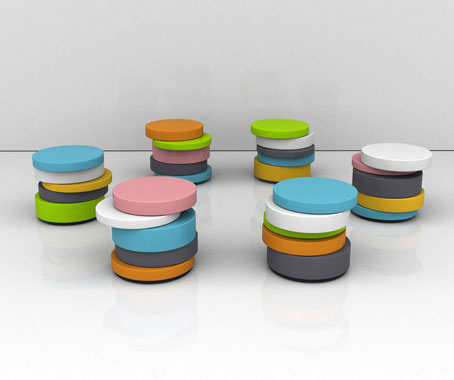
O Stool by Gavin Harris
futurespace
futurespace.com.au