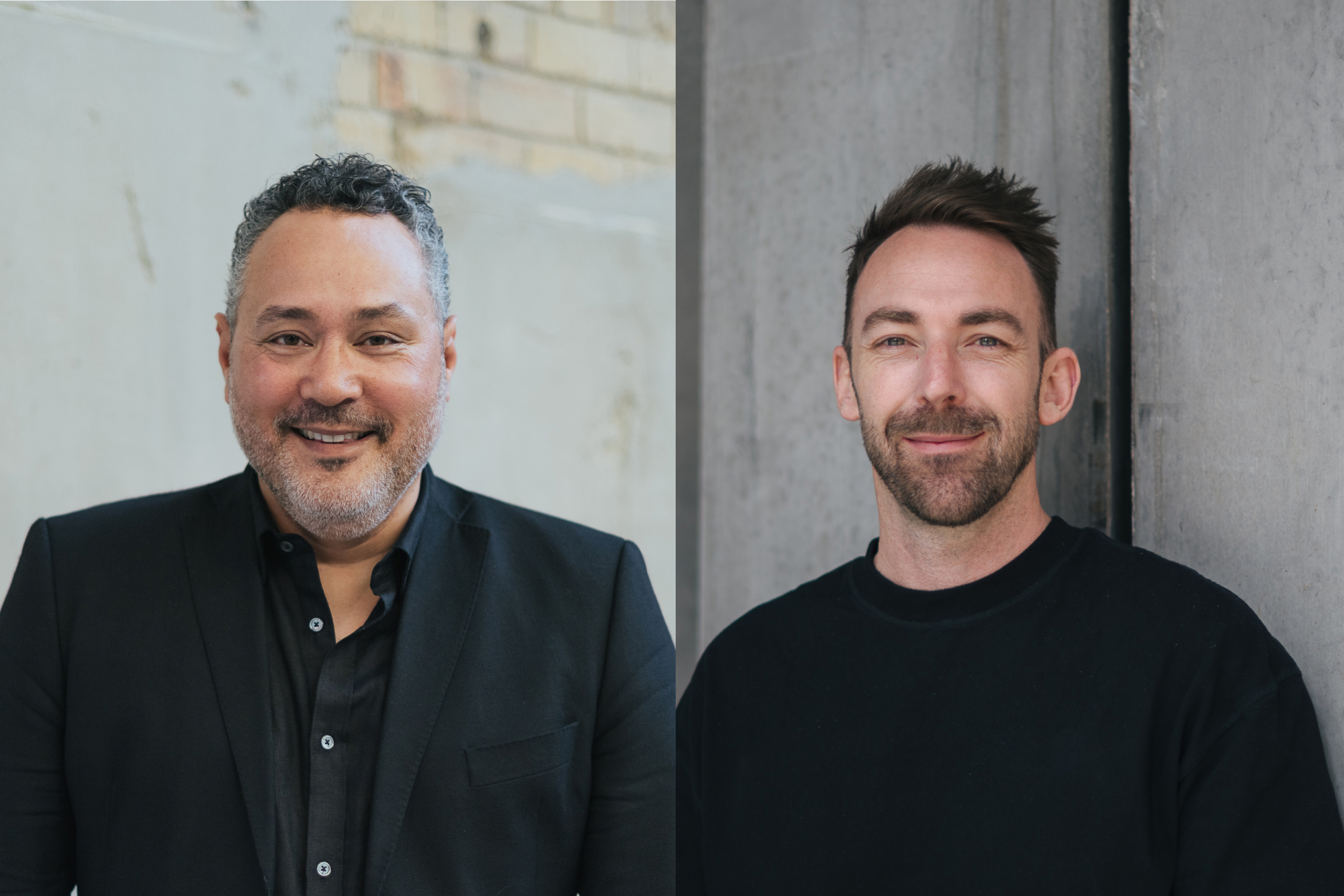
The dynamic couple behind the rising design practice Studio Truly Truly returned to their native Australia recently to launch a new lighting collaboration. The trip presented the opportunity to sit down with one half of the practice, Joel Booy, and hear more about the project, as well as the culturally different design approaches between the Dutch and the Aussies.

The designers did a series of talks with Cafe Culture + Insitu and Rakumba, with the Authentic Design Alliance.
Sandra Tan: Let’s talk about the Rakumba project
Joel Booy: Sure! It’s been an interesting one for us because it was a commercial brief, but we got given quite a free rein.
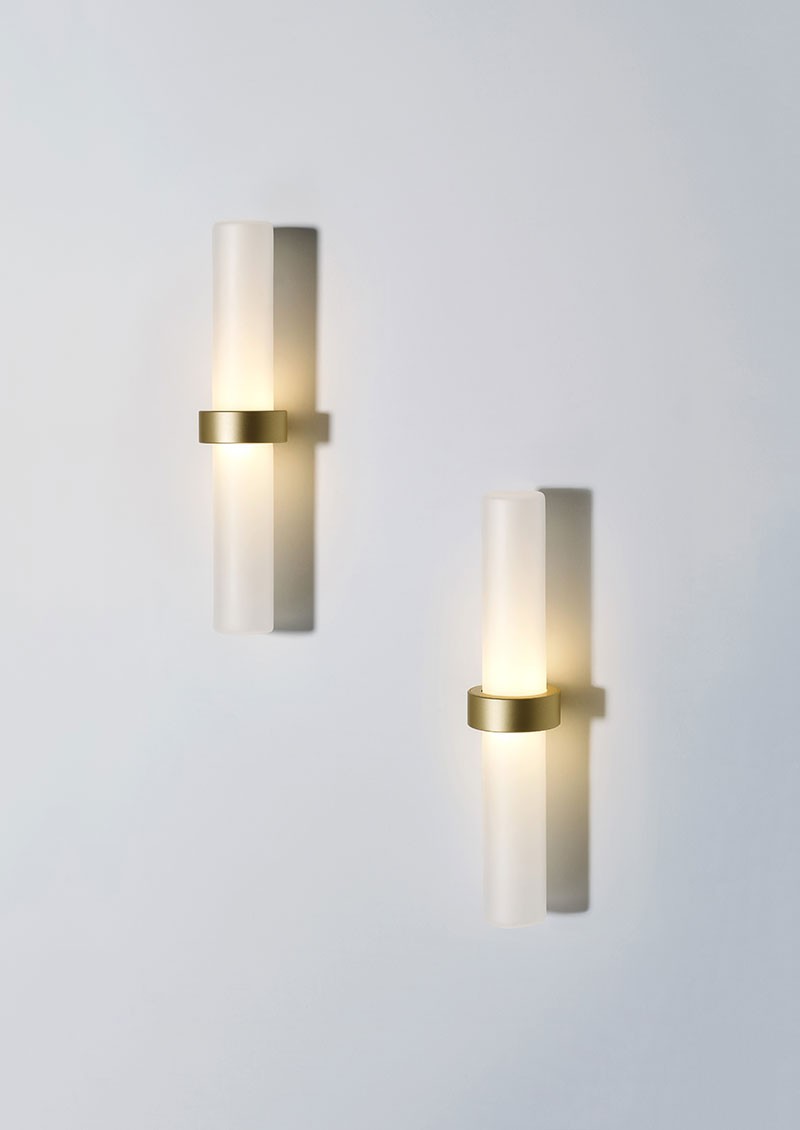
They wanted a collection of lights that would fit together on a track. So we came up with the idea of it being Typography, which made it really easy because Kate and I had been typographers.
Letters have common pieces, though they look completely different – like a ‘G’ versus an ‘L’ – they work together because of the sizes and proportions. We created that language and developed a lot of variations, or ‘fonts’, which we then whittled down.

Typography, designed by Studio Truly Truly for Rakumba.
Typography reminds me of a musical composition, like notes on a stave…
That’s the cool thing. You can use them on the vertical and along the track in a classic, rhythmic way, or put them anywhere in a sort of ‘jazz’ way.
Rakumba worked really hard on making it a reality. And that’s one difference that we see in Australia versus the European mentality. We can accept aesthetic images, take on the challenge of making them, and technically they resolve. In Europe, it can sometimes be the other way around.
.
“That’s one difference that we see in Australia versus the European mentality. We can accept aesthetic images, take on the challenge of making them, and technically they resolve.” – Joel Booy
.
Interesting. So between those design cultures, would you say that there is more agility here in Australia?
Yeah, there’s a kind of innovation, and a drive here that says, ‘if I need to get it done, I’ll get it done – I’ll find a way to make this’. In the Netherlands, they’re more focused on ‘fascination’, on coming up with something that’s really out there and from your heart, but it doesn’t matter if it’s ugly, or non-functional. It’s really extreme in the Netherlands.
What do you think drives that?
I think the Dutch have a very open-minded culture, so lots of thinking and discussing things like ‘the future’ or sustainability and the idea of doing it via design is comfortable for them. Also, politics and design are not separated there at all. Whereas here, I don’t know – it’s tough to get everyone into the thinking that everything you make is political.
.
“I think the Dutch have a very open-minded culture.” – Joel Booy, Studio Truly Truly
.
How do you approach sustainable practice, and how did it come to play in your work with Rakumba?
Designers can get a lot of extra press out of the idea of making something responsibly. We’re always questioning how we can make things better, without it being just spin. With projects like the IKEA sofa [designed for the PS2017 range] for instance – which is our most mass-produced product – we were really conscious of how we could make it as sustainable as possible.

The IKEA PS2017 sofa.
The good thing about Rakumba is that they were able to manufacture in a responsible way, using high-quality materials. And that’s another thing about Australian design, it’s not cheap but it is great quality, and most often, made really well.

What’s in store for the future?
A lot of great things that we’re not allowed to talk about! We’ll keep being artistic with our work, exhibitions… and furniture. There are some very interesting briefs, the kind we’ve always wanted and are finally getting. We seem to be getting more and more freedom. And that’s kind of the dream.
.
“We seem to be getting more and more freedom. And that’s kind of the dream.” Joel Booy
.
Rakumba lighting is available through Cafe Culture + Insitu.
Catch a recap of the designer talk series hosted by Cafe Culture + Insitu.