The home of architecture and design in the Asia-Pacific
Get the latest design news direct to your inbox!

Get the latest design news direct to your inbox!
With just 12 indigenous architects nationwide, it’s little wonder our cities are lacking a spirit of place, Dillon Kombumerri tells Gemma Battenbough.
July 14th, 2010
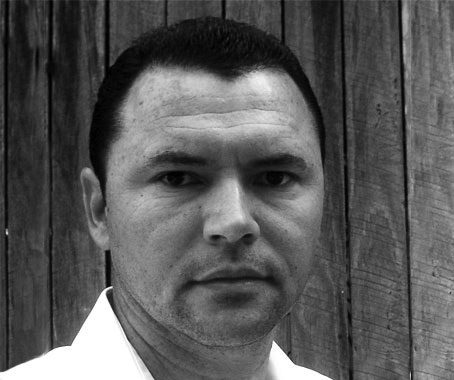
With just 12 indigenous architects nationwide, it’s little wonder our cities are lacking a spirit of place, according to NSW’s Principal Indigenous Architect, Dillon Kombumerri (pictured).
The figure is diminutive, especially when you consider that there are 11,000* architects in Australia and, according to the latest ABS statistics, indigenous people make up 2.5% of the general population. By these figures, proportionally the number of indigenous architects should be more like 275.
The profession’s failure to engage with indigenous communities is part of the problem, Kombumerri told indesignlive.
Architecture is a “good fit” for many aboriginals because it is creative. But in order to encourage young people into the profession, architects will have to ditch the “fancy job” image and get back to grass roots, he said.
“Architects can’t help themselves – there is an ego that goes with the job. They get distracted from the purpose. It becomes ‘for’ the community rather than ‘with’ the community.”
The architectural profession needs to work harder to bring about discourses with communities. Getting elders involved in steering groups and running studios with schools would bring significant benefits for design, Kombumerri said.
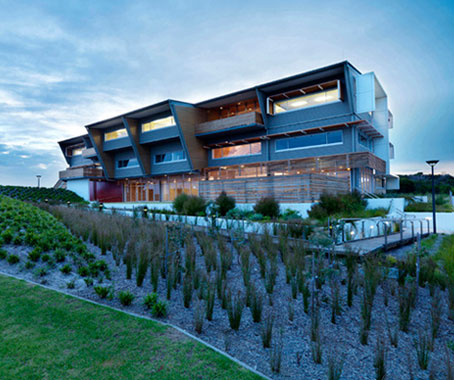
Aboriginal Health College at Little Bay (AHC) completed 2009 – photo by Rob Tuckwell
“The effect on the profession would be extraordinarily profound if we were to have more indigenous architects. Sydney is dead. It has no spirit of place, it’s developer driven. If you got indigenous elders involved it would be a gift to the city.”
There should also be more recognition for indigenous architects and practices that are fostering strong community links, Kombumerri said.
“The profession has been supportive but so far it’s been in a patronising and boxed way. Each year we have the awards, which is a real club. It’s a self-promoting exercise and it needs to change.
“There is a pooh-poohing of anything from the edges and inconsistency in the judging. It disengages people and breaks the spirit of our professional community. The awards should be supporting difference, otherwise it’s a self-fulfilling prophecy.”
Karl Fender, National President of the Australian Institute of Architects (AIA), told indesignlive that while the number of indigenous architects was “disproportionately low”, the AIA was keen to encourage increased participation and representation by the indigenous community. Better access to the profession and its services would provide “mutual understandings”, he said.
“Our hope would be that this might then engender in more members of the indigenous community a wish to participate and join the ranks of the architectural profession.
“Conversely, and noting the intimate relationship that the indigenous community has with the land, their contribution is invaluable to architects as the major contributors to the evolution of the built environment,” Fender said.
Most universities are also failing to deliver on their responsibility to encourage diversity in their architecture programs. “They need to get on the ground and invest some money. They think they are doing enough by offering a scholarship but you’ve got to get young people interested first. The schools can do a lot more,” Kombumerri said. 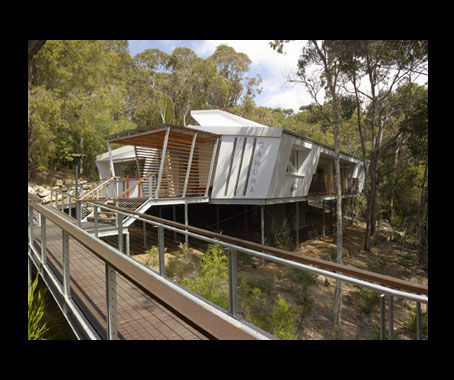
Gurawa Indigenous Learning Centre at Brookvale TAFE completed in 2008 – photo by Brett Boardman
However, the University of New South Wales is one example of a university making a difference. The Indigenous Winter School Program, which introduces 150 indigenous students to university studies, including architecture and design, at no cost to themselves is a great help to young people from indigenous communities considering a career in the profession.
With a little financial support from government agencies and universities, and a commitment from the architectural community, the amount of indigenous architects could rise, Kombumerri said.
“The will is there and I think within the next decade you could see the numbers double. When there is 1, there will be 10, then 100.”
*The Architects Accreditation Council of Australia estimates that there are 11,000 architects nationally. Architects are required to register with the Architects’ Board in the state or territory they wish to work in and, because many architects are registered to practice in more than one state, a finite figure for the number of registered architects nationally is not available.
INDESIGN is on instagram
Follow @indesignlive
A searchable and comprehensive guide for specifying leading products and their suppliers
Keep up to date with the latest and greatest from our industry BFF's!
The internet never sleeps! Here's the stuff you might have missed