The home of architecture and design in the Asia-Pacific
Get the latest design news direct to your inbox!

Get the latest design news direct to your inbox!
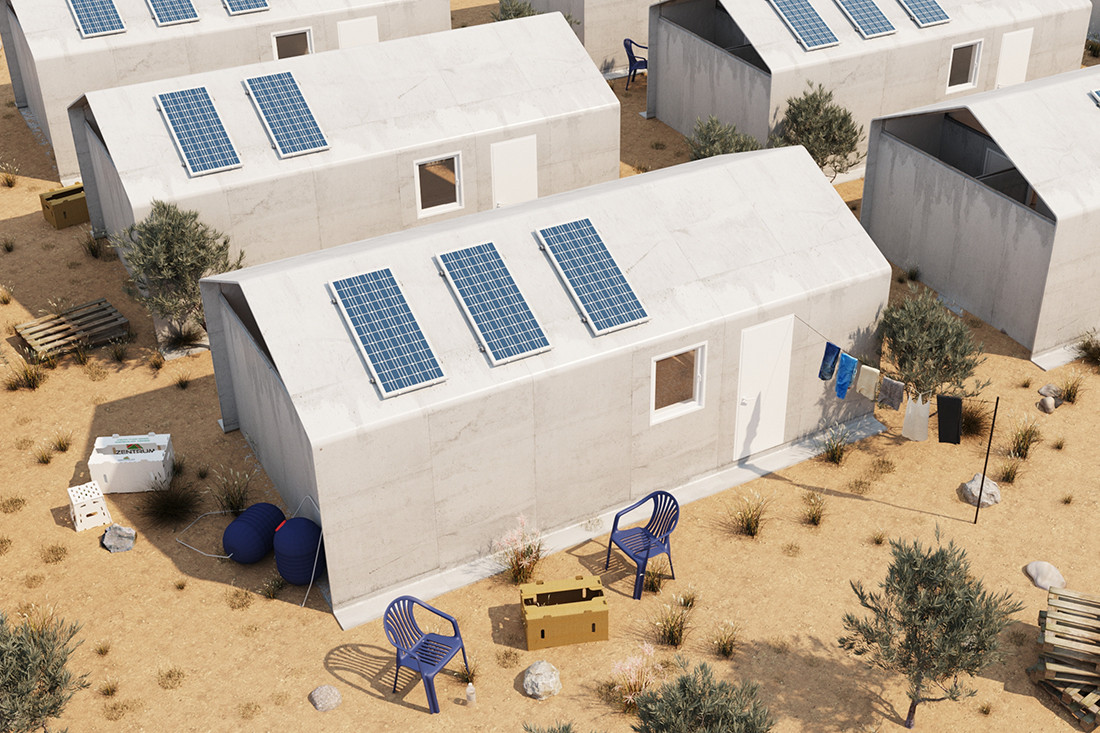
British design studio Cutwork has designed Cortex Shelter, an easily-assembled and affordable housing solution for the global refugee crisis.

Design has the ability to solve some of the most pressing problems hitting the world today, and the global displacement and movement of people is one such issue.
An easily built, low-cost, long-term housing solution for the global refugee crisis? It seems too good to be true, but British studio Cutwork has released its designs for Cortex Shelter, a proposed housing solution for temporary refugees.
The innovative design addresses many of the critical issues with the current temporary housing solutions by offering a sustainable yet easily assembled alternative. Cortex Shelter takes just one day and two unskilled people to build, and no heavy equipment or machinery is required in its construction.
Finding humanitarian solutions through design
In many global refugee camps accommodation is little more than a tent. Not only do the current options not offer privacy, stability or security, but they also lack adequate insulation and are often replaced after a six-month period.
Cutwork’s Cortex Shelter uses a bendable metallic tube framework. The metal structure can be easily bent by hand and locked into place. Waterproof and washable insulation sheets then snap into the frame. The final addition is Cortex Composite’s rollable concrete, which then has water added to it and in 24 hours it hardens to create the final product.
Cutwork CEO and co-founder Kelsea Crawford says of the project: “Our mission is to create stability and security for people who have lost the most – essential safety, a place to call home, and the simple foundations to rebuild communities and hope.”
Technical factors
Through its flat-packed nature and one-day assembly, the Cortex Shelter streamlines construction and production costs. The Cortex concrete product takes less time to install and dry, uses 90 per cent less material than traditional concrete (only 1.25cm thick); possesses more than triple the compressive strength (9000+ psi) of traditional concrete, and saves 90 per cent of carbon used in traditional concrete.
Get regular design inspiration, join our digital community for our weekly newsletter.
INDESIGN is on instagram
Follow @indesignlive
A searchable and comprehensive guide for specifying leading products and their suppliers
Keep up to date with the latest and greatest from our industry BFF's!
The internet never sleeps! Here's the stuff you might have missed