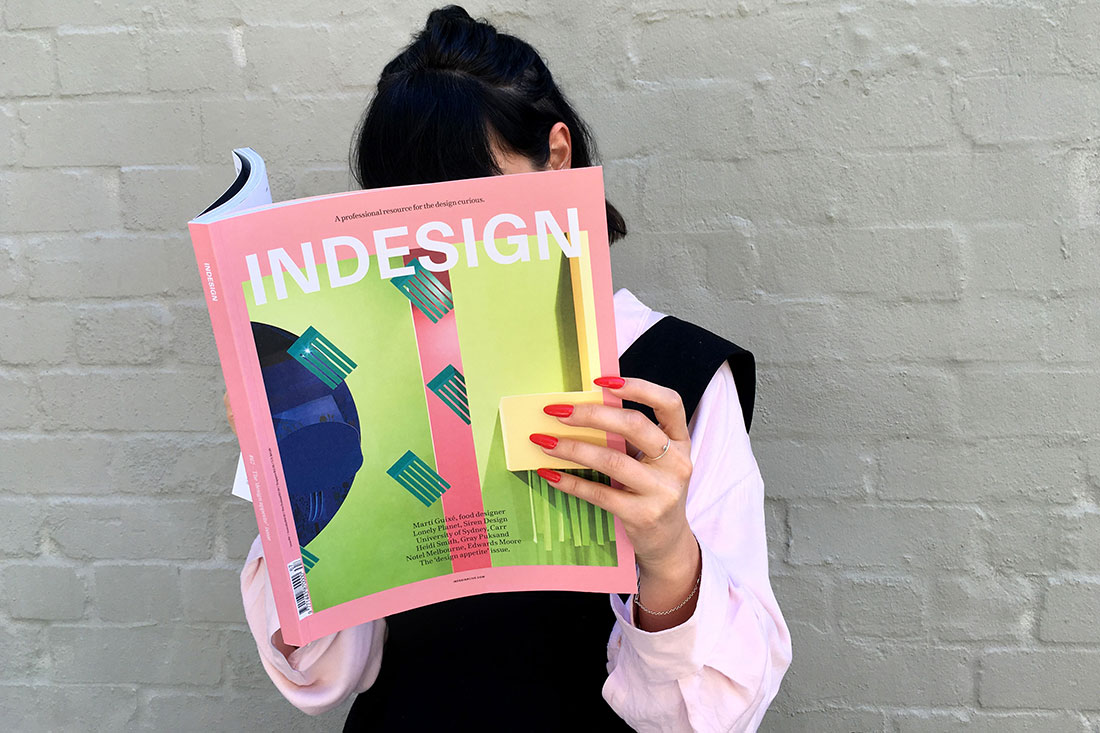
In the latest edition of Indesign: the ‘Design Appetite’ issue, we tackle the design industry’s most biting issues around hospitality. Here’s a taste of what’s inside.
November 16th, 2016
Is it just us, or is ‘consuming’ not quite what it used to be? Our collective appetite for personalisation and customised experience has grown and with it our expectation that services and spaces operate in an agile, intuitive manner. Disruptive hotel and travel platforms like Airbnb, TripAdvisor and Expedia, as well as the more culinary side of hospitality 2.0 (think foodora and Deliveroo), are challenging the old systems and building in new structures of expectation among consumers. It’s a paradigm shift that’s precipitated a complete rethink in how we design space, service and experience. And it’s given us plenty of food for thought.
What are the impacts of Millennials and frequent travellers on contemporary hotel design? With boutique hotels on the rise and game-changers like Airbnb redefining hotel-stays, what does the modern, five-star experience look like? And do star ratings even matter? How are hospitality modalities re-shaping agile working environments? And who are the forces and faces actively disrupting the traditional design models, and how are they doing this?
In these pages, you’ll discover designers who use food as a medium for mass production, and chefs who use interior design and architecture as tools for cooking. You’ll find the blueprints to new and exciting movements in hospitality culture and design including, ‘anti-hotels’, ‘tasteology’ and ‘café commercial’.
Ultimately, these disruptive and opposing forces are good for our industry, and are pushing us to problem-solve in new and different ways; to really listen to the customer and the user (channel our empathy), and rethink our design approach.
Think about your own consumption patterns, say, as a traveller. Last time you booked a hotel, chances are you checked TripAdvisor to weigh up the ratings and user reviews, before jumping on Webjet to compare flight routes and costs. You grabbed an Uber to the airport, checked in using the self-check-in app and pre-selected your meal preference and seat. Are we right?
Indesign co-editors, Sophia Watson & Alice Blackwood.
Read more in issue #67 of Indesign.
On sale November 17, subscribe here.
INDESIGN is on instagram
Follow @indesignlive
A searchable and comprehensive guide for specifying leading products and their suppliers
Keep up to date with the latest and greatest from our industry BFF's!
Herman Miller’s reintroduction of the Eames Moulded Plastic Dining Chair balances environmental responsibility with an enduring commitment to continuous material innovation.
In a tightly held heritage pocket of Woollahra, a reworked Neo-Georgian house reveals the power of restraint. Designed by Tobias Partners, this compact home demonstrates how a reduced material palette, thoughtful appliance selection and enduring craftsmanship can create a space designed for generations to come.
Now cooking and entertaining from his minimalist home kitchen designed around Gaggenau’s refined performance, Chef Wu brings professional craft into a calm and well-composed setting.
Merging two hotel identities in one landmark development, Hotel Indigo and Holiday Inn Little Collins capture the spirit of Melbourne through Buchan’s narrative-driven design – elevated by GROHE’s signature craftsmanship.
Architectus disrupts the traditional thinking around public and civic projects with an ‘accessible’ architectural vision for the Christchurch Bus Interchange.
What is interior design’s responsibility in revolutionising aged-care environments? The new Emmy Monash Aged-Care facility in Melbourne’s Caufield has all the luxury commodities of a contemporary multi-residential complex. From thoughtfully considered finishes through to superior shared facilities, no expense has been spared on residents’ comfort and quality of life.
The internet never sleeps! Here's the stuff you might have missed
Chus Martínez and Nguyen Le reflect on the importance of exhibition design as their own show – ‘A velvet ant, a flower and a bird’ – runs at the Potter Museum of Art.
In a tightly held heritage pocket of Woollahra, a reworked Neo-Georgian house reveals the power of restraint. Designed by Tobias Partners, this compact home demonstrates how a reduced material palette, thoughtful appliance selection and enduring craftsmanship can create a space designed for generations to come.